ASUS launched the ROG Equalizer 12V-2×6 cable with a clear promise: better power load balancing than standard 12V-2×6 GPU power cables. For anyone watching the ongoing concerns around high-wattage graphics cards and connector reliability, that claim is a big deal. But new testing suggests the cable may not behave the way many PC builders expect.
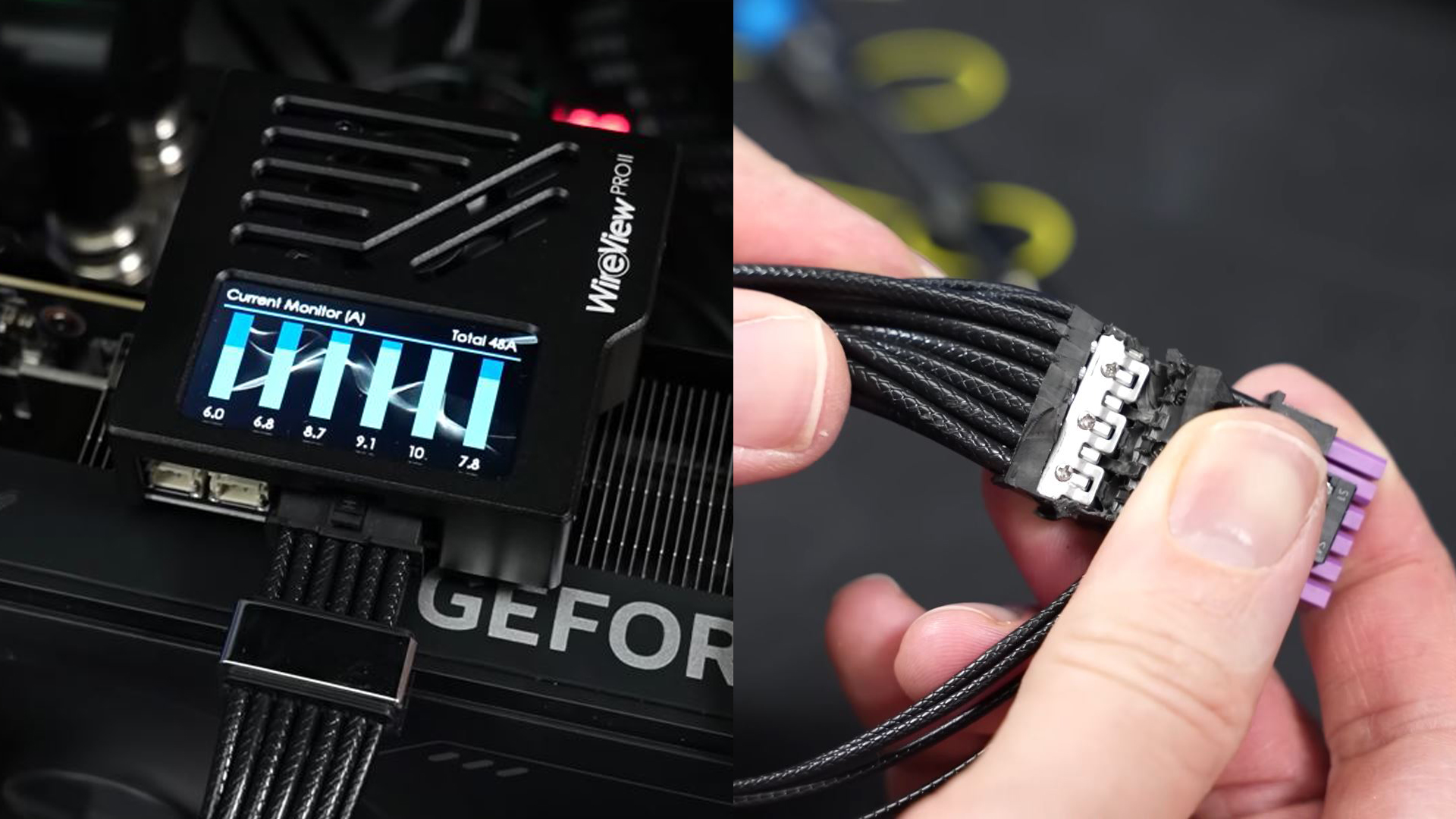
In a recent demonstration, hardware overclocker and YouTuber Der8auer put the ROG Equalizer cable under the microscope using an RTX 5090 and a WireView Pro II to monitor how evenly current is distributed across the connector’s pins. The results were surprising. Instead of producing consistently balanced power delivery, the cable showed notable current imbalance across the pins—and in some situations, it actually performed worse than conventional 12V-2×6 cables.
One of the more concerning observations was inconsistency. Der8auer reported that simply disconnecting and reconnecting the cable could change the load distribution pattern. In some runs, he recorded up to a 4A difference between the most-loaded and least-loaded pin, enough to trigger warnings on the monitoring hardware about uneven load.
After investigating further, the issue appeared to come down to the cable’s design. What looks like a “cable comb” on the ROG Equalizer isn’t just a tidy organizer—it functions as an electrical bridge. According to Der8auer’s findings, that bridge introduces extra resistance into the circuit. In practical terms, it adds about 1–2 mΩ on top of the resistance already present from the PSU-side connector, the GPU-side connector, and the wire itself. That additional resistance can influence how the current divides between conductors, which helps explain why the “equalizing” behavior didn’t match the marketing message.
To confirm the bridge’s impact, Der8auer removed it. The bridge he referenced connects the wires across the top row, with another insulated bridge joining the bottom row wires. After disconnecting the bridging components and insulating the wires, he tested the setup again. This time, the current sharing improved significantly: the highest-loaded pin carried 8.9A while the lowest-loaded pin carried 7.5A, a much tighter spread than before.
Beyond the electrical behavior, the bridge also brings practical downsides for case builds. Der8auer pointed out that it makes the cable stiffer and reduces flexibility near the connector, which can make routing harder and may require more clearance—an immediate headache in tighter cases or when trying to avoid sharp bends near the GPU power input.
There’s also a connector-material concern. The ROG Equalizer reportedly uses gold-plated pins, while many standard 12V-2×6 solutions use tin-plated pins. Tin-on-tin contact is common because many GPU-side connector pins are also tin-plated. Mixing plating types can be problematic over time; Der8auer suggested that gold-plated pins paired with tin-plated mating surfaces could contribute to wear or damage on the GPU connector and may increase oxidation risk depending on conditions.
For PC builders and enthusiasts shopping for a 12V-2×6 cable—especially those powering high-end GPUs—this testing is a reminder that “improved load balancing” isn’t just a tagline. Small design choices, added resistance, connector plating, and even cable stiffness can have real consequences for stability, thermals, and long-term reliability.
As always, if you’re troubleshooting GPU power issues or planning a new build, it’s worth paying attention to independent measurements of current distribution, not just product claims—particularly with the latest generation of high-power graphics cards where every amp and every milliohm can matter.