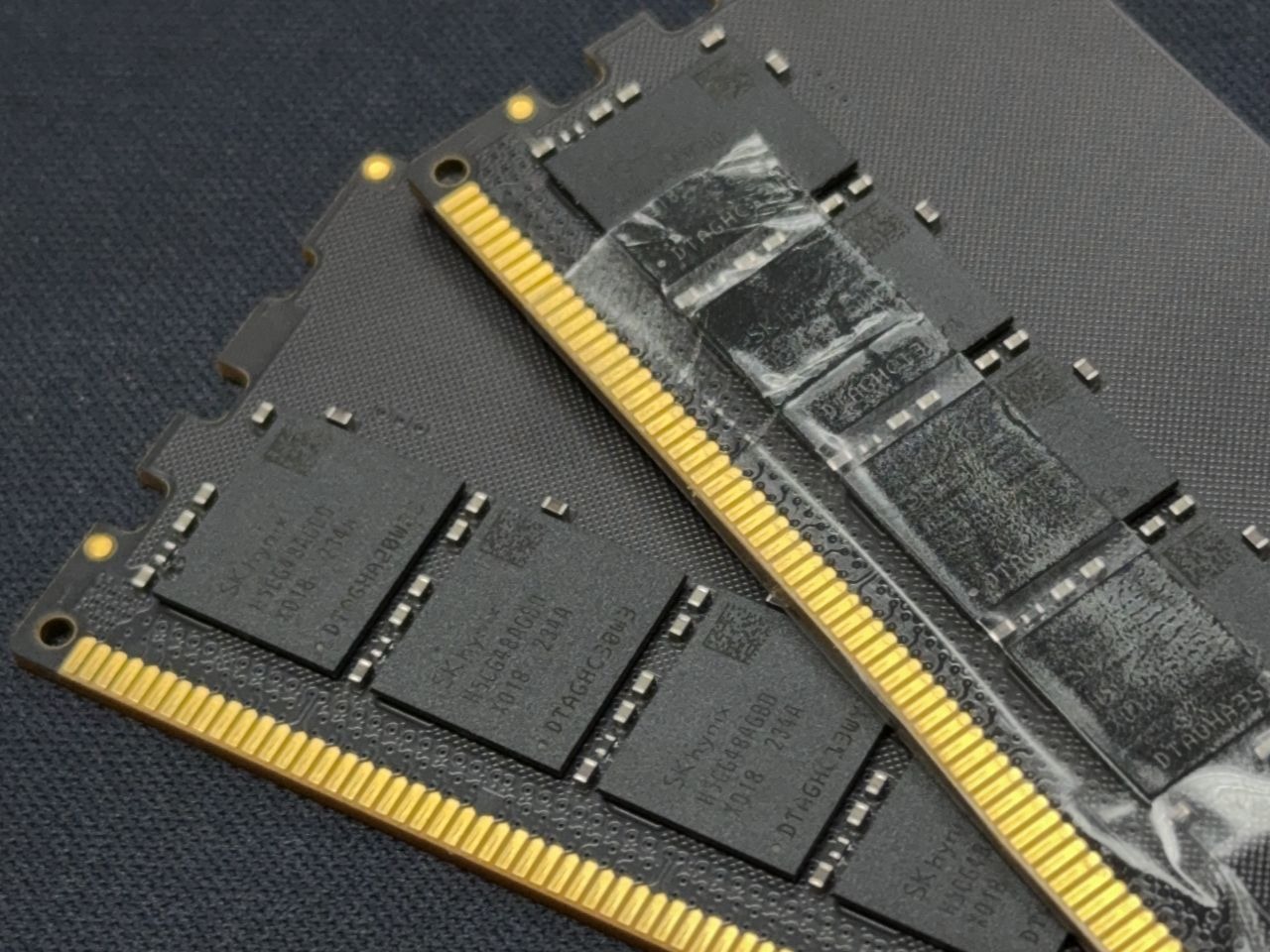
Rising Memory Prices Could Put Pressure on Dell’s PC and Server Business Through Early 2027
Surging demand for AI hardware is reshaping the memory market, and Dell could feel the impact more strongly in the coming quarters. According to investment bank UBS, higher DRAM and NAND costs are expected to place increasing pressure on the PC, server, and storage markets in the second half of 2026 and into the first quarter of 2027.
UBS recently raised its price target for Dell shares to $440 from $243 while also increasing its earnings estimates for fiscal 2027 and fiscal 2028. The upbeat outlook follows Dell’s strong fiscal first-quarter results, which were fueled heavily by explosive growth in AI server demand.
Dell reported quarterly revenue of $43.84 billion and earnings per share of $4.86. Revenue rose 88% year over year, while net income climbed to $3.44 billion, up sharply from $965 million in the same period a year earlier. The biggest driver was Dell’s AI server business, where revenue surged 757% annually as enterprises continue investing aggressively in artificial intelligence infrastructure.
However, the same AI boom that is lifting Dell’s server sales is also creating challenges across the supply chain. High-bandwidth memory, DRAM, and NAND are in heavy demand because they are essential components for AI GPUs, data centers, PCs, and storage systems. As a result, memory supply has tightened significantly, pushing prices sharply higher in several regions.
Industry data suggests that memory prices have climbed by as much as 414% in some markets. PC makers have also faced steep cost increases, with memory prices reportedly rising around 110% as companies rush to secure supply. This tight environment has encouraged some buyers to place orders earlier than usual, contributing to stronger PC shipment activity in 2026.
UBS noted that Dell’s supply chain has so far handled the sharp rise in DRAM and NAND pricing effectively. Even with component costs climbing, Dell has been able to benefit from powerful AI server demand and strong execution. Still, the bank warned that the cost impact is likely to become more severe over the next two to three quarters.
The key concern is margin pressure. Dell’s earnings outlook depends not only on revenue growth, but also on how well the company can protect gross margins as component costs rise. UBS said Dell’s valuation multiple could be affected if higher memory prices and product mix changes reduce profitability across PCs, servers, and storage.
While memory price increases may begin to moderate after the first quarter of 2027, UBS does not expect a major price decline that would quickly relieve margin pressure. In other words, the worst of the price acceleration may eventually pass, but elevated memory costs could remain a challenge for longer than some investors expect.
Dell executives have also acknowledged the difficult pricing environment. During the company’s earnings call, chief operating officer Jeff Clarke said the rapid rise in component costs has forced Dell to adjust product pricing quickly. He pointed to inflation across several categories, including fuel, raw materials, DRAM, NAND, and CPUs, saying the pace of change is unlike anything the company has seen before.
This creates a complicated picture for Dell. On one hand, demand for AI servers remains exceptionally strong, giving the company a major growth engine. On the other hand, the same AI-driven demand is tightening the memory supply chain and raising costs for the broader hardware industry.
For PC buyers, server customers, and enterprise IT teams, the message is clear: memory pricing could remain a major factor in hardware costs through early 2027. For Dell, the challenge will be balancing strong AI server momentum with rising component expenses while protecting margins in its core PC and infrastructure businesses.
If Dell continues to manage supply constraints effectively, it could remain one of the biggest beneficiaries of the AI infrastructure boom. But with DRAM and NAND prices expected to stay elevated, investors and customers alike will be watching closely to see how much of the cost pressure the company can absorb, and how much will be passed on through higher product prices.