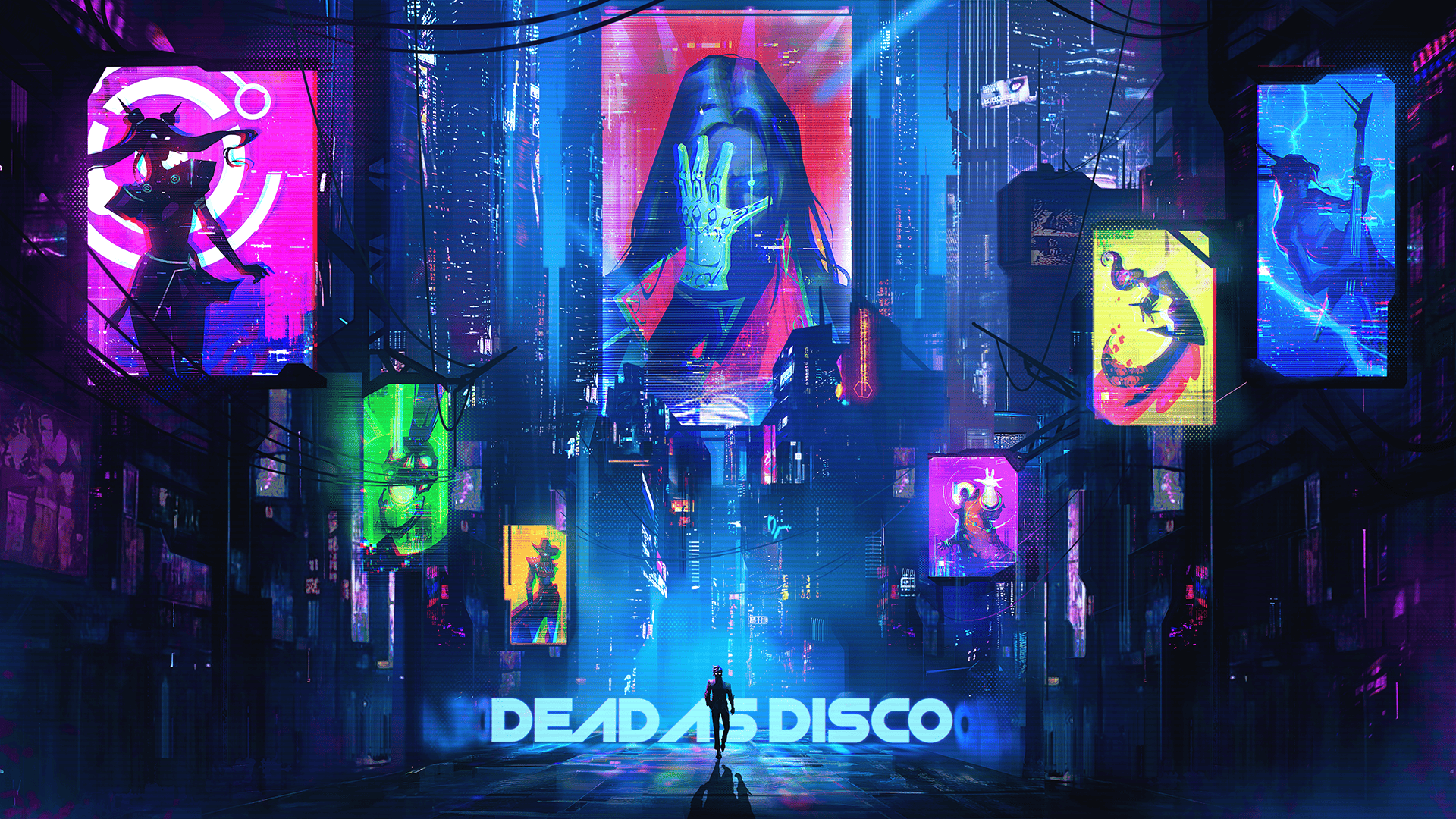
Dead as Disco wears its premise like a neon sign: a band loses its drummer, the drummer dies, then comes back a decade later with one goal—track down the truth and punch his former bandmates into getting the group back together. You play as Charlie Disco, freshly returned from the afterlife and not exactly in the mood for a calm reunion tour. It’s a classic revenge setup with hints that the rest of the band knows more than they’re admitting, even if the story still feels like it’s finding its footing because the game is in early access.
Right now, the narrative mainly exists to push you through each character’s stage, encouraging you to replay levels and hunt for hidden items that unlock extra dialogue and memories. From the time spent with the current build, Hemlock (the bassist) seems to have the most complete story arc so far, but it’s easy to imagine the rest filling out as the full 1.0 release approaches.
In this version, Charlie’s band includes four other members: Hemlock, a giant punk-rock skull guy with a juvenile streak and a nonstop supply of crude jokes; Arora, an AI-powered vocaloid-style robot vocalist; Dex, a cyberpunk emo kid who’s more machine than human; and Prophet, the group’s rapper. They all have distinct personalities, and the game clearly has bigger plans—there are signs that even more band members are intended to join later—but not everyone feels fully developed just yet.
Where Dead as Disco really starts to shine is in its structure: each bandmate functions as a playable boss stage, and each stage has its own hook. Hemlock’s level throws you into a graffiti-soaked nightclub before shifting into a subway train sequence that feels ripped from classic side-scrolling brawlers. Prophet’s stage adds chaos with hazards like dashing cars you’ll need to dodge, while Arora’s level escalates with a massive astral version of her bombarding you with projectiles. Dex’s stage tightens the space, forcing fights into cramped hallways before building to a last stand against relentless waves on top of a cybernetic ziggurat. The variety makes stages memorable, and the hidden collectibles add real replay value for anyone who likes unlocking every last secret.
The combat is fast, flashy, and clearly built around rhythm. You’re rewarded for attacking on beat, giving the whole experience a satisfying musical momentum—part rhythm game, part brawler. The fighting blends combo juggling with movement and defense, asking you to sway, dodge, and parry as enemies come from multiple directions. There’s a heavy influence from freeflow-style combat, and when everything clicks, it feels great.
That said, there are a few early access rough spots. Movement and quick direction changes usually behave, but occasionally inputs don’t seem to register the way you expect, which can lead to taking hits that feel avoidable. Whether that gets patched out or turns out to be a “get good” learning curve remains to be seen, but it’s noticeable in the current build.
The soundtrack is one of the game’s strongest assets, though it also feels like the place where the game is still figuring out what it wants to be. Each band member represents a different music genre, which is a fun concept and gives stages their own flavor. Some tracks fit their characters perfectly—Prophet’s Mission works well, Dex’s Echolokators leans into emo/industrial metalcore energy, and Arora’s songs land about how you’d expect for an AI pop performer.
Other choices are more confusing. Hemlock, who practically screams punk attitude, ends up fighting to a cover of Maniac, which clashes with the character’s whole vibe, even if Authority suits him much better. There’s also a moment of disappointment on the setlist with Mensch Machine, which turns out to be more of a heavy industrial knockoff than what the name might lead some players to expect. More broadly, despite the title, there isn’t a huge amount of disco-inspired music in the mix aside from Just Dance by Bad Computer.
One track stands out for the wrong reasons: Big and Rich by Novul, a rap song dressed up with faux-country elements and a hook that veers into awkward, crude territory. It’s a baffling inclusion in an otherwise solid soundtrack and feels like a tonal mismatch compared to the rest of the game’s style.
The best feature, and the one that could give Dead as Disco serious staying power, is its challenge mode. It offers a stack of trials that help you unlock items, push story progress, and rebuild your rundown hideout bar, The Encore. Even better: you can import your own MP3s into the game. That turns challenge mode into a personal rhythm-brawler sandbox, and it’s where the concept truly takes off.
Imported tracks can feel shockingly natural in the system. Neverender by Justice featuring Tame Impala fits perfectly, but the fun part is discovering what else works. Disco-leaning electropop is an obvious win, yet heavier picks can also land—Static-X tracks can be a blast, and electronic genres like psytrance end up feeling especially at home once the punches start syncing with the beat. The result is a game that’s not only fun to play, but also fun to experiment with as you test different songs and see how the combat “dances” to each one.
Overall, Dead as Disco is shaping up to be a strong rhythmic brawler with a creative stage structure, satisfying on-beat combat, and a standout custom music feature that makes challenge mode dangerously replayable. The boss-stage cutscenes have style, and it’d be great to see the game lean more into those for storytelling rather than relying on simpler storyboards that currently lack voice lines. With tighter polish, deeper character arcs, and a few soundtrack adjustments, this could evolve into something special.
Dead as Disco is available now in early access for Windows PC via Steam.