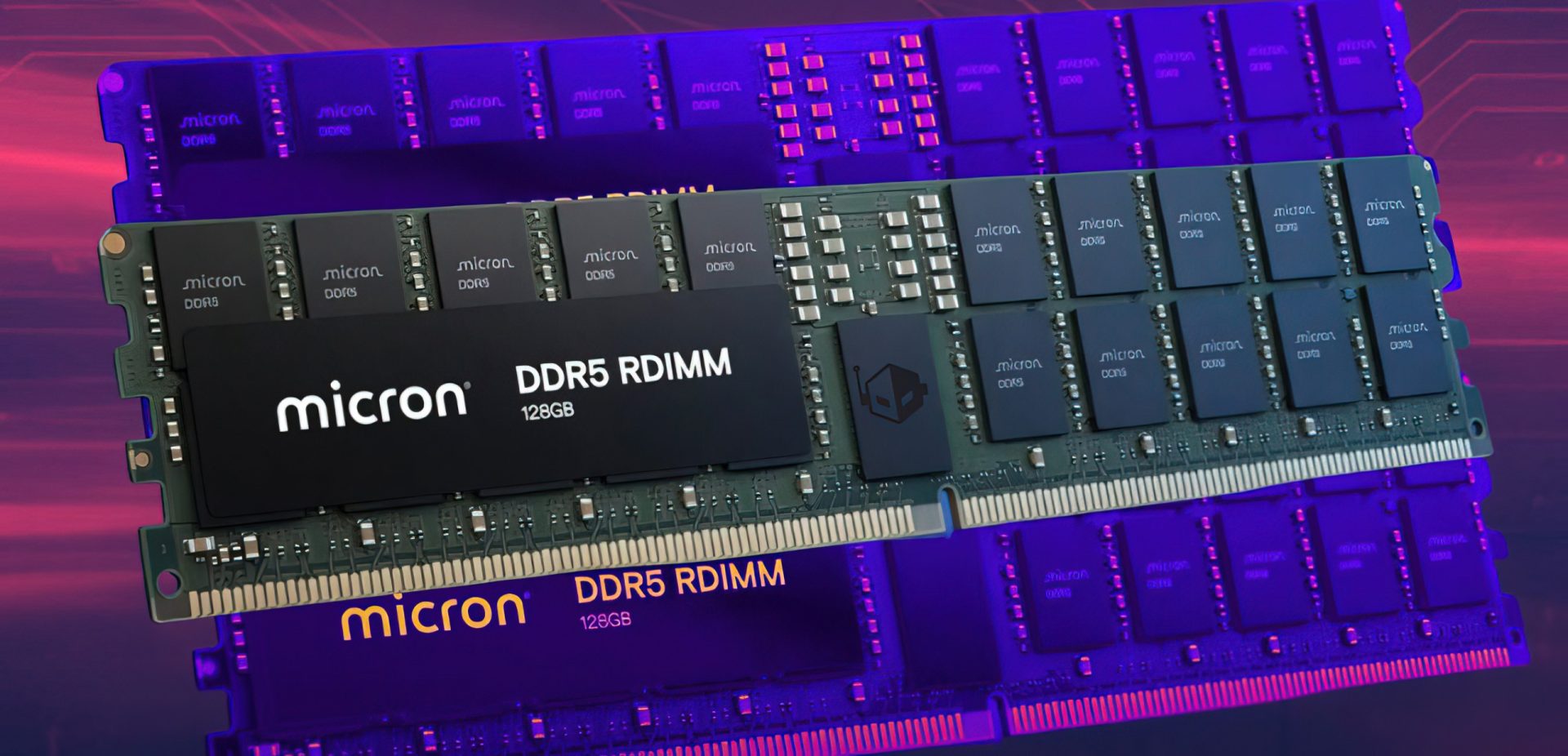
DDR5 MRDIMM adoption is accelerating as AI servers demand more memory bandwidth
DDR5 MRDIMM memory is quickly becoming a major focus for the server and data center market as demand for faster compute platforms continues to rise. With artificial intelligence, high-performance computing, cloud infrastructure, and accelerated workloads pushing systems harder than ever, memory bandwidth has become one of the biggest priorities for next-generation platforms.
Traditional DDR5 RDIMMs have served the server market well, but MRDIMMs, or Multiplexed Rank Dual In-Line Memory Modules, are designed to deliver much higher bandwidth while staying within the DDR5 memory ecosystem. This makes them especially attractive for data centers that need stronger performance without waiting for a full transition to future DDR6 memory standards.
The first generation of DDR5 MRDIMMs has already entered the market with speeds above 8,000 MT/s. Now, second-generation DDR5 MRDIMMs are moving into production with significantly faster speeds, and third-generation solutions are already being prepared for the next wave of server platforms.
The latest DDR5 MRDIMM roadmap shows a sharp jump in bandwidth. Intel is expected to be among the first to support 8,800 MT/s MRDIMMs on its Xeon 6 server platforms, while AMD is targeting support for DDR5 MRDIMM speeds up to 12,800 MT/s.
That 12,800 MT/s level marks a major improvement over DDR5-8000 RDIMMs, offering up to 60% more bandwidth. For AI training, inference, large databases, virtualization, and HPC workloads, this added bandwidth can help reduce bottlenecks and keep powerful CPUs better fed with data.
Some second-generation MRDIMM modules are already listed with speeds of 12,800 MT/s. These modules use MRCD and MDB technologies to enable higher transfer rates while keeping the compact DDR5 DIMM form factor. They are designed for server-class reliability and include ECC support, registered memory functionality, and densities ranging from 32 GB to 128 GB.
Typical specifications for these DDR5 MRDIMMs include a 287-pin design, x80 bus width, 1.1V operating voltage, and support for operating temperatures up to 95°C. Features such as anti-sulfuration protection and gold fingers are also included to improve durability in demanding server environments.
Micron pushes second-generation MRDIMMs up to 14,400 MT/s
The race for higher DDR5 server memory bandwidth does not stop at 12,800 MT/s. Micron has also listed its own second-generation MRDIMM solution with speeds up to 14,400 MT/s. That represents an 80% bandwidth uplift compared to DDR5-8000 RDIMMs.
Micron’s 14,400 MT/s MRDIMM memory is listed with CL58 timings, a 1.1V operating voltage, and 24 Gb ICs, enabling 96 GB module capacities. Additional capacities and denser configurations are expected as the technology matures and adoption expands across enterprise platforms.
For modern data centers, this kind of bandwidth increase is extremely important. As CPUs add more cores and AI accelerators become more common, memory subsystems must scale to prevent performance limits. MRDIMM technology is one of the key ways server platforms can improve throughput while continuing to use DDR5-based infrastructure.
While second-generation MRDIMMs are entering production, work on third-generation DDR5 MRDIMM technology is already underway. Renesas has announced a Gen 3 MRDIMM chipset designed to support DDR5 server memory speeds up to 16,000 MT/s.
This would provide up to 25% more bandwidth than second-generation 12,800 MT/s MRDIMMs and double the performance level of DDR5-8000 RDIMMs. The company says its third-generation MRDIMM solutions are not only focused on raw speed but also on improving system-level power efficiency.
That combination of higher bandwidth and better efficiency is especially important for AI data centers, where power consumption and cooling are major operating costs. Faster memory can help improve overall system utilization, while better efficiency can reduce strain on large-scale deployments.
The new Gen 3 MRDIMM chipset solutions include MRCD and MDB components designed for upcoming server memory modules. These parts are currently being sampled to select customers, with production availability expected in the second half of 2027.
AMD expected to be a major supporter of future MRDIMM platforms
AMD is expected to be one of the key companies driving MRDIMM adoption in future server platforms. The company has already outlined support for DDR5-12800 MRDIMMs in its upcoming Zen 6-based Venice and Verano platforms.
Looking further ahead, future AMD server lineups could take advantage of third-generation MRDIMMs as the technology reaches 16,000 MT/s. This would align well with the growing bandwidth demands of AI, HPC, enterprise cloud, and large-scale compute workloads.
AMD has emphasized the importance of open, standards-based technologies for data center innovation. Next-generation memory form factors such as MRDIMM are expected to play an important role in improving platform scalability, efficiency, and bandwidth for future enterprise systems.
Why DDR5 MRDIMM matters for AI, cloud, and HPC
The shift toward MRDIMM memory is happening because modern workloads are becoming increasingly memory-hungry. AI models need fast access to massive datasets. Cloud servers must handle more users and more virtual machines. HPC systems require high throughput for scientific simulation, analytics, and engineering workloads.
As CPUs continue to gain more cores and higher performance, standard memory configurations can struggle to keep up. MRDIMMs help solve this by increasing bandwidth without requiring a completely new memory generation.
This gives server makers and data center operators a practical upgrade path. Instead of waiting for DDR6, platforms that support DDR5 MRDIMM can gain major bandwidth improvements while remaining within the current DDR5 ecosystem.
With first-generation modules already available, second-generation DDR5 MRDIMMs reaching 12,800 MT/s and 14,400 MT/s, and third-generation designs targeting 16,000 MT/s, MRDIMM technology is set to become a major part of the next era of server memory.
As AI and accelerated computing continue to expand, DDR5 MRDIMMs are positioned to play a crucial role in delivering faster performance, higher bandwidth, better efficiency, and stronger scalability for future data center platforms.