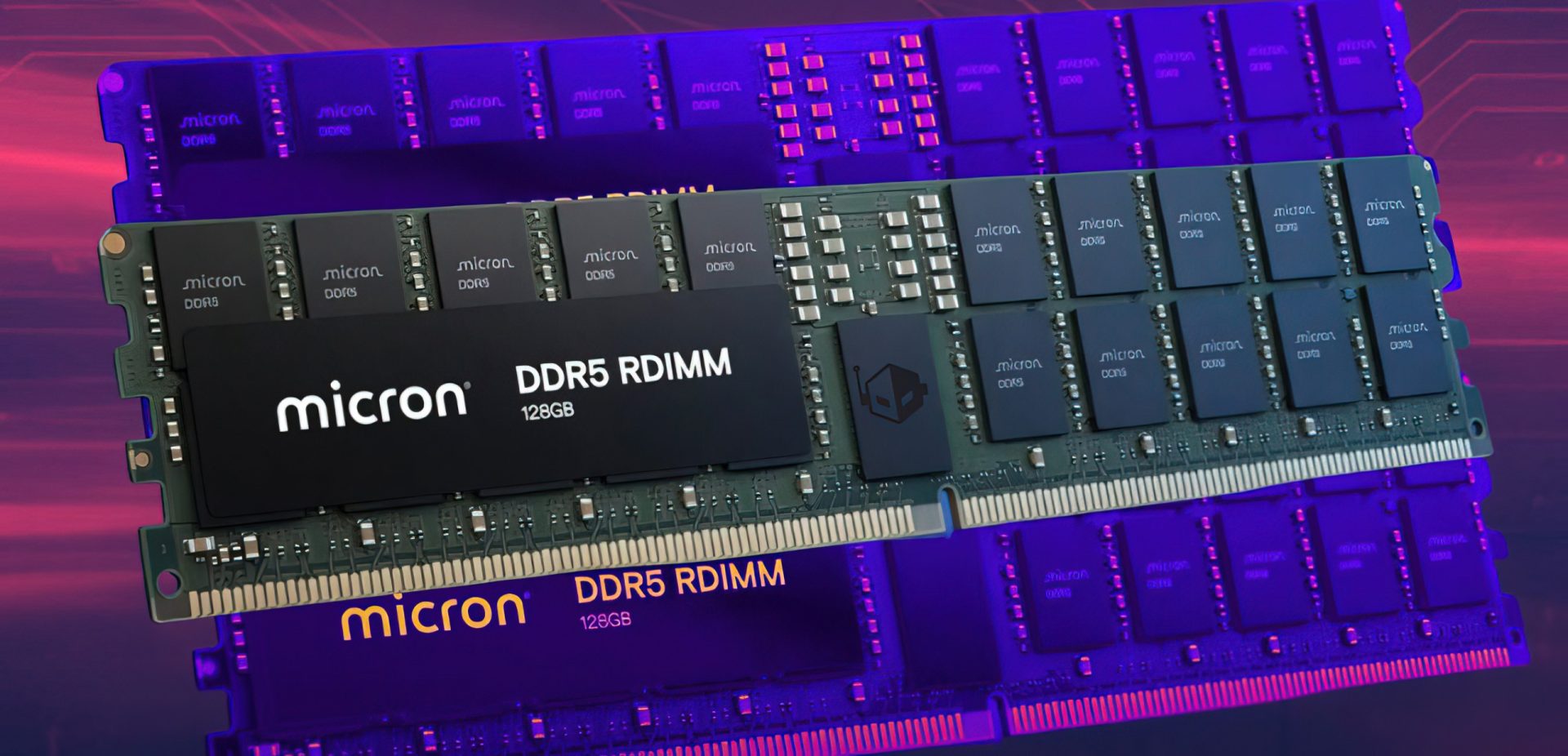
DDR5 MRDIMMs could bring DDR6-class bandwidth to existing server platforms
DDR5 MRDIMMs are shaping up to be one of the most important memory upgrades for modern data centers, especially as AI, high-performance computing, and cloud workloads demand faster access to larger pools of memory. Instead of waiting for DDR6 and the platform changes that come with it, MRDIMMs aim to push DDR5 far beyond standard speeds while keeping compatibility with existing server memory slot designs.
MRDIMM stands for Multiplexed Rank Dual Inline Memory Module. Unlike a standard DDR5 RDIMM, an MRDIMM uses an on-module multiplexer along with buffer and control logic to manage data across multiple memory ranks more efficiently. This design allows the memory module to deliver much higher bandwidth between the CPU and memory without requiring a completely new physical interface.
In simple terms, DDR5 MRDIMMs are designed to make current and upcoming servers feel much closer to what users might expect from future DDR6 memory. That is a major advantage for data center operators, because memory bandwidth has become one of the biggest bottlenecks in AI training, AI inference, analytics, simulation, virtualization, and other compute-heavy workloads.
The first generation of DDR5 MRDIMMs already reached speeds of 8,800 MT/s with capacities of up to 256 GB. These modules were introduced with Intel’s Xeon 6 platform, known by the codename Granite Rapids. Compared with standard DDR5 RDIMMs, which officially top out around 6,400 MT/s under JEDEC specifications, first-generation MRDIMMs offer a significant bandwidth uplift.
The second generation is expected to raise speeds to 12,800 MT/s, effectively doubling the bandwidth offered by standard DDR5 RDIMMs. A third generation is projected to reach up to 17,600 MT/s around 2030, making it nearly three times faster than the fastest standard DDR5 server memory available today.
That roadmap is especially important because DDR6 is still several years away. DDR6 is expected to arrive around the 2028 to 2029 timeframe, but adopting it will likely require new server platforms, new memory slots, and higher infrastructure costs. For large data centers, that kind of transition is expensive and time-consuming.
DDR5 MRDIMMs offer a more practical path. They provide a way to increase memory bandwidth dramatically without forcing companies to redesign their entire server infrastructure. For enterprises managing thousands of servers, that could mean better performance, longer platform lifespans, and a smoother upgrade cycle.
Industry analysis suggests that DDR5 MRDIMMs may deliver bandwidth levels comparable to early DDR6 generations. If that proves accurate, server operators may be able to delay a full DDR6 transition while still meeting the needs of demanding workloads. This is particularly valuable as AI models continue to grow in size and require faster memory access to avoid slowing down expensive CPUs and accelerators.
Intel is expected to continue supporting the technology with its upcoming Diamond Rapids Xeon 7 processors, which are reportedly set to use second-generation DDR5 MRDIMMs. AMD is also expected to support MRDIMM technology with future EPYC Venice processors based on the Zen 6 architecture. Meanwhile, AMD’s Verano platform is expected to use LPDDR5X memory, likely due to its focus on AI inference efficiency.
The growing support from both major server CPU vendors shows that MRDIMM is not just a temporary workaround. It is becoming a key part of the data center memory roadmap. Its open standard approach also makes it attractive for wider industry adoption, giving server manufacturers and memory suppliers a clear path to build faster, higher-capacity systems.
As AI and compute workloads continue to expand, memory performance will matter more than ever. Faster CPUs alone are not enough if data cannot move quickly between memory and the processor. DDR5 MRDIMMs address that challenge by increasing bandwidth, improving efficiency, and enabling higher capacity without demanding an immediate shift to DDR6.
For data centers looking to extend the life of DDR5 platforms while preparing for the next wave of AI and high-performance computing, MRDIMMs could become one of the most valuable upgrades of the decade.