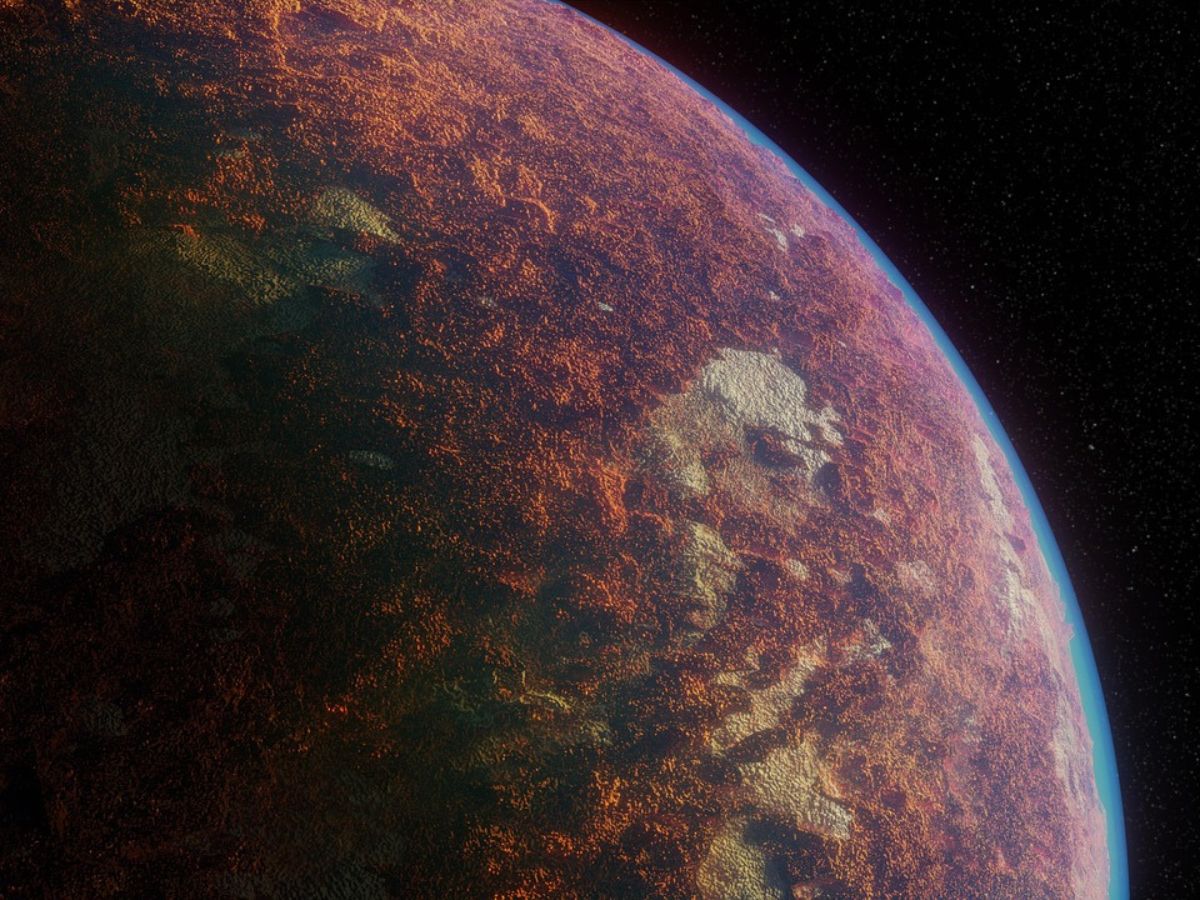
Auroras found on a planet outside our solar system: a breakthrough for astronomy
The James Webb Space Telescope has helped scientists spot auroras on a world far beyond the Sun’s reach—an astonishing find that reshapes how we think about magnetic fields and weather on alien planets. The phenomenon, similar to Earth’s northern lights, was detected on SIMP-0136, an unusual object about 20 light-years away.
SIMP-0136 stands out because it doesn’t orbit a star. Once classified as a brown dwarf, it drifts through space on its own, making it more like a rogue planet than a typical exoplanet. That independence makes the discovery even more surprising: auroras are usually powered by interactions with a star’s charged particles. Yet researchers at Trinity College Dublin used the James Webb Space Telescope to monitor subtle changes in SIMP-0136’s brightness and found clear signs of auroral activity without any nearby star.
What’s driving these lights? The team reports that SIMP-0136 hosts an exceptionally strong magnetic field capable of generating auroras on its own. Webb’s observations also revealed that the upper atmosphere is warmer than the layers below, a hallmark of auroral heating. Temperature changes were measured at less than 5 °C, indicating localized warming tied to the auroras. In addition, the object’s clouds appear to be made of silicate particles—tiny mineral grains that can form high-altitude hazes and clouds on hot, gas-rich worlds.
Why it matters
– First evidence of aurora-like activity on a free-floating world highlights how powerful magnetic fields can sculpt alien atmospheres.
– Detecting upper-atmosphere heating and silicate clouds offers a rare window into weather patterns beyond the solar system.
– The results expand our understanding of how planets and brown dwarfs behave without the influence of a parent star.
Launched in 2021, the James Webb Space Telescope continues to reveal the hidden physics of distant worlds with unprecedented precision. SIMP-0136 is now a prime target for follow-up studies, and scientists expect more surprises as they probe its magnetic environment, cloud layers, and atmospheric chemistry. This discovery not only brings us closer to understanding rogue planets but also opens new paths for studying auroras across the galaxy.


