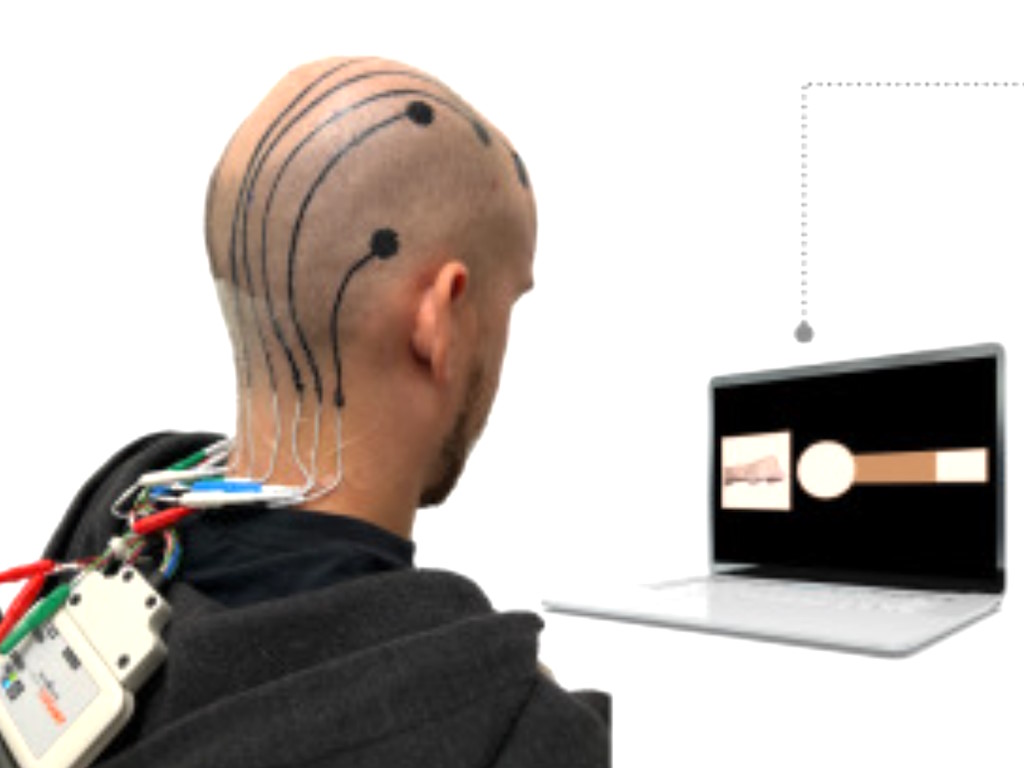
Researchers from the University of Texas and UCLA have pioneered an innovative 3D printing technique to create EEG tattoos directly on the scalp. These groundbreaking tattoos are crafted from conductive polymers, serving the same purpose as traditional EEG caps. This cutting-edge development offers an exciting alternative for brain-computer interface users, enabling the mind to control electronic devices, robots, and immerse into virtual reality with remarkable precision.
Unlike implanted BCIs, which carry risks such as infection and rejection, the new EEG tattoos provide a non-invasive solution. Traditional EEG caps tend to be bulky and can become uncomfortable over time. Additionally, they often require wet-gel electrodes that dry out and limit usability. The newly developed EEG tattoos boast a lightweight and comfortable design, offering extended use without these drawbacks.
The secret to this revolutionary approach lies in the polymer called PEDOT:PSS. This conductive material can be sprayed as a liquid onto the scalp, forming a network of electrodes. The entire process is swift—the robotic microjet printer can apply ten electrodes in just ten minutes. After a brief five-minute calibration, the system is ready to capture brain signals. This rapid setup is a significant improvement over the cumbersome process of fitting a traditional EEG cap.
Despite this progress, it’s important to note that while the EEG tattoos can match the traditional EEG’s capabilities, neither surpasses the accuracy of implanted BCIs. Nonetheless, the potential for artificial intelligence to enhance the interpretation of these signals could bridge some of this gap, offering an exciting future for mind-controlled technologies.
For those interested in exploring this technology further, videos detailing the printing process are available in the researchers’ published work. As technology continues to advance, innovations such as the SereniBrain headband, equipped with built-in EEG sensors, present a practical way to monitor brain relaxation, making these technologies accessible for stress relief and mental well-being.
This development in EEG technologies showcases a significant leap forward, enabling a more comfortable and user-friendly experience for those engaging with brain-computer interfaces and mind-controlled systems. This progression not only reduces the inconvenience associated with traditional methods but opens doors to broader applications in healthcare and beyond.