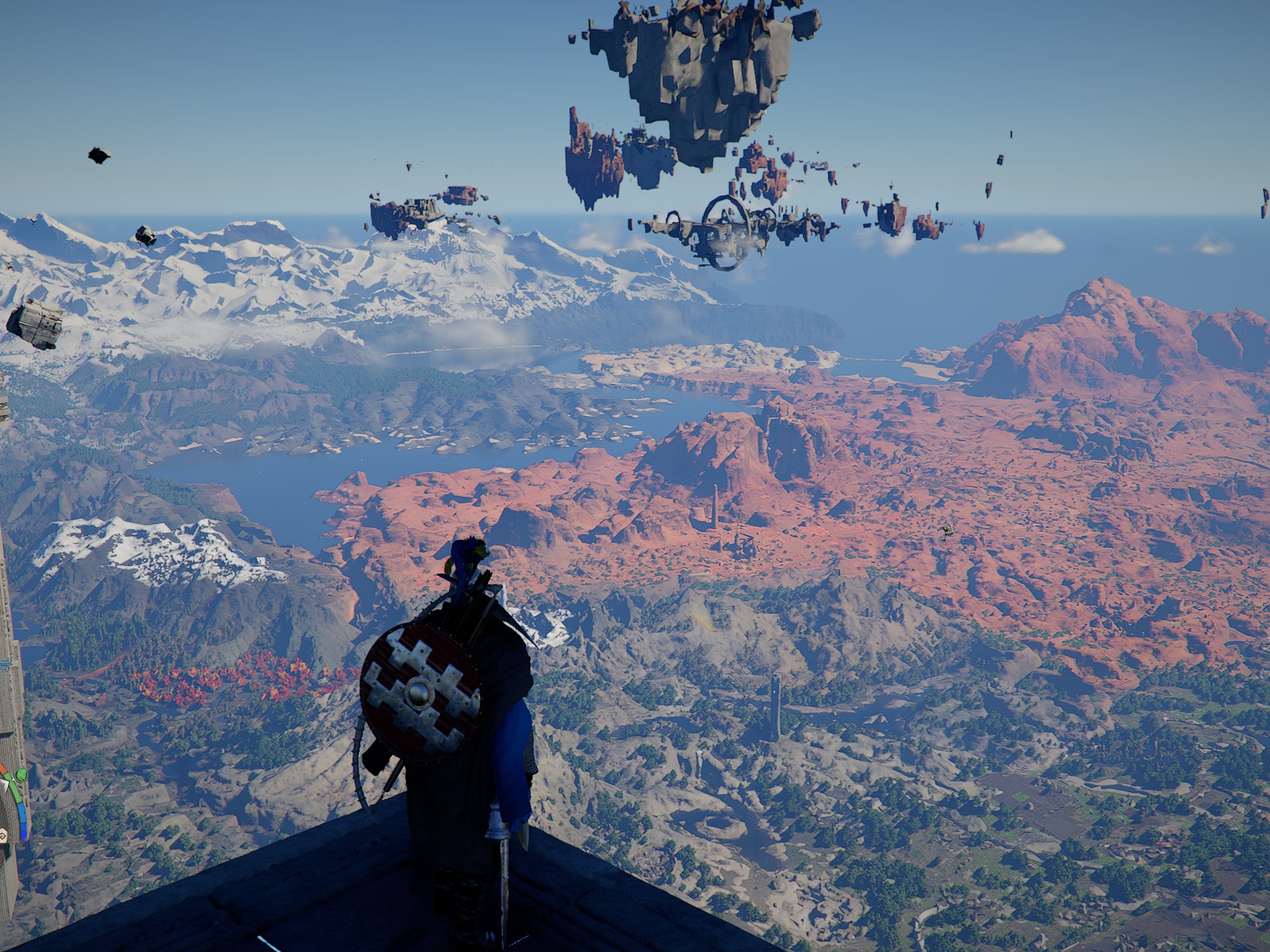
A lot has already been said about Crimson Desert, and it’s easy to see why. This isn’t an attempt to deliver a final verdict on whether it’s “good” or “bad.” What stands out right now is something more interesting: Crimson Desert looks like the kind of game that could become essential playing for anyone who wants to see where modern open-world games are heading. Even for players who prefer to wait for a discount, it still feels like a title worth experiencing simply to understand the current direction of the industry.
In terms of ambition, Crimson Desert has the potential to sit near the top of the open-world conversation alongside other mega-budget releases. It’s packed with layered systems, a high level of complexity, intense boss fights, and even camp management that hints at longer-term progression beyond just completing missions. Everything about it suggests a “big swing” game—one that tries to do a lot at once, and do it at a scale designed to impress.
It’s also a game you can describe from multiple angles, which is often a sign of a project with wide appeal. Imagine a blend of Assassin’s Creed-style action and traversal mixed with the freeform experimentation and vertical exploration many players associate with Zelda: Tears of the Kingdom. At the same time, Crimson Desert carries DNA from its spiritual predecessor, Black Desert Online, and you can feel that heritage in how the world and its systems are structured—even though this time the story itself plays out in a more straightforward way.
That linear storytelling is one of the most noticeable design choices. There are no branching story paths and no options to steer key plot outcomes, which can occasionally feel like a missed opportunity. In moments where you might expect the freedom to negotiate, compromise, or strike a deal—like choosing to work with a criminal instead of turning them in—the game keeps you on rails. You experience the story through the main character, Kliff, in a vivid and personal way, but you’re not shaping his decisions.
Where Crimson Desert does offer freedom is in the systems and the moment-to-moment gameplay. You might not be able to avoid a conflict through diplomacy, but you can decide exactly how to fight when things inevitably turn violent. That kind of agency matters in an open-world action game, and it sounds like Crimson Desert is leaning hard into player creativity on the battlefield, rather than player choice in the narrative.
Beyond combat, there’s also the promise of building something over time. A camp awaits expansion, adding another layer to the experience and giving players a reason to invest in the world beyond the next mission marker. The game even lets you take control of other main characters within certain limits, using a character-switching approach that zooms in during the transition in a way that will feel familiar to fans of GTA V’s swapping system.
And yes, the comparisons to other major games don’t stop there. The moment you start dealing with flying through the Abyss or using wings, it becomes clear Crimson Desert borrows from popular open-world traversal trends—especially those associated with Breath of the Wild and Tears of the Kingdom. For some players, that familiarity will be a selling point. For others, it will raise the question every big open-world release faces: does it simply echo what came before, or does it evolve those ideas into something that feels new?
Either way, Crimson Desert is shaping up to be one of those conversation-defining open-world games—packed with systems, spectacle, and modern design ideas—whether you jump in on day one or decide to experience it when the price drops.