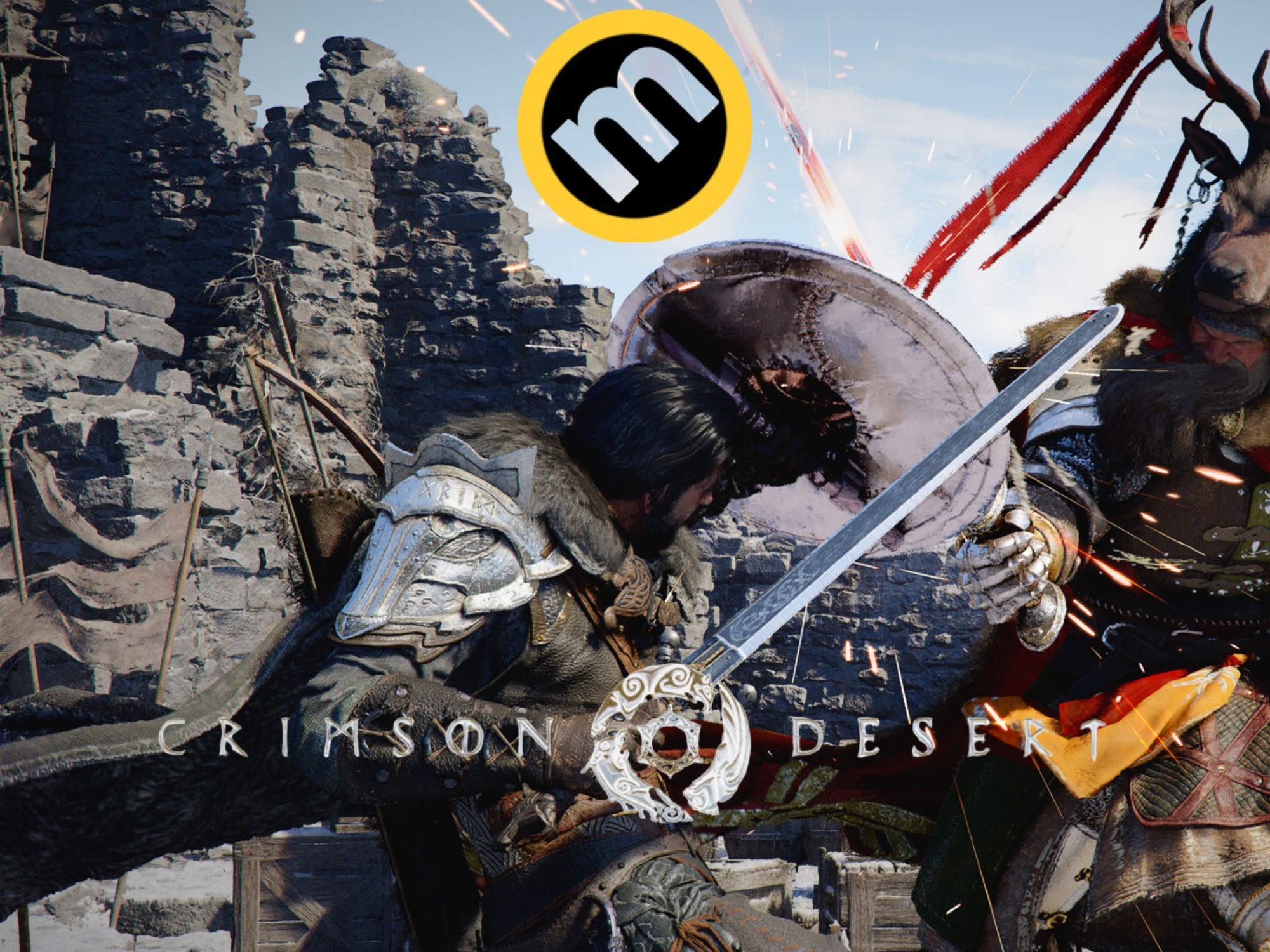
The wait is over for Crimson Desert reviews, and the first wave of critic scores is painting a clear picture: Pearl Abyss has delivered a visually ambitious open-world action RPG that impresses on a technical level, but it also comes with enough rough edges to divide players. Following the embargo lift, dozens of evaluations hit Metacritic, and after 82 critics weighed in, Crimson Desert is sitting at a 78 Metascore.
That score won’t automatically decide the game’s fate, but reviews still influence buying decisions, especially for a massive release in the open-world genre. And based on early impressions, Crimson Desert is shaping up to be exactly the kind of “love it or bounce off it” experience that sparks debate.
A huge open world with standout visuals, but not everyone loves how it plays
Most critics agree on one thing: Pywel is enormous, richly detailed, and genuinely rewarding to explore. The world design, graphics, and physics systems are frequently highlighted as major strengths, with many calling the game a technical achievement and a new benchmark for environmental detail in open-world games.
Interestingly, early reviews focusing on the PC version don’t emphasize major performance issues. So even when framerates are stable, other problems still surface—mostly tied to how the game feels in your hands and how clearly it guides you through everything it wants you to do.
Several reviews describe Crimson Desert as a “game of extremes,” praising its scale and artistry while criticizing an overabundance of systems that can feel unfocused. The result is a game packed with ideas, but not always streamlined in a way that makes those ideas shine.
Combat can be thrilling, frustrating, or both
Crimson Desert combat is one of the most debated parts of the experience. On the positive side, enemy variety pushes players to learn patterns, stay patient, and fight with intention. Some encounters demand real skill and can be satisfying to overcome.
At the same time, difficulty balance appears uneven. Some early bosses can feel punishing if you aren’t prepared, while later encounters may not maintain the same level of challenge. That swing can make progression feel inconsistent—especially for players who want combat to steadily evolve in depth and intensity.
Controls are another sticking point. Multiple critics warn about clunky inputs and an awkward layout that can take hours to truly get comfortable with, even if you remap buttons. For an action-heavy open-world RPG, that kind of friction can be a dealbreaker for players who prefer responsive, intuitive movement and fighting.
Story concerns may be justified
Before launch, one of the big concerns surrounding Crimson Desert was narrative quality, and reviews suggest those fears weren’t unfounded. There is a story to follow, but it can feel scattered across the game’s massive maps, making it harder to piece together in a satisfying way.
Some critics also point to bland characters who don’t elevate the script or leave a strong impression. In a genre where memorable companions and strong personalities often help carry long campaigns, flat characterization can make the overall storyline feel less urgent—even when the world itself is captivating.
Quality-of-life frustrations could wear players down
Beyond the combat and story, quality-of-life issues show up as another common complaint. Inventory management, in particular, is described as aggravating enough to push some players toward rage-quitting. Without storage boxes, item collection quickly becomes a space problem, and in a game built around exploration and loot, that kind of limitation can turn fun scavenging into tedious micromanagement.
The good news is that these sorts of issues are often fixable. If Pearl Abyss commits to meaningful patches, Crimson Desert could improve significantly over time, especially if the focus is on smoothing out controls, inventory flow, and other everyday annoyances that interrupt the adventure.
A technical achievement that could still become an obsession for the right player
Even with its flaws, Crimson Desert is getting plenty of praise for what it achieves technically. Many critics view it as a standout accomplishment in world detail, environmental design, and overall ambition. And while it may not be a guaranteed game-of-the-year contender for everyone, the upside is clear: players who aren’t deterred by clunky controls, uneven systems, or a less compelling narrative may find themselves completely absorbed in Pywel.
In other words, Crimson Desert may not be universally smooth, but it’s big, bold, and memorable—and for fans who prioritize exploration, spectacle, and large-scale open-world immersion, it might be hard to put down.


