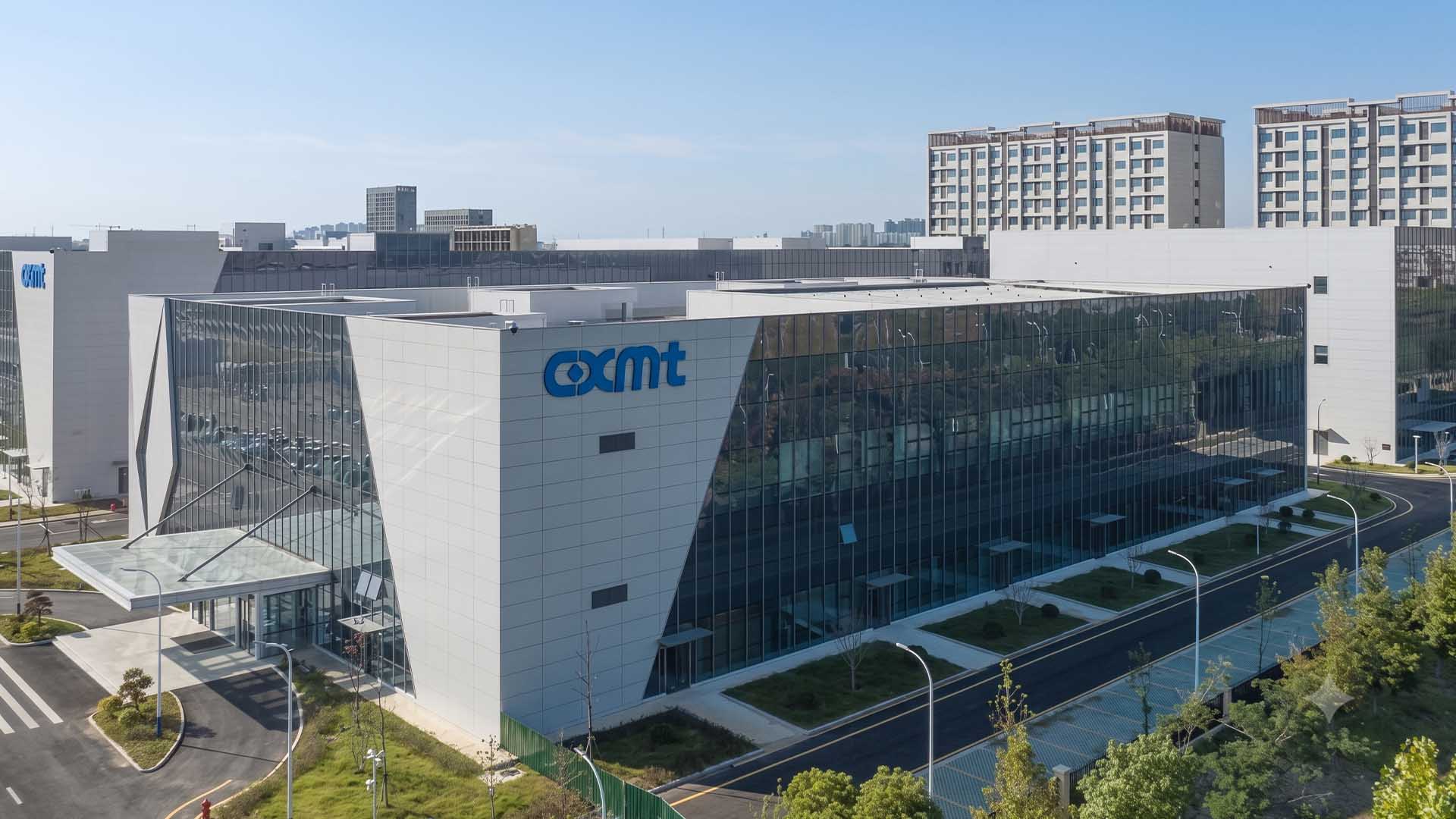
CXMT’s DRAM Growth Is Rising Fast, But It May Not Reshape the Global Memory Market Yet
China’s ChangXin Memory Technologies, better known as CXMT, has quickly become one of the most closely watched names in the global DRAM industry. Strong demand from artificial intelligence, cloud infrastructure, consumer electronics, and Chinese domestic technology companies has created a major opportunity for the memory chipmaker to expand its presence.
Even with rapid revenue growth and ambitious production plans, however, CXMT may still struggle to make a lasting impact on the broader global DRAM market over the next few years. A recent analysis from South Korea’s Hanwha Securities suggests that CXMT will help ease supply pressure, but it is unlikely to shift the market into oversupply or seriously challenge the dominance of Samsung, SK hynix, and Micron in the near term.
The global memory market has entered a powerful upcycle, largely driven by AI servers, high-performance computing, and rising demand for advanced DRAM products. As major memory suppliers focus more capacity on premium chips such as HBM and high-density server memory, supply conditions have tightened across the industry.
This environment has worked in CXMT’s favor. The company has benefited from strong local demand in China, where domestic electronics and technology firms are looking to reduce reliance on foreign semiconductor suppliers. Reports have also suggested that major global device makers have shown interest in CXMT’s products, underlining the company’s growing relevance.
CXMT’s recent growth numbers are striking. In the second quarter, the company reportedly became the fastest-growing memory manufacturer in the world by revenue growth. Its quarterly revenue surged 716% year over year, supported by expanding production capacity and strong demand from Chinese customers.
That kind of growth highlights how quickly CXMT is scaling. Still, its overall share of the global DRAM market remains relatively small compared with the industry’s three leading players.
According to Hanwha Securities, CXMT is expected to account for 6.7% of the global DRAM market in 2026. More importantly, the company is projected to contribute 11.3% of global DRAM supply growth that year. This means CXMT’s expansion will play a meaningful role in adding new supply to the market.
However, the report suggests that CXMT’s contribution to DRAM supply growth will slow in 2027. By then, larger manufacturers including Samsung, SK hynix, and Micron are expected to bring more capacity online. As a result, CXMT’s share of global DRAM supply growth is forecast to fall to 6.9% in 2027.
In other words, CXMT is growing quickly, but the biggest memory companies are also preparing major capacity expansions of their own. That could limit CXMT’s ability to gain significant global influence, even if its production volumes continue to rise.
The broader DRAM market is still expected to remain tight. Hanwha estimates that global DRAM supply will grow 22.4% in 2026 and 24.1% in 2027. Despite those increases, demand is expected to remain strong enough to keep the industry in shortage.
The firm’s sufficiency ratio estimates help explain the situation. This ratio measures how much of total DRAM demand can be met by available supply. With CXMT included, the global DRAM sufficiency ratio is expected to stand at -9.4% in 2026 and -5.6% in 2027. A negative figure indicates that supply remains below demand.
Without CXMT’s added production, the shortage would be even more severe. Hanwha estimates that the sufficiency ratio would fall to -15.5% in 2026 and -12% in 2027 if CXMT’s output were excluded.
This suggests that CXMT will matter to the global DRAM supply picture, but mainly as a company that reduces the scale of the shortage rather than one that changes the entire market balance.
For buyers, this means DRAM pricing could remain firm if demand continues to outpace supply. AI hardware, data centers, smartphones, PCs, and automotive electronics are all contributing to memory demand. As more devices require larger memory capacities and faster performance, the pressure on DRAM suppliers is likely to continue.
For CXMT, the next few years could be critical. The company has a chance to strengthen its domestic position, improve its technology, and become a more important supplier in the global memory chain. But catching up with the established DRAM leaders will require more than capacity expansion. It will also require progress in manufacturing efficiency, product quality, advanced process technology, and customer trust.
The main takeaway is clear: CXMT is becoming an increasingly important player in the DRAM industry, especially for China’s semiconductor ambitions. Its rapid growth is helping ease global memory shortages, and its production ramp will support supply expansion in 2026 and 2027.
Still, based on current projections, CXMT is not expected to dramatically disrupt the global DRAM market. The company’s rise is significant, but Samsung, SK hynix, and Micron remain far ahead in scale, technology, and global customer reach.
As AI demand continues to reshape the semiconductor industry, DRAM will remain one of the most important markets to watch. CXMT’s growth may not overturn the global memory hierarchy yet, but it adds another important layer to the evolving competition in one of the world’s most strategic technology sectors.