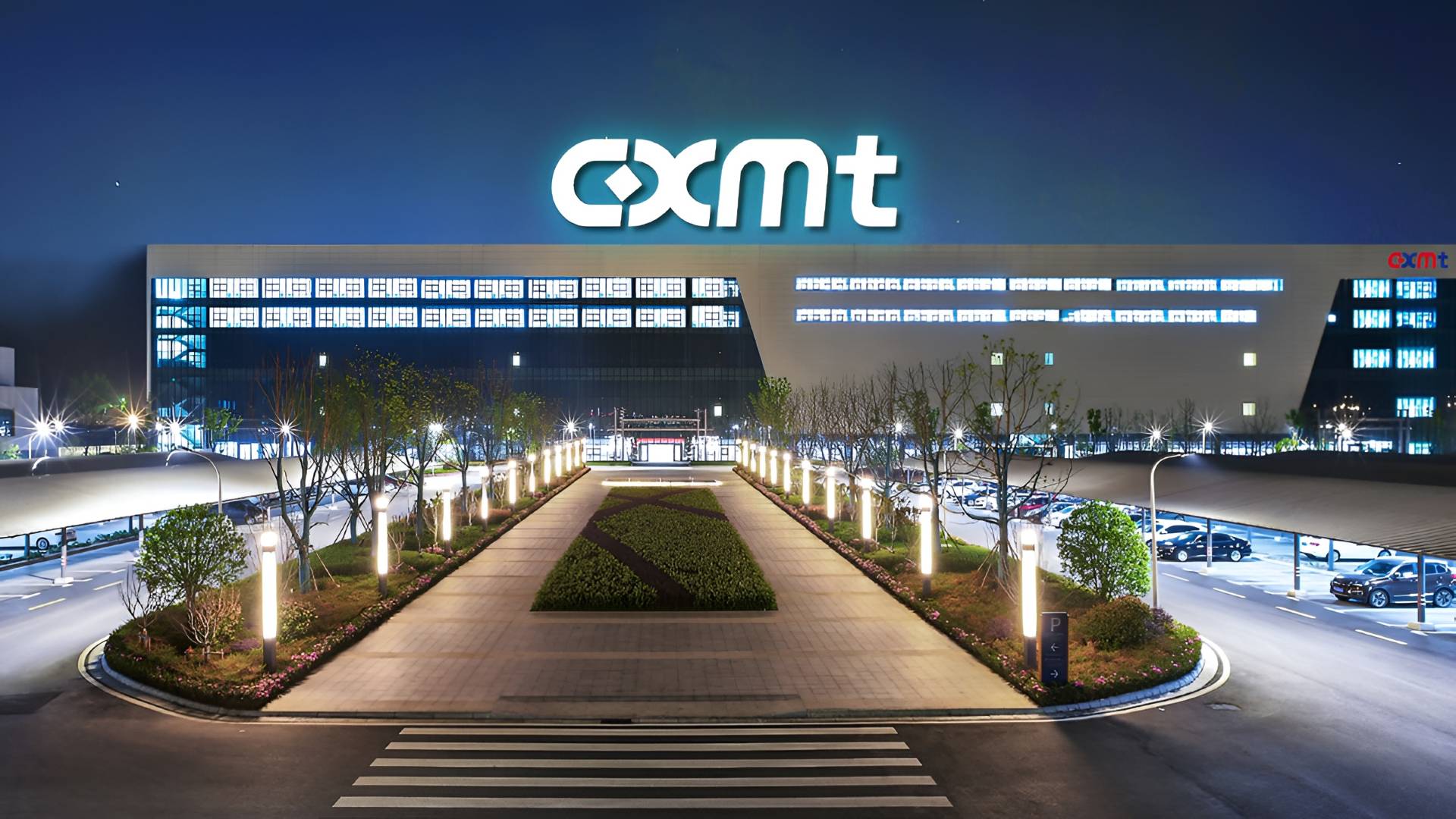
CXMT’s $3 Billion Tencent Deal Shows Why Apple May Be Watching China’s Rising DRAM Maker
The global memory market is being reshaped by the AI boom, and while Samsung, SK hynix, and Micron remain the biggest winners, China’s CXMT is becoming harder to ignore. The Chinese DRAM manufacturer is reportedly gaining momentum at a rapid pace, with major customers now showing interest in its memory chips for servers, cloud computing, databases, and artificial intelligence workloads.
A major sign of CXMT’s progress is its newly reported multi-billion-dollar agreement with Tencent. The deal is said to be worth around $3 billion and could run for three years, though another source suggests the partnership may extend to five years. Either way, the agreement gives CXMT a powerful long-term customer and a more stable revenue stream at a time when demand for memory chips is soaring.
Tencent is expected to use CXMT’s DRAM products in server infrastructure designed for cloud services, databases, and AI-related tasks. These are among the fastest-growing areas in the technology industry, especially as companies race to build larger data centers and expand artificial intelligence capabilities. The deal also suggests that CXMT is becoming more competitive in a market traditionally dominated by foreign memory giants.
The company’s recent financial performance makes its rise even more striking. CXMT reportedly recorded revenue of 50.8 billion yuan, or about $7.45 billion, in the first quarter of 2026. Its profit reached 25 billion yuan, or roughly $3.67 billion. That marks a huge turnaround from the previous year, when the company posted a loss of 1.6 billion yuan, or about $234.6 million. A reported 700 percent year-over-year revenue increase shows just how quickly CXMT is benefiting from the current demand cycle.
One key question is whether CXMT will supply Tencent with High-Bandwidth Memory, better known as HBM. HBM is a critical component for AI accelerators and advanced computing hardware, and it has become one of the most sought-after memory technologies in the world. While the details of Tencent’s order have not confirmed HBM supply, any move by CXMT into this segment would attract even more industry attention.
The Tencent deal also raises a bigger question: what happens if Apple becomes a CXMT customer?
Apple is reportedly interested in working with the Chinese memory maker, but any potential partnership would depend on regulatory and political hurdles. CXMT has been linked to discussions around the U.S. Entity List, and Apple would likely need a clear path before adding the company to its supply chain.
For Apple, the motivation may not be simply about finding cheaper DRAM. According to analyst Ming-Chi Kuo, the bigger goal would be reducing the risk of DRAM shortages. Apple sells hundreds of millions of devices and requires a massive, reliable memory supply for products such as the iPhone. With memory prices rising and AI companies consuming more supply, Apple may want to diversify its supplier base to avoid future disruptions.
The cost pressure is already visible. Apple is reportedly paying around $145 for a single 12GB LPDDR5X memory module, showing that premium DRAM prices may remain a reality for years. Adding another supplier like CXMT could give Apple more flexibility, especially if demand for iPhone memory continues to climb.
If CXMT can prove itself as a dependable supplier to Tencent, it may strengthen its case with Apple. A long-term supply agreement with Apple would be a major milestone for the Chinese DRAM maker, potentially placing it deeper into the global consumer electronics supply chain. It could also give CXMT the credibility needed to compete more directly with established memory manufacturers.
Still, Apple may not be the easiest customer for CXMT to secure. AI companies and cloud providers are currently placing enormous orders for memory chips, and these customers may receive priority because of the scale and profitability of their demand. Data centers, AI training systems, and high-performance servers require vast amounts of DRAM, making them highly attractive buyers for memory suppliers.
Even so, Apple remains one of the most valuable customers any semiconductor company can win. If future iPhone shipments meet expectations, especially around the iPhone 18 cycle, the opportunity could be too large for CXMT to ignore. Becoming part of Apple’s supply chain would not only bring revenue but also strengthen CXMT’s reputation as a global DRAM contender.
For now, the Tencent agreement is the clearest sign that CXMT’s ambitions are becoming reality. A $3 billion deal gives the company financial momentum, industry validation, and a stronger position in the AI-driven memory market. If Apple eventually joins its customer list, CXMT could move from being an emerging Chinese DRAM maker to one of the most closely watched players in the global semiconductor supply chain.