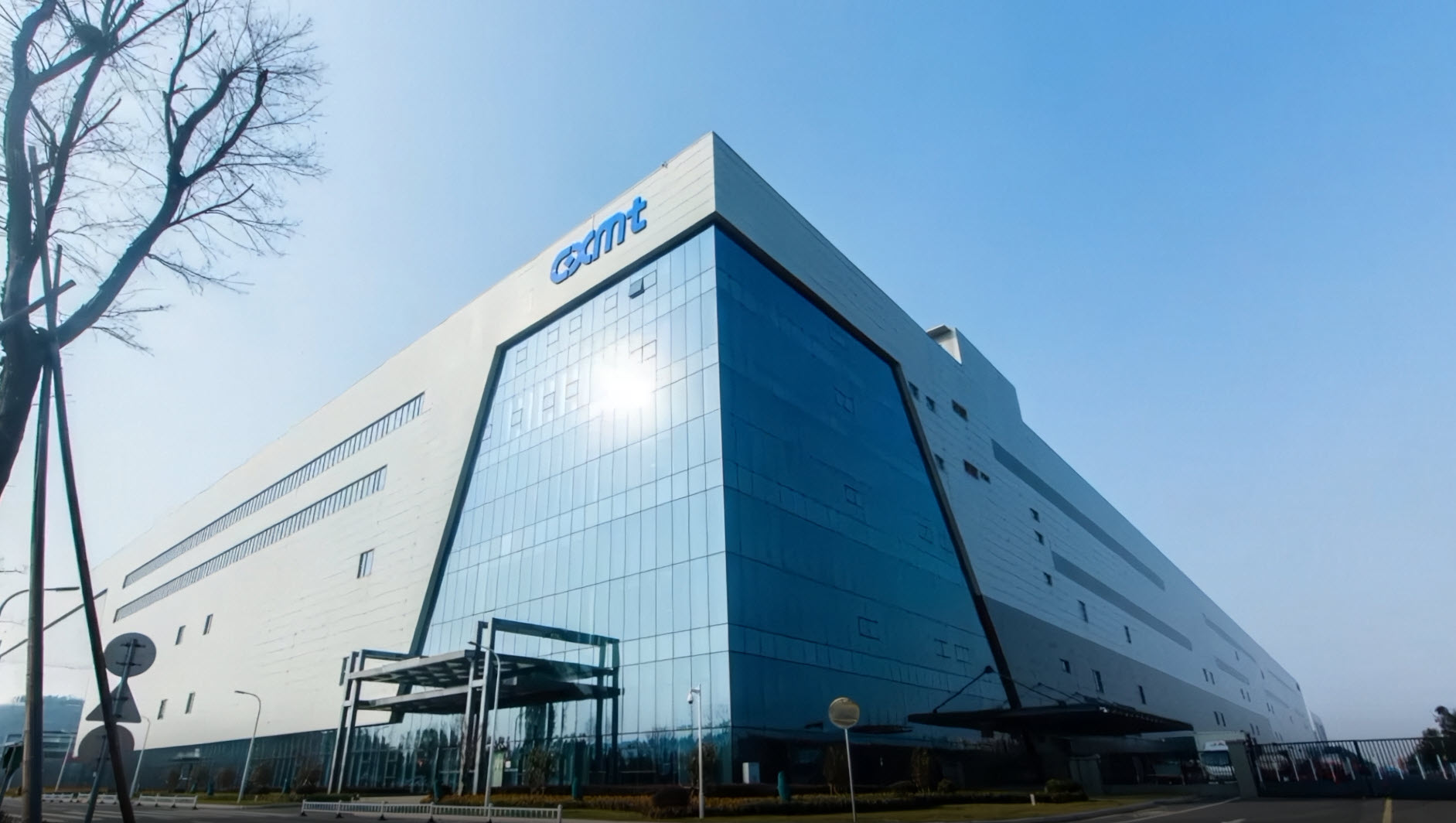
CXMT Accelerates DRAM Roadmap as China’s Memory Ambitions Grow
CXMT is rapidly emerging as one of the most closely watched companies in the global DRAM market, with a bold expansion strategy that could challenge the long-standing dominance of Samsung, SK Hynix, and Micron.
The Chinese memory manufacturer recently made its public market debut on the Shanghai STAR Board through an IPO valued at approximately $8.6 billion. The listing places CXMT’s valuation in the range of $80 billion to $85 billion, a significant figure for China’s semiconductor industry, even though it remains far behind the trillion-dollar scale associated with the world’s largest memory leaders.
Still, CXMT’s ambitions are no longer limited to being a regional supplier. The company is accelerating its DRAM product roadmap, expanding production capacity, and targeting next-generation memory technologies such as DDR5, LPDDR5, and HBM.
CXMT’s Rise in the Global DRAM Market
CXMT has already moved ahead of several established memory companies in revenue, including YMTC, Winbond, and Nanya. This shift highlights how quickly the company has grown as demand for DRAM continues to rise across smartphones, PCs, servers, artificial intelligence systems, and high-performance computing platforms.
At present, CXMT holds around 8% of global DRAM bit share. By comparison, Samsung controls about 36%, SK Hynix holds 29%, and Micron has 24%. While the gap remains large, CXMT’s progress is notable because the DRAM market has historically been extremely difficult for new players to penetrate at scale.
To enter the same competitive tier as the top three memory makers, CXMT will need to capture a much larger share of global DRAM revenue. However, analysts believe the company’s recent momentum, rising domestic demand, and upcoming HBM push could give it a stronger position over the next several years.
Market projections suggest CXMT could reach around 11% DRAM market share by 2028. Longer term, if its expansion plans succeed, the company may have the potential to approach a 15% share by 2035.
Major Production Expansion Planned Through 2035
A key part of CXMT’s strategy is a large-scale production expansion plan aimed at significantly increasing wafer output. The company, along with other Chinese memory players, has outlined an aggressive multi-year buildout involving new fabs, added production lines, and expanded manufacturing clusters.
The near-term goal is to increase monthly wafer output from roughly 320,000 wafers to 420,000 wafers by 2027. Beyond that, the company is looking toward a broader 2030 to 2035 roadmap designed to support the next wave of DRAM demand.
New and expanded manufacturing facilities are expected in Shanghai and Beijing, along with a growing production cluster in Hefei. These sites will play a central role in CXMT’s effort to boost output, reduce reliance on foreign memory suppliers, and support China’s broader semiconductor self-sufficiency goals.
Focus on DDR5, LPDDR5, and HBM
CXMT is also pushing to improve its product mix. The company aims to accelerate production of LPDDR5 and DDR5 memory, with a target of having these advanced DRAM products account for around 75% of output.
This is an important step because DDR5 and LPDDR5 are increasingly essential for modern computing devices. DDR5 is widely used in newer PCs, servers, and data center platforms, while LPDDR5 is critical for mobile devices, laptops, and power-efficient computing applications.
The biggest opportunity, however, may be HBM, or High Bandwidth Memory. HBM is a crucial technology for artificial intelligence accelerators, advanced GPUs, and high-performance computing workloads. Demand for HBM has surged as AI infrastructure investment continues to expand worldwide.
CXMT is reportedly working toward ramping 12-Hi HBM3 DRAM, a more advanced memory stack that could be used by domestic Chinese technology companies, including firms developing AI chips and high-performance processors. If CXMT can produce HBM at scale, it could become a much more important supplier in China’s AI hardware ecosystem.
Export Controls Remain a Major Challenge
Despite its strong momentum, CXMT faces major obstacles. One of the biggest challenges is access to advanced semiconductor manufacturing equipment. Restrictions on advanced lithography tools and other chipmaking technologies have made it harder for Chinese semiconductor firms to follow the same manufacturing path as leading global rivals.
To work around these limits, CXMT may need to rely more heavily on alternative technologies such as Vertical Channel Transistors and Wafer-on-Wafer bonding. These approaches could help the company improve density, performance, and production efficiency without depending entirely on restricted tools.
Interestingly, these constraints could also push CXMT to innovate faster. While established memory giants may take a more cautious approach to protect returns on existing equipment and production lines, CXMT may be forced to adopt new methods sooner. If successful, this could help the company narrow the technology gap more quickly than expected.
Can CXMT Challenge Samsung, SK Hynix, and Micron?
CXMT still has a long way to go before it can truly stand alongside the world’s three largest DRAM manufacturers. Samsung, SK Hynix, and Micron have decades of experience, vast intellectual property portfolios, mature global customer bases, and highly advanced production capabilities.
However, CXMT’s rapid growth shows that the DRAM market is becoming more competitive. The company benefits from strong domestic demand, strategic importance within China’s semiconductor plans, and a market environment where memory demand is being reshaped by AI, data centers, mobile devices, and next-generation computing.
CXMT is aiming for around $2 billion in revenue by 2028 as it ramps advanced DRAM products, including HBM3. Its ability to hit that target will depend on manufacturing yields, product quality, customer adoption, and how effectively it navigates geopolitical and technology restrictions.
If CXMT successfully scales DDR5, LPDDR5, and HBM production while expanding wafer capacity, it could become a much more serious force in the global memory industry. By 2035, the company may not replace the current leaders, but it could become powerful enough to reshape pricing, supply chains, and competition across the DRAM market.
For now, CXMT’s IPO, aggressive roadmap, and production expansion signal one thing clearly: China’s leading DRAM maker is no longer content with being a small player. It is preparing for a much larger role in the global memory race.