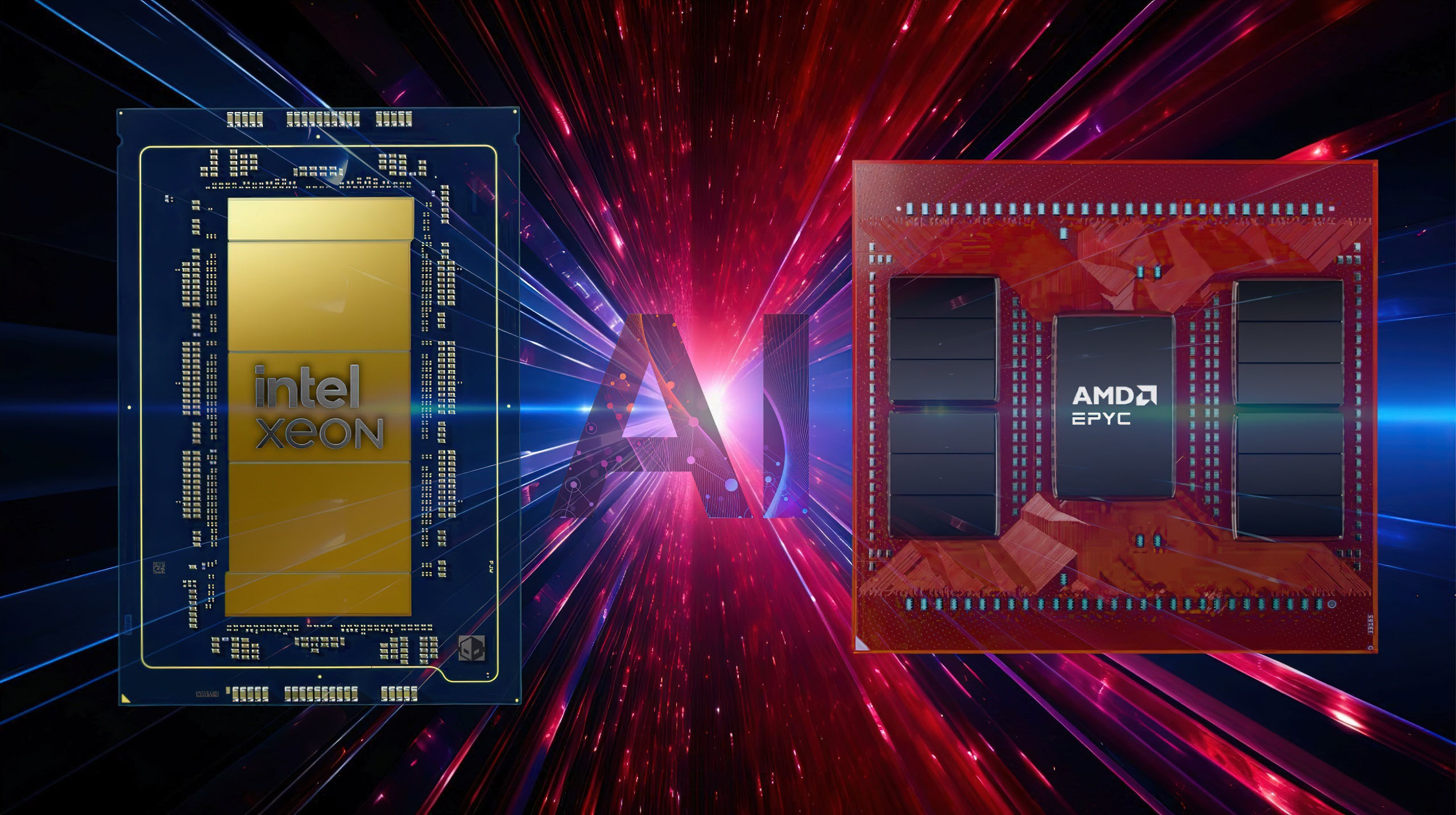
The AI boom is no longer just squeezing graphics cards and high-end accelerators. It’s now putting serious strain on the CPU market too, with a new report indicating that Intel and AMD are struggling to keep up with enterprise demand for server processors. The result: higher prices, longer wait times, and growing concern that everyday PC buyers could feel the ripple effects next.
Data centers and hyperscalers are in the middle of an aggressive infrastructure buildout, expanding capacity for AI training, cloud services, and next-generation workloads. That rapid expansion is colliding with broader supply chain pressure across key components, including DRAM, NAND, and advanced semiconductors. As the industry races to add compute power, server CPUs have become a hot commodity—and supply is looking increasingly tight.
In China, Intel’s server CPU lineup is reportedly seeing noticeable price increases as demand from professional customers surges. Delivery lead times have also reportedly stretched beyond six months in some cases, highlighting just how backed up the pipeline has become. This isn’t an Intel-only issue, either. AMD is facing similar constraints, particularly because its EPYC server processors rely heavily on external manufacturing capacity. With chipmakers already stretched by AI-related orders across the entire ecosystem, production timelines are becoming harder to meet.
Intel’s leadership has also acknowledged the pressure. During a recent earnings discussion, the company pointed to supply limitations that prevented it from fully meeting hyperscaler demand for server CPUs. When companies operating massive cloud and AI platforms can’t get enough processors, it signals a broader supply-demand imbalance that can influence pricing and availability across the market.
For PC gamers and mainstream buyers, this trend is uncomfortable for a familiar reason: enterprise buyers often get priority when supply is tight. Hyperscalers are currently replacing older server equipment and upgrading to newer x86 platforms, creating another wave of server CPU demand on top of the AI expansion itself. If Intel and AMD focus their limited supply on higher-margin enterprise contracts, consumer CPU availability could tighten—and retail pricing could rise right when many people are already dealing with expensive GPUs, memory, and storage.
The bigger picture is clear: the AI infrastructure buildout is affecting nearly every major PC component category. With CPUs, RAM, and GPUs all facing upward pricing pressure, the near future could be rough for anyone planning a new build or upgrade. For now, the hope is that manufacturing capacity catches up and lead times stabilize—but until then, buyers may need to prepare for a market where performance upgrades cost more and arrive slower than usual.