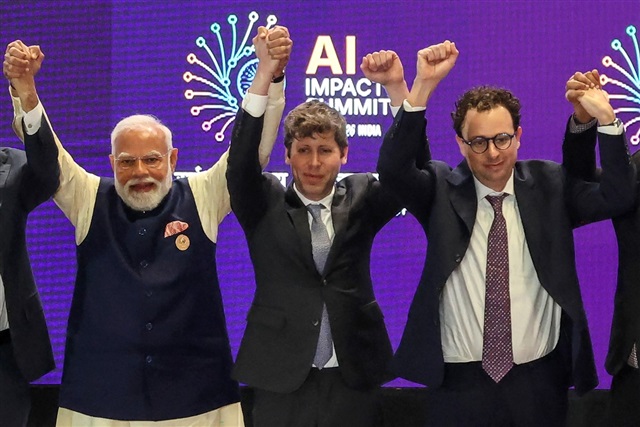
At the India AI Impact Summit 2026, some of the world’s most influential technology leaders and policymakers delivered a clear message: artificial intelligence is moving fast enough to reshape economies, public services, and daily life—but the benefits won’t be shared automatically. Without deliberate action, uneven AI adoption could deepen the gap between countries and communities that can build and deploy advanced systems and those that can’t.
Throughout the summit, speakers focused on AI’s transformative potential across sectors like healthcare, education, agriculture, manufacturing, and government services. They also stressed that progress won’t be defined only by breakthrough models or flashy demos. Real-world impact, they argued, depends on whether nations and institutions have the basic foundations to use AI responsibly and effectively.
A central theme was the importance of infrastructure. AI at scale requires robust digital connectivity, dependable power, modern cloud and compute access, and secure data systems. For many regions, the barrier isn’t a lack of interest in AI—it’s the practical challenge of making the technology accessible, affordable, and reliable. Executives and policymakers warned that if investment concentrates only in a handful of wealthy markets, AI could accelerate growth in those places while leaving others further behind.
Skills and workforce readiness were presented as the second major pillar. Building AI tools and using them safely requires talent—from engineers and data scientists to domain experts, educators, and civil servants who understand how to evaluate AI-driven decisions. Speakers pointed to the need for large-scale training programs, stronger university and industry collaboration, and reskilling initiatives that help workers adapt as AI changes job roles. The summit’s message was straightforward: countries that invest in AI literacy and technical capacity early will be better positioned to shape outcomes rather than simply react to them.
Governance and safeguards were equally prominent in the discussions. Leaders emphasized that as AI systems influence hiring, lending, healthcare decisions, security, and information flows, society will need clear rules that protect people from harm. That includes transparency standards, accountability mechanisms, privacy protections, and approaches to reduce bias and misuse. The broader point wasn’t to slow innovation for its own sake, but to ensure that rapid adoption doesn’t come at the expense of trust, safety, and human rights.
Another recurring concern was the risk of a “two-speed” AI world, where advanced models and best practices circulate among a small group of companies and countries. Summit participants highlighted the need for collaboration that makes AI more widely usable—through shared research efforts, cross-border standards, and partnerships that help emerging markets implement the technology in ways that match local needs and constraints.
The India AI Impact Summit 2026 ultimately framed AI as both an opportunity and a test of global coordination. The opportunity is enormous: better public services, improved productivity, new kinds of businesses, and solutions to persistent social challenges. The test is whether leaders can align investment, education, and policy quickly enough to prevent AI progress from becoming another driver of inequality.
As the summit made clear, the next chapter of AI won’t be defined only by who builds the most powerful systems. It will be defined by how widely the benefits are distributed, how responsibly the tools are governed, and whether the world treats equitable AI adoption as a priority rather than an afterthought.