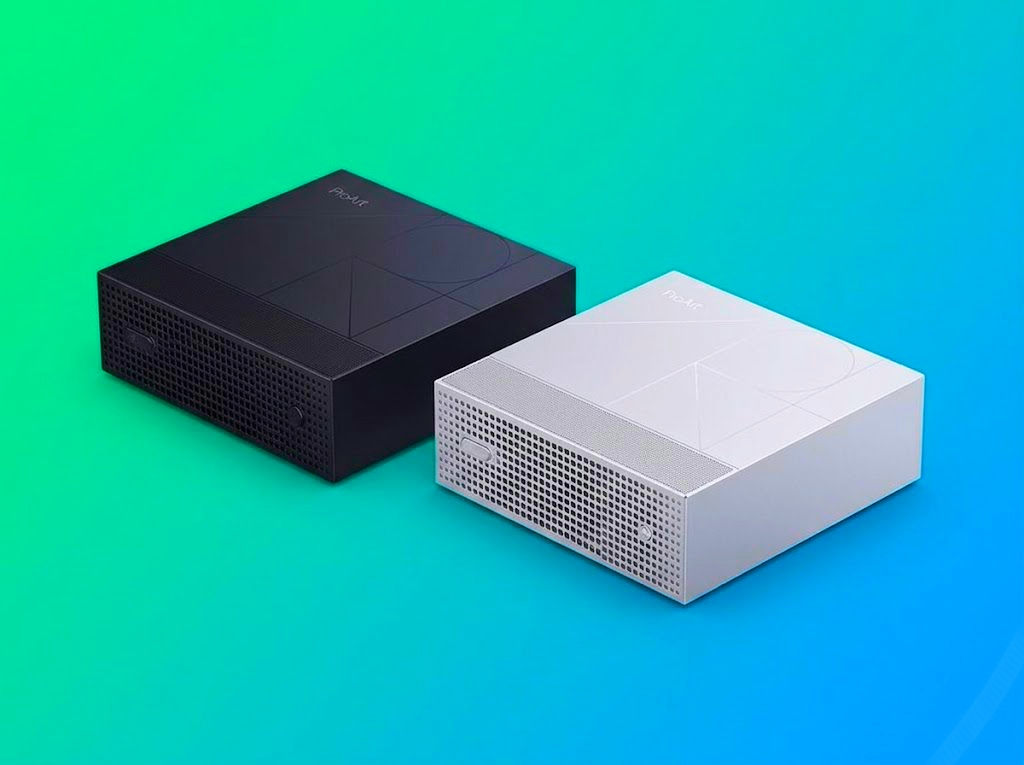
Asus ProArt Mini PC Debuts as a Compact AI Workstation With Nvidia RTX Spark Power
Asus has unveiled its new ProArt Mini PC at Computex 2026, and it is clearly built for professionals who want serious workstation performance without giving up valuable desk space. Designed for AI developers, 3D artists, content creators, and studios working with demanding creative workloads, this ultra-compact desktop packs high-end generative AI and rendering capabilities into a chassis that measures just 150 x 150 x 51 mm.
The ProArt Mini PC is aimed directly at users who need the power of a professional workstation in a much smaller footprint. It enters the same category as compact creator-focused machines like Apple’s Mac Studio and HP’s OmniDesk mini desktop, but Asus is leaning heavily into local AI performance as its biggest selling point.
At the center of the new machine is the Nvidia RTX Spark superchip platform. This combines an Nvidia Blackwell-based RTX GPU with 6,144 CUDA cores and a 20-core Nvidia Grace CPU, giving the system enough power to handle workloads that usually require much larger desktop hardware. Asus rates the ProArt Mini PC at up to 1 petaflop of AI performance, making it a serious option for local generative AI, AI model development, 3D rendering, and advanced creative production.
One of the standout features is its unified memory architecture. The system supports up to 128GB of unified memory, allowing resources to be shared dynamically between CPU and GPU tasks. This is especially useful for massive datasets and complex creative projects, including 90GB-plus 3D scenes and large language models with up to 120 billion parameters. Asus says the system can support LLM workloads with up to 1 million tokens of context, positioning the mini PC as a compact but powerful platform for AI agent development and local AI workflows.
Despite its tiny size, Asus says the ProArt Mini PC is designed for sustained professional use. The company has developed a dedicated thermal system that provides up to 140W of thermal headroom. That matters for creators and developers who run long rendering sessions, AI training jobs, or heavy multitasking workloads, where stable performance is just as important as peak speed.
Connectivity and expandability also target professional environments. The ProArt Mini PC includes integrated 10GbE wired networking, giving studios and developers the bandwidth needed for fast file transfers, shared storage access, and high-volume production pipelines. It also supports M.2 PCIe Gen 5 x4 expansion slots, enabling extremely fast storage upgrades for large projects, AI datasets, and demanding media libraries.
Asus is also positioning the ProArt Mini PC as part of its broader creative ecosystem. The desktop is compatible with Asus’ AI-focused ProArt software suite, including ProArt Creator Hub for system and resource management. It also supports tools such as MuseTree and StoryCube, which are designed to help streamline generative creative workflows.
The company is clearly targeting a growing audience of professionals who want to run powerful AI tools locally rather than relying entirely on cloud services. For developers, this could mean faster experimentation with AI agents and large language models. For creators, it means smoother work with 3D assets, video projects, generative design tools, and rendering tasks.
The Asus ProArt Mini PC is expected to launch in fall 2026. Pricing and full configuration details have not yet been announced, but based on its hardware and target market, it is shaping up to be one of the most powerful compact AI workstations revealed so far.
With Nvidia RTX Spark hardware, up to 128GB of unified memory, 10GbE networking, PCIe Gen 5 storage support, and workstation-class thermal design, the ProArt Mini PC could become an appealing choice for creators and AI professionals who want big performance in a remarkably small desktop.


