ASUS has weighed in on the growing controversy around the ROG Matrix RTX 5090 and its 16‑pin power connector placement—and the answer isn’t what frustrated buyers were hoping to hear.
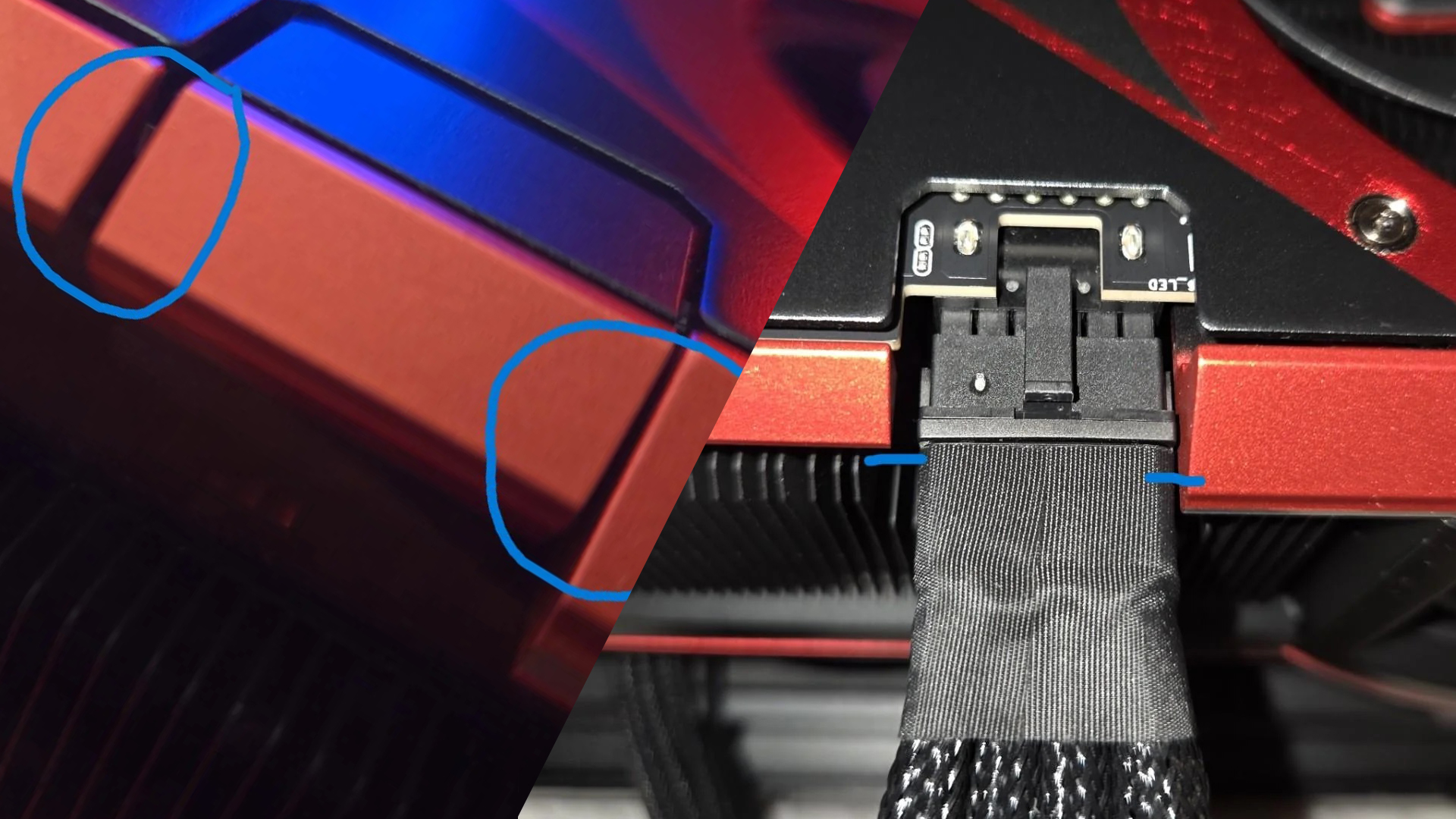
The issue surfaced after a Reddit user reported that the 16‑pin power connector on their ROG Matrix RTX 5090 didn’t allow the cable to seat properly. The connector is positioned slightly off-center in relation to the cooler frame, leaving very tight clearance for the connector housing. In real-world use, that small shift can make it difficult to fully insert certain 16‑pin power plugs, raising concerns about whether the connection is truly secure.
That’s a big problem for a flagship graphics card in this price tier. The ROG Matrix RTX 5090 is being talked about as an ultra-premium, limited-release GPU, with only 1,000 units said to exist. With so few cards in circulation, it’s still unclear how widespread the connector clearance problem is, but the post drew attention because it affects something critical: power delivery.
After the user contacted ASUS, the company reportedly reviewed the concern and responded that the connector’s non-centered placement is intentional. According to ASUS, the positioning is part of the original product design and was chosen based on overall structural and electrical layout considerations. In other words, ASUS is not calling it a defect—even if it prevents some standard 16‑pin power connectors from fitting comfortably.
For buyers, that response limits the options. The Reddit user said ASUS did not offer a fix or replacement and chose to return the card instead. If others run into the same compatibility headache, returning the GPU may be the only straightforward solution.
There is one workaround, but it’s not ideal for most people. Users could switch to ASUS’s HPWR-style connector solution, but that typically requires compatible ASUS hardware—specifically an ASUS BTF motherboard—to support that setup. That means many PC builders using standard components may not benefit from the alternative, even if they’re willing to try it.
The takeaway is simple: if you’re considering a ROG Matrix RTX 5090, pay close attention to power cable compatibility and connector clearance before committing—especially if you’re using a bulkier 16‑pin plug housing. With ASUS describing the alignment as intentional, don’t expect a design revision or official “fix” for this particular fitment problem.