A Massive Star Expected to Explode May Be Hiding a Different Cosmic Secret
Astronomers have been watching a distant star for years because it looked like a strong candidate for an upcoming supernova. But new observations suggest the story may be more complicated, and possibly even more fascinating.
The star, known as AT 2016blu, sits roughly 29 million light-years from Earth. It is an enormous and unstable type of star called a luminous blue variable, with an estimated mass at least 33 times greater than the Sun. Stars like this are known for dramatic changes in brightness, powerful eruptions, and intense mass loss, which is why they often attract attention from researchers searching for clues about the final stages of massive stellar lives.
Since its discovery in 2012, AT 2016blu has displayed 27 separate outbursts. These events were bright and energetic enough to resemble some features of a supernova, leading scientists to wonder whether the star was nearing the end of its life and preparing for a catastrophic explosion.
However, the repeated pattern of these outbursts has now pointed astronomers toward another explanation. Rather than being random signs of an imminent supernova, the eruptions appear to occur in a roughly repeating cycle of about 113 days. That timing suggests AT 2016blu may not be alone.
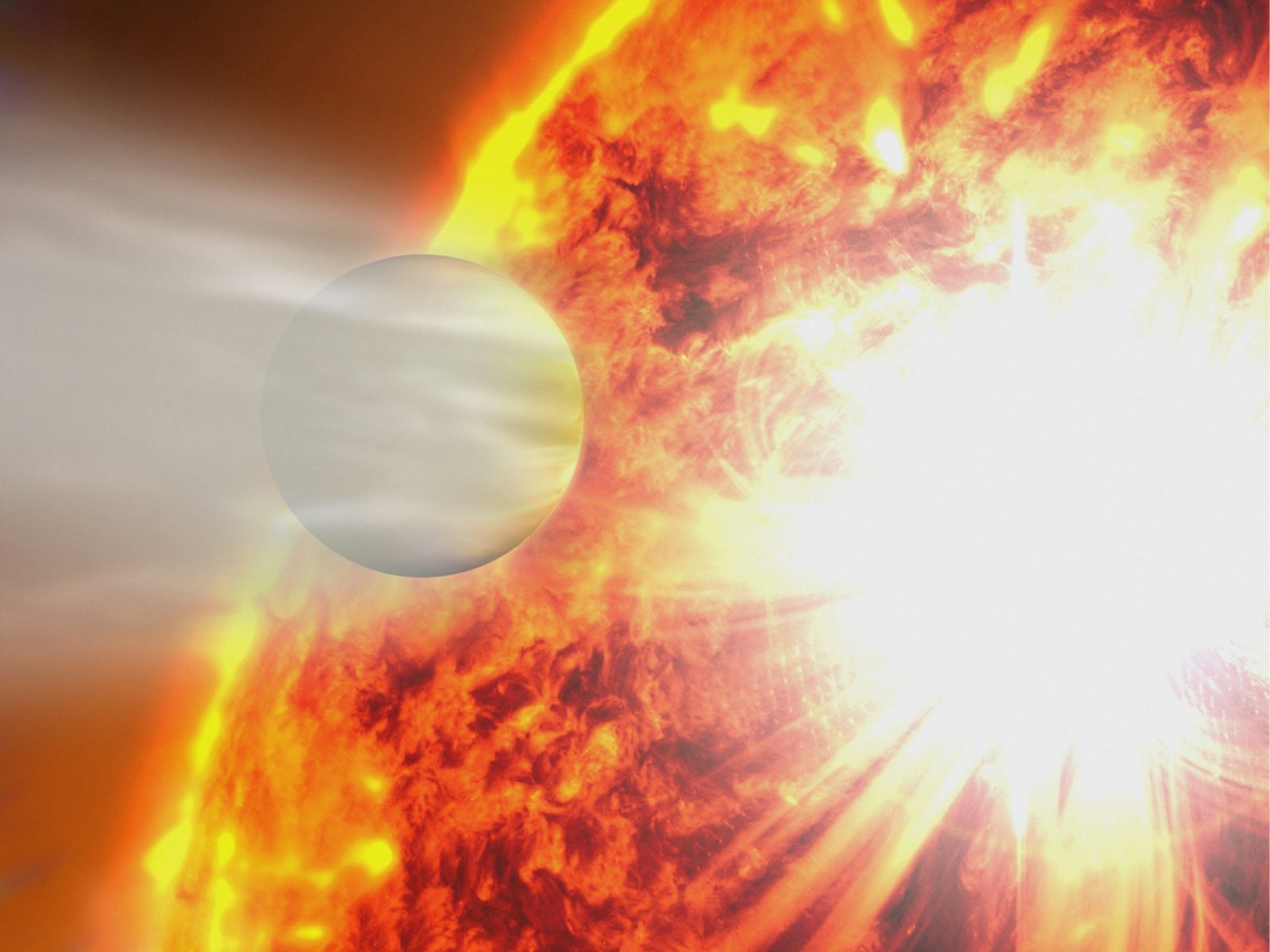
Researchers now believe the star is likely part of a binary system, meaning it has a companion object locked in orbit around it. In this scenario, the outbursts may happen when the two objects make their closest approach to each other during an elongated orbit. At that point, gravitational interaction could disturb the massive star and trigger bursts of activity that mimic some supernova-like behavior.
To investigate further, astronomers studied AT 2016blu in X-rays and combined those findings with earlier observations. X-ray emission is an important clue because it can be produced when matter is pulled from one object onto another. As the material heats up during this process, it releases high-energy radiation.
The X-ray evidence strengthens the idea that AT 2016blu has a compact companion feeding on material from the massive star. But the identity of that companion remains unknown. It may be a neutron star, the ultra-dense remnant of a dead star, or it could be a black hole quietly consuming stellar material.
If the companion is confirmed to be a black hole or neutron star, AT 2016blu would become an especially valuable target for astronomers studying how massive stars interact with compact objects before their final fate. These systems can help scientists better understand stellar evolution, mass transfer, and the conditions that may eventually lead to supernova explosions.
For now, AT 2016blu remains a cosmic mystery. It may still explode one day as a supernova, but its strange behavior appears to be shaped by a hidden partner rather than a solo countdown to destruction. Instead of a simple case of a dying star, astronomers may be looking at a dramatic stellar dance between a massive unstable star and one of the universe’s most extreme objects.