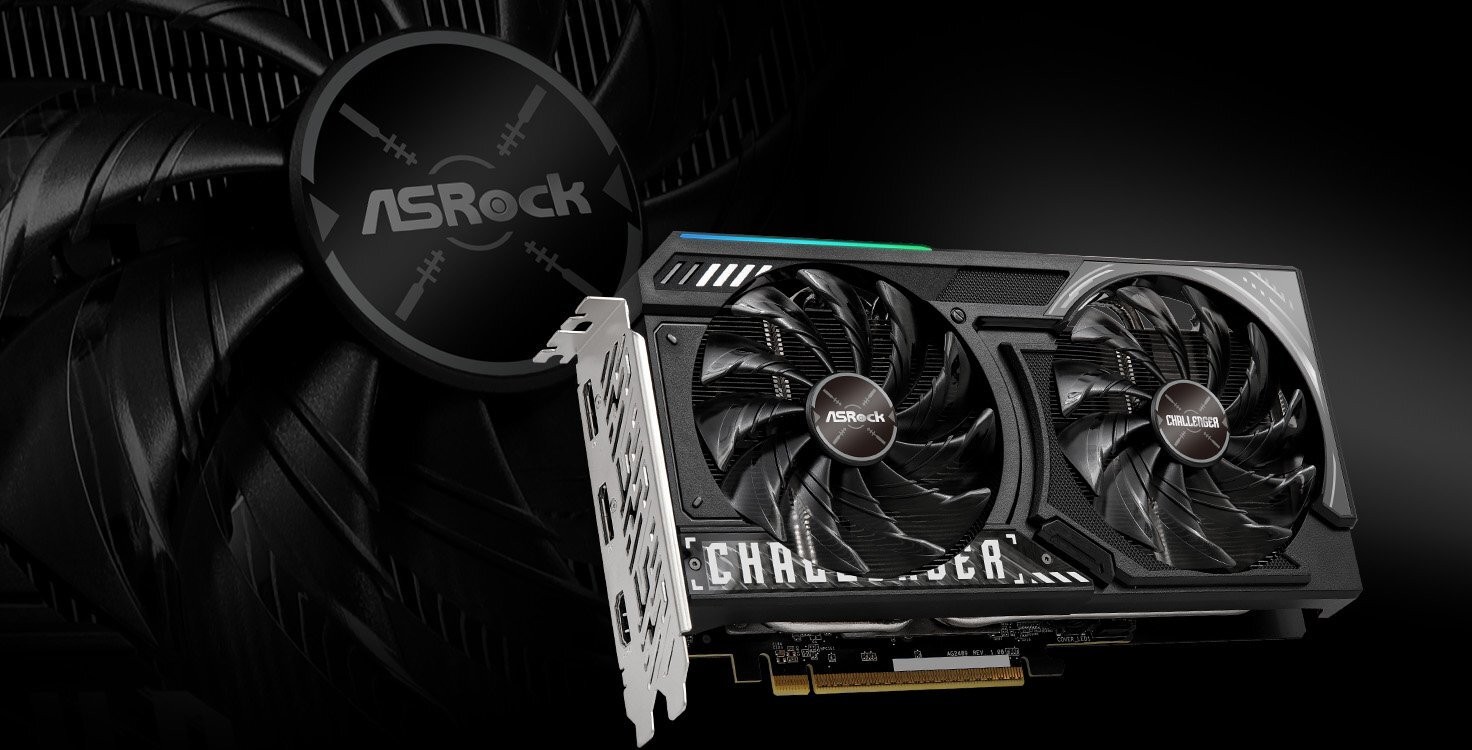
ASRock Radeon RX 9050 Challenger 4GB surfaces with a smaller memory setup
ASRock has listed a Radeon RX 9050 Challenger graphics card with 4GB of GDDR6 memory, signaling an even more budget-focused version of AMD’s entry-level RDNA GPU lineup. The new model appears to sit below the previously revealed 8GB Radeon RX 9050 Challenger, targeting price-sensitive markets where affordable graphics cards remain in demand.
According to the listed specifications, the Radeon RX 9050 Challenger 4GB uses AMD’s Navi 44 GPU and comes with 16 compute units, giving it 1,024 stream processors. That places it well below the Radeon RX 9060 XT in raw shader count, despite sharing the same underlying graphics die. In other words, this is clearly designed as a lower-cost card rather than a performance-focused gaming GPU.
The biggest change is the memory configuration. While the 8GB Radeon RX 9050 Challenger features a 128-bit memory bus, the 4GB version drops to a much narrower 64-bit interface. Memory speed remains at 18 Gbps, but the reduced bus width cuts total bandwidth in half, from 288 GB/s on the 8GB model to 144 GB/s on the 4GB version.
That bandwidth reduction could have a major impact in modern games, especially at higher settings or resolutions. Even 8GB of VRAM is increasingly viewed as the minimum for new PC titles, and many recent games can exceed that amount when texture quality is raised. With only 4GB of video memory, the Radeon RX 9050 Challenger 4GB will likely be best suited for esports titles, older games, light 1080p gaming, basic multimedia use, and budget desktop builds.
The arrival of a 4GB model also reflects the current pressure in the memory market. Demand for advanced memory used in AI servers and data center hardware has tightened supply for more common GPU memory. As a result, graphics card makers may be looking for ways to reduce costs by offering smaller memory configurations in regions where price matters more than high-end gaming performance.
For AMD and its board partners, a 4GB Radeon RX 9050 could help create a lower entry point for buyers in emerging and cost-conscious markets. However, the card’s appeal will depend heavily on pricing. If it launches at a meaningfully lower price than the 8GB version, it may find an audience among users building inexpensive PCs. If the price gap is small, the 8GB model would likely be the smarter choice for anyone planning to play modern games.
ASRock has not yet confirmed the card’s price, launch date, power requirements, or exact regional availability. The 8GB Radeon RX 9050 Challenger was previously positioned for Asia-Pacific and Latin American markets, and the 4GB version appears likely to follow a similar regional strategy rather than receiving a broad worldwide release.
The Radeon RX 9050 Challenger 4GB is shaping up to be a very niche graphics card: affordable, compact in specification, and aimed at buyers who need a basic dedicated GPU rather than a strong gaming upgrade. Its success will ultimately come down to whether ASRock and AMD can price it low enough to make the compromises worthwhile.