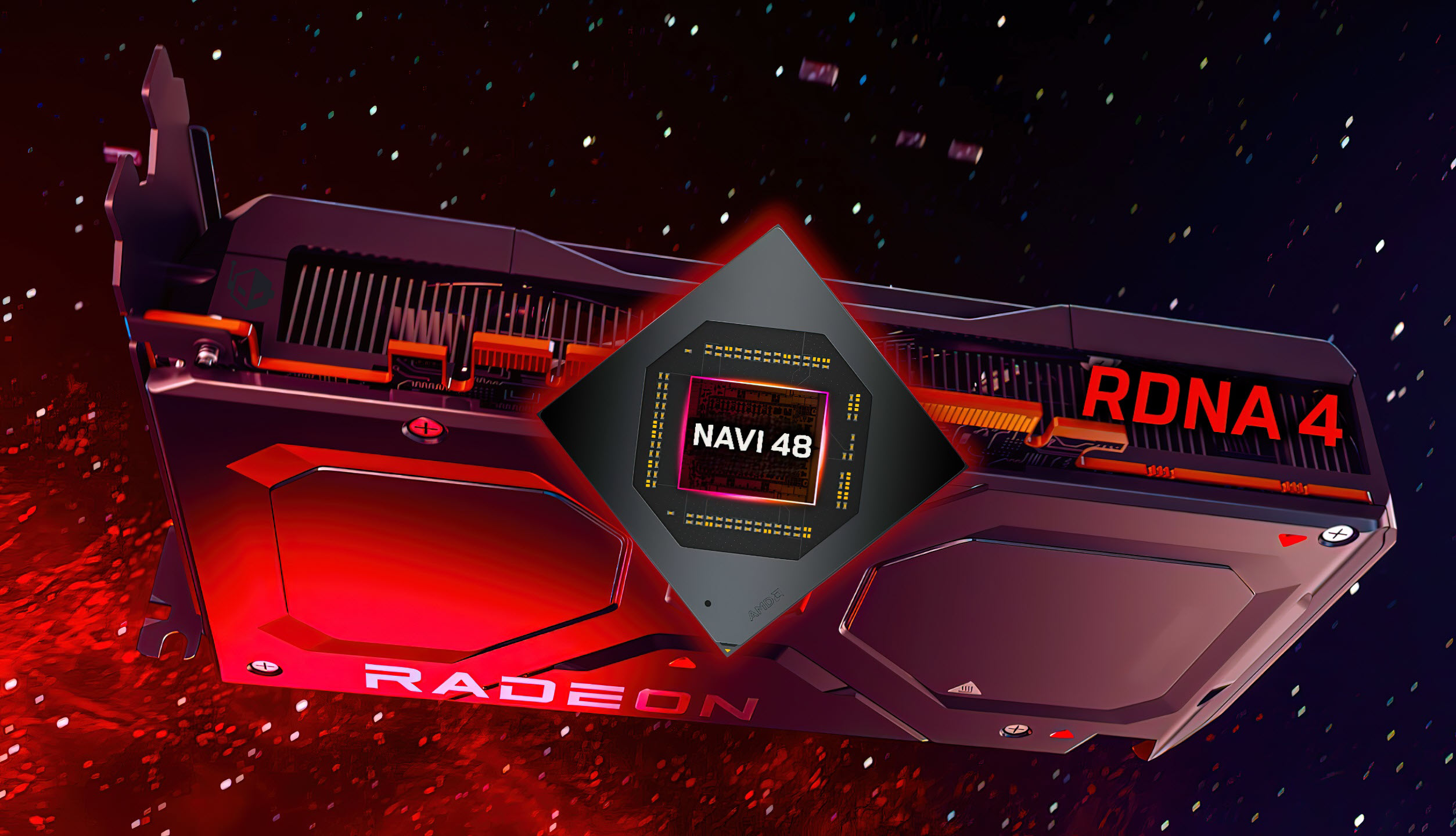
The upcoming AMD Radeon RX 8000 series, leveraging the next-generation RDNA 4 architecture, has made its first appearance on Geekbench, revealing insights into its core configuration and memory specifications.
AMD’s next-gen Radeon RX 8000 GPUs, which are expected to launch next year, have started showing up on Geekbench, indicating that internal testing is currently underway. Multiple entries for an SKU within the RDNA 4 lineup have been detected, along with some intriguing specifications.
The GPU is identified by the “GFX1201” Device ID, confirming it as a Navi 48 SKU, which is the more substantial of the two Navi 4X dies to be introduced in the RDNA 4 family. The “GFX1201” GPU lists 28 compute units, which should equate to 56 according to the new configurations similar to the RDNA 3 series. Each GPU has a shader engine featuring dual compute units; if this configuration holds for RDNA 4, we can anticipate up to 56 compute units, positioning it between the RX 7700 XT (54 CUs) and RX 7800 XT (60 CUs).
The AMD Radeon RX 8000 GPU also lists its clock speed at 2101 MHz (2.1 GHz). Current RDNA 3 GPUs can boost up to around 2.5-2.6 GHz, and since RDNA 4 chips are expected to utilize a better node and new architecture, the listed clocks may seem a bit low but could improve as additional samples emerge closer to the launch date.
In terms of memory, the GPU is listed with 16 GB VRAM, comparable to the RX 7800 XT and RX 7900 GRE. This points to a 256-bit bus interface for high-end RDNA 4 cards, with expectations for some configurations to employ a 192-bit bus with 12GB VRAM. Although the type of memory hasn’t been specified, previous reports suggest AMD will use GDDR6 memory clocked at around 18 Gbps for the RDNA 4 lineup.
Performance-wise, the early listings show the AMD Radeon RX 8000 “RDNA 4” GPU performing like an integrated GPU in the OpenCL benchmark, which is likely due to its early development stage. These preliminary results should be taken with a grain of skepticism as better performance figures will emerge closer to the release date.
The RDNA 4 GPUs aim to target both mainstream and high-end markets, promising to deliver Navi 31 level performance within a more affordable price range anticipated to be around $400-$500. More detailed revelations about these GPUs are expected at CES.
Here’s a look at AMD’s RDNA Generational GPU lineup: