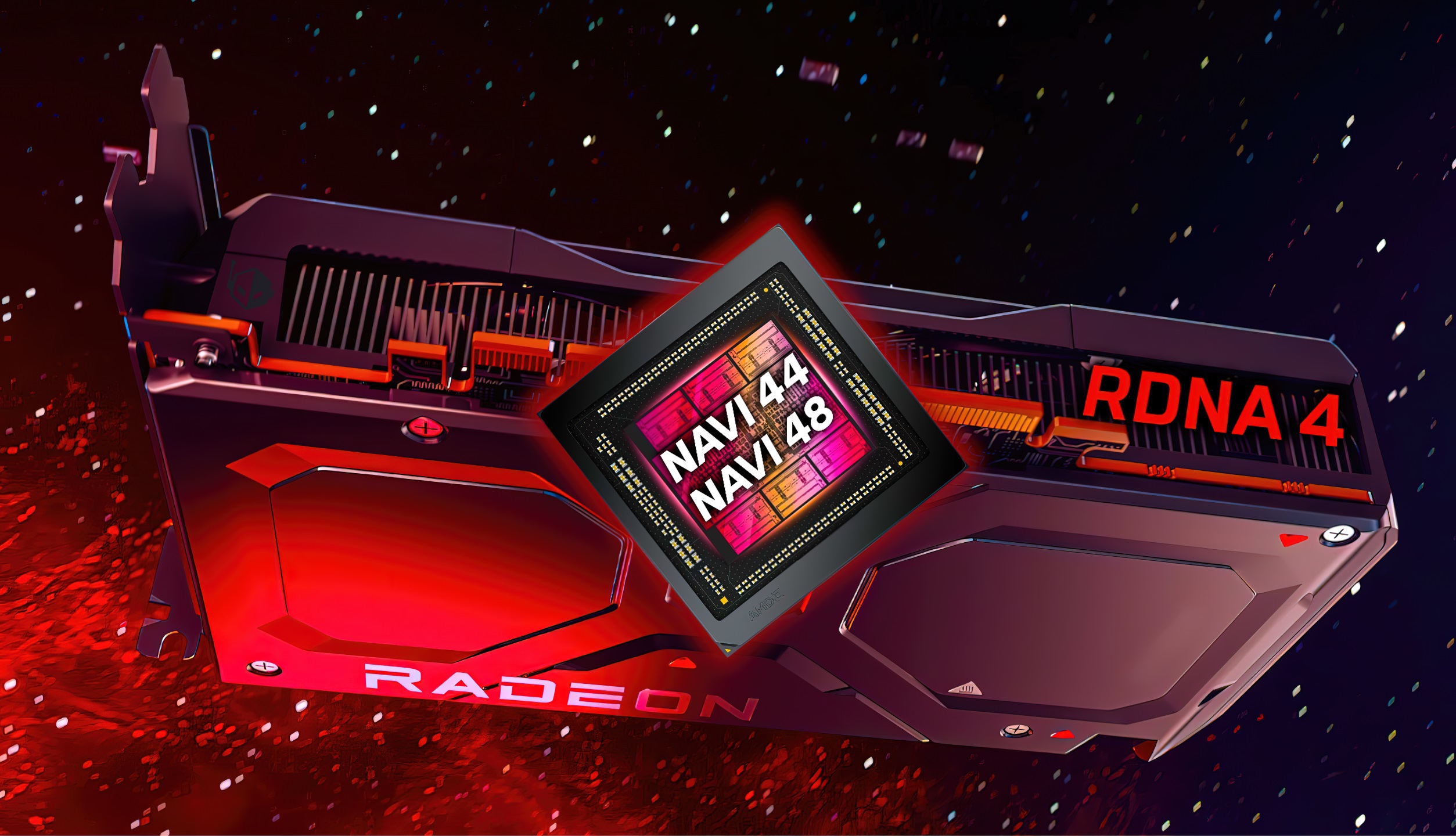
AMD has been turning heads with the confirmation of its next-generation RDNA 4 GPUs, designed to power the upcoming Radeon RX 8000 series graphics cards. The scoop comes courtesy of a repository where details regarding the Navi 44 “GFX1200” and Navi 48 “GFX1201” graphics processing units (GPUs) have emerged, stirring anticipation within the gaming and tech communities.
Introduction of Navi 44 and Navi 48 GPUs
The latest update from AMD introduces the Navi 44 and Navi 48 graphics chips. They mark a significant progression in AMD’s GPU architecture, inheriting the innovative RDNA 4 graphics design. Though information remains limited, each chip has been assigned a unique graphics ID, with Navi 44 being classified as “GFX1200” and the likely more powerful Navi 48 as “GFX1201.”
Understanding the Performance Targets
The performance expectations for the Navi 48 GPU suggest it won’t fall into the typical high-end category as seen with its predecessors, the Navi 31 (RDNA 3) and Navi 21 (RDNA 2) series. Instead, it’s anticipated to offer strong value, balancing performance and cost to cater to mainstream gaming audiences. This approach contrasts with the recently shelved decisions to focus exclusively on ultra-high-end chips, indicating a strategic shift towards broader market appeal.
Projected Pricing and Value
With the AMD Radeon RX 7900 GRE—an entry-level RDNA 3 option—currently retailing near the $549 mark due to pricing adjustments, the anticipation for the Navi 48-provided performance within a more affordable range of $400 to $500 could represent an enticing prospect for gamers looking for high-quality game experiences without breaking the bank.
Architectural Innovations and Features
The RDNA 4 architecture is slated to be a completely fresh design. This overhaul hints at the potential for improved ray tracing performance and other incremental advancements, such as a potentially AI-enhanced FSR (FidelityFX Super Resolution) upscaling technology. This would not only bolster gaming experiences but also provide a competitive edge against rival technologies like NVIDIA’s DLSS.
Memory Support and Chip Design
Next-generation GPUs may include support for cutting-edge GDDR7 memory, initially available in 28/32 Gbps dies and presented in 2 GB modules. Yet, the possibility remains that AMD may select a more economically favorable path by opting for faster implementations of GDDR6 memory at the outset. Rumors are also hinting at a shift in chip design, with expectations pointing towards smaller, monolithic structures that step away from the multi-chip module (MCD) design introduced just a year prior.
AMD RDNA Generational Evolution
The RDNA GPU lineage traces back from RDNA 1 to the latest RDNA 4, with each iteration paving the way for performance and efficiency improvements. We have witnessed the family of GPUs advance from the Navi 1X to Navi 4X series, navigating through process node changes, from 7nm down to what is now potentially 5nm or even 3nm for the latest generation.
These graphics cards have climbed the performance ladder, scaling from entry-tier offerings to flagship models boasting significant stream processor (SP) counts. As for the RDNA 4 lineup, expectations are for the Navi 48 to fill the high-end GPU role, while Navi 44 is presumed to serve more entry-level purposes.
The Radeon RX 8000 series, adorned with these new GPUs, stands as a promising frontier for AMD. Enthusiasts and consumers alike have much to anticipate, including potentially favorable pricing, enhanced performance, and groundbreaking architectural advancements. With keen eyes on official details and product launches, the next phase of AMD’s Radeon graphics cards is poised to make a substantial impact on the gaming industry.