Intel’s LGA 1700 era had a strong run. Launched in 2021, the platform supported three full CPU generations—12th Gen Alder Lake, 13th Gen Raptor Lake, and 14th Gen Raptor Lake Refresh—alongside multiple motherboard waves. It began with the 600-series (headlined by Z690) and continued through two 700-series cycles led by Z790, including a mild refresh to align with the 14th Gen lineup.
By late 2024, Intel moved on with a new direction: the 800-series chipset family and the Core Ultra 200S desktop processors. That shift also introduced a brand-new CPU socket, LGA 1851, officially closing the chapter on LGA 1700 after a little over three years. With this new platform now in place, attention is turning to the most budget-friendly options in the lineup—especially B860 motherboards designed to deliver modern features without premium pricing.
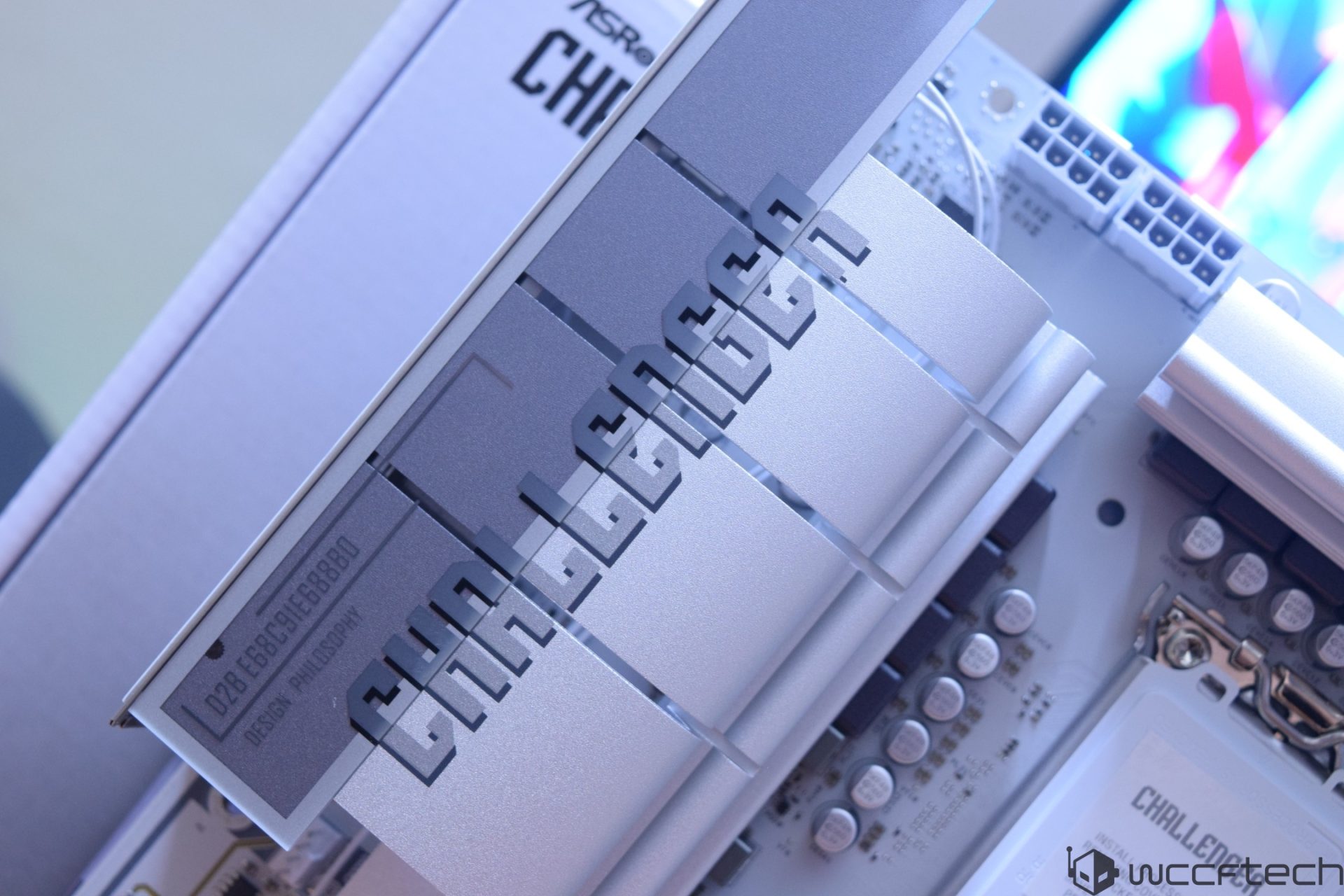
One of the newest entries in that value category is the ASRock B860 Challenger WIFI White, a clean, bright build-focused board aimed squarely at cost-conscious PC builders who still want up-to-date connectivity and a fresh aesthetic. At $179, it targets the sweet spot for anyone building an Arrow Lake system without stepping up to higher-end chipsets.
LGA 1851 and the Intel 800-Series: What Changes for Builders
LGA 1851 arrives as the foundation for Intel’s Arrow Lake desktop CPUs. It’s the socket paired with the 800-series motherboards, and it brings platform updates that matter to everyday builders: more next-gen I/O, updated lane allocations, and expanded DDR5 support.
The B860 chipset sits as the entry-tier option within the 800-series family, but it’s far from barebones. According to the platform specifications, B860 offers a total of 34 PCIe lanes, with 20 lanes supporting PCIe Gen 5.0 coming from a combination of CPU and chipset resources. On the chipset side, the B860 PCH can provide up to 14 PCIe 4.0 lanes, giving motherboard makers flexibility for M.2 storage, controllers, and expansion slots.
USB and Storage Support on B860
Modern builds live and die by connectivity, and B860 keeps things current. The chipset supports up to 6 USB 3.2 ports in a mix that can include 2x 20Gbps, 4x 10Gbps, and 6x 5Gbps options (as configured by the motherboard manufacturer). It also supports up to 12 USB 2.0 connections and up to 4 SATA III ports for builders who still rely on 2.5-inch SSDs or high-capacity SATA hard drives.
DDR5 Memory Support and High-Speed Headroom
Memory support is another highlight for the LGA 1851 + B860 platform. Native DDR5 support reaches up to DDR5-6400, while overclocked profiles can push beyond 8000 MT/s using XMP, depending on the CPU, motherboard design, and DIMM quality.
Capacity support is equally builder-friendly. The platform supports dual-channel memory and up to 48GB per DIMM, enabling configurations up to 192GB total. It also accommodates multiple module formats including UDIMM, CUDIMM, SODIMM, and CSODIMM variants, giving manufacturers flexibility across different board styles and system designs.
Cooler Compatibility: Can You Reuse LGA 1700 Cooling?
A major concern with any socket change is whether existing cooling hardware becomes obsolete. With LGA 1851, the good news is that it remains compatible with LGA 1700 coolers. That means many builders can reuse their current air coolers or AIO liquid coolers when upgrading—though some models may benefit from (or require) an offset mounting kit to ensure optimal thermal contact and balanced pressure.
Intel also updated the socket’s retention and loading approach with a revised integrated loading mechanism called RL-ILM. This design uses a spacer within the loading mechanism to help ensure correct mounting pressure for Arrow Lake CPUs, improving consistency and helping coolers sit properly across the chip.
Why the ASRock B860 Challenger WIFI White Stands Out
Value-focused motherboards often trade style for cost savings, but the B860 Challenger WIFI White aims to offer both. Its standout all-white look is clearly designed for modern themed builds, especially popular white PC setups that pair matching components, RGB lighting, and clean cable management. Combined with the B860 platform’s PCIe Gen 5 support, fast DDR5 options, and contemporary USB capability, it’s positioned as a practical foundation for a new Intel Core Ultra 200S build without stretching into premium motherboard pricing.
If you’d like, share the rest of the post content (features list, VRM details, M.2 layout, WiFi version, LAN, audio, or test results) and I can rewrite the full article into a complete search-optimized review piece with a smoother narrative and stronger keyword coverage.