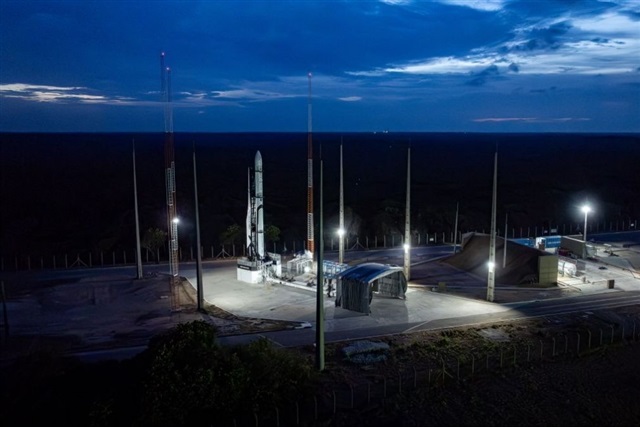
The commercial space race is picking up speed worldwide, with more private companies and national programs pushing to make space launches routine, profitable, and accessible. Yet two recent setbacks—one in South Korea and one in China—highlight a reality that often gets lost in the excitement: getting to orbit reliably, and doing it in a way that supports true commercialization, is still extremely hard.
In South Korea, aerospace startup Innospace suffered a major disappointment when its launch attempt did not successfully place its vehicle into orbit. For any emerging launch provider, demonstrating the ability to reach orbit is a critical milestone. It’s the baseline proof customers look for before trusting a company with valuable payloads, whether those are small satellites, research instruments, or technology demonstrations. When an orbital attempt falls short, it can slow momentum, complicate future funding, and delay the broader goal of building a competitive commercial launch sector.
Meanwhile, China’s push toward more advanced and cost-effective launch operations faced its own challenge. The country’s newer Long March 12A rocket reportedly missed its objective of recovering the first-stage booster during its maiden flight. Booster recovery is one of the most important steps toward lowering launch costs over time, because it can reduce the need to build an entirely new first stage for every mission. But recovering rocket stages—especially on early flights of a new vehicle—requires precise engineering, dependable flight software, and consistent performance across multiple systems. When recovery efforts don’t go as planned, it’s a reminder that reusability is not just an add-on feature; it’s a demanding, high-stakes capability that can take many iterations to mature.
Together, these incidents reinforce a bigger takeaway for the global space industry: commercialization isn’t a straight line. Even as demand for satellite launches grows and more players enter the market, rockets remain complex machines operating at the edge of what’s possible. Reaching orbit and mastering partial reusability are two different challenges, and both can expose weaknesses in design, manufacturing, and mission execution.
Still, setbacks like these don’t necessarily signal failure of the wider commercial space movement. They show where the hardest parts are—and why progress can look uneven from country to country and company to company. For South Korea’s startup scene and China’s evolving launch ambitions, the next steps will depend on how quickly lessons are identified, fixes are made, and confidence is rebuilt through future launches.
As the commercial space industry expands, stories like these are likely to become more common: ambitious new launch systems, bold first attempts, and the tough learning curve that comes with trying to make spaceflight not only possible, but sustainable as a business.