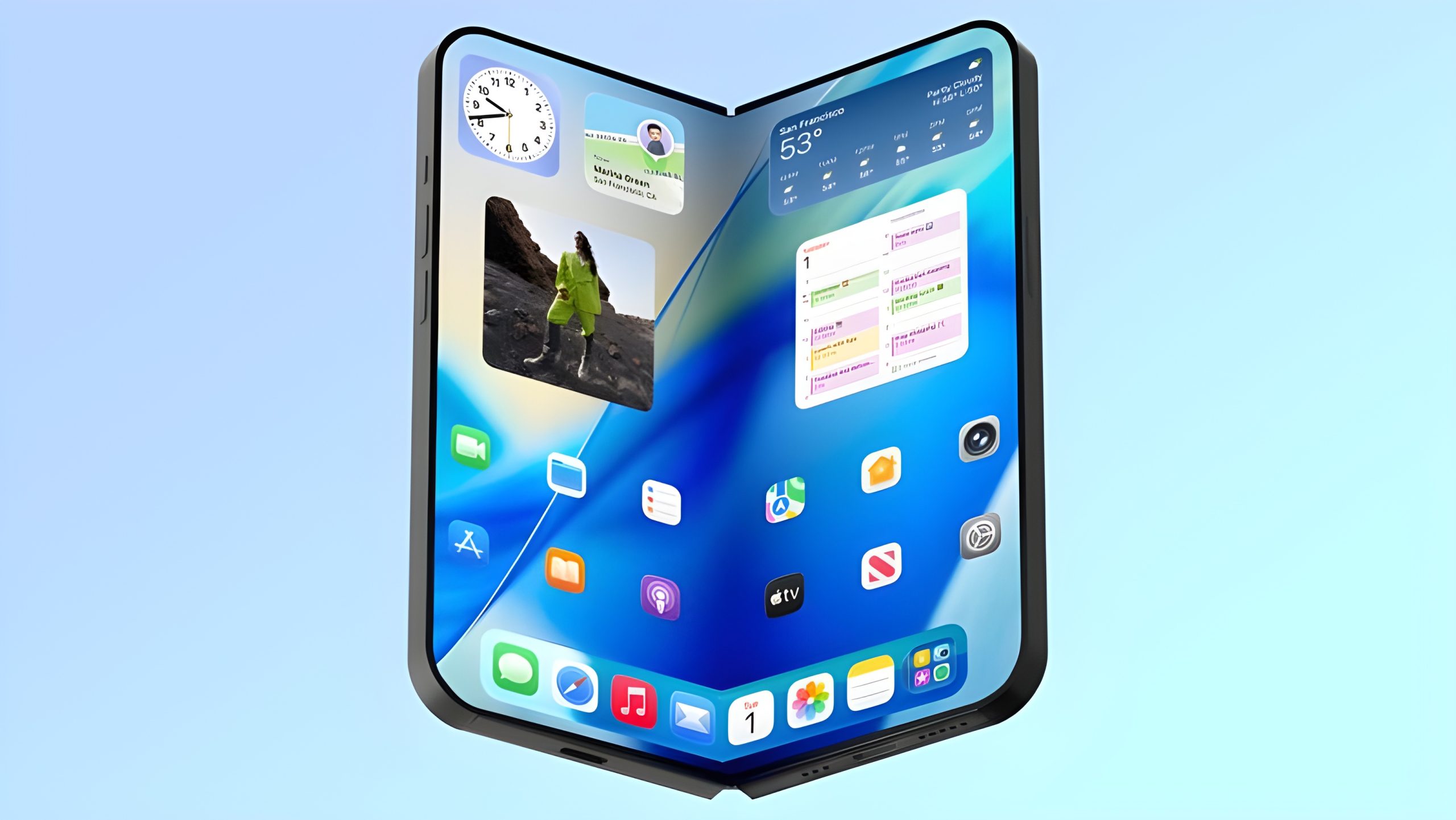
Apple’s long-rumored foldable iPhone is starting to sound more real, and a new report suggests the company may finally bring one of its most talked-about materials to a much bigger part of the device. The upcoming iPhone Fold is now rumored to use a liquid metal hinge paired with a titanium body, a combination intended to boost durability while helping Apple fine-tune weight distribution—two critical factors for making a foldable phone feel premium and balanced in the hand.
The liquid metal hinge rumor also lines up with earlier chatter from well-known Apple supply chain commentary that pointed to liquid metal being used to improve hinge longevity and reduce the display crease that many foldable phones still struggle with. Apple has referenced liquid metal frequently in patents over the years, but real-world use has been limited, likely because producing liquid metal parts at scale is difficult. That’s why it has mostly appeared in smaller components, such as SIM-related parts. If Apple really moves liquid metal into the hinge—one of the most important and mechanically demanding parts of a foldable—it could signal that the company has solved major manufacturing hurdles.
At the same time, Apple is also rumored to be exploring display efficiency improvements. One claim says a color filter may be applied to the protective encapsulation layer of the foldable OLED panel, potentially making the screen lighter and more power-efficient. For a foldable iPhone, shaving weight and improving battery performance could be just as important as making the screen look great.
The biggest headline feature, however, may be a nearly crease-free foldable display. Creases are still the most visible downside of foldable phones, and Apple is widely expected to push hard for a cleaner, flatter look. Samsung recently showed a crease-reducing panel concept at CES 2026, and one described approach relies on a metal plate underneath the folding OLED. With perforations designed to spread pressure differently each time the phone folds, the structure helps avoid concentrating stress along the hinge line—reducing the chance of a noticeable crease forming over time.
Apple has reportedly tested multiple iterations of ultra-thin flexible glass while chasing that crease-free finish, suggesting the company has been iterating aggressively behind the scenes to get the fold feel and long-term durability right before launching.
As for the design, the iPhone Fold is expected to use a passport-style wide form factor. The main, internal display is rumored to be around 7.7 inches, while the outer cover display may come in at about 5.4 inches—giving users a familiar phone experience when closed and a compact tablet-like view when opened.
Other rumored iPhone Fold specifications and features include a dedicated vapor chamber for cooling, a 2,713 x 1,920 resolution paired with a 4:3 aspect ratio, and a notable biometric change: side-mounted Touch ID instead of Face ID. Internally, the device is said to feature an A20 Pro chip, 12GB of RAM, and Apple’s in-house C2 5G modem. Camera details in the leak point to a dual 48MP rear setup, plus an in-display front camera that could reach up to 24MP.
Battery capacity is estimated in the 5,400 to 5,800mAh range, which—combined with potential display efficiency tweaks—could help offset the power demands of a large foldable screen. The iPhone Fold is also rumored to launch as an eSIM-only device, reflecting Apple’s ongoing push away from physical SIM hardware.
Timing and price expectations remain ambitious. The latest talk points to a second-half 2026 launch window, with a projected price around $2,399. First-year shipments are estimated to land somewhere between 7 million and 9 million units, indicating Apple may be planning a serious rollout rather than a limited experiment.
Of course, until Apple confirms anything, these details should be treated as informed speculation. Still, the combination of a liquid metal hinge, titanium body, and a strong focus on crease reduction paints a clear picture of Apple’s priorities: make the foldable iPhone feel durable, balanced, and refined enough to justify a premium price—and stand out in a market where hinge reliability and screen creases still define the experience.