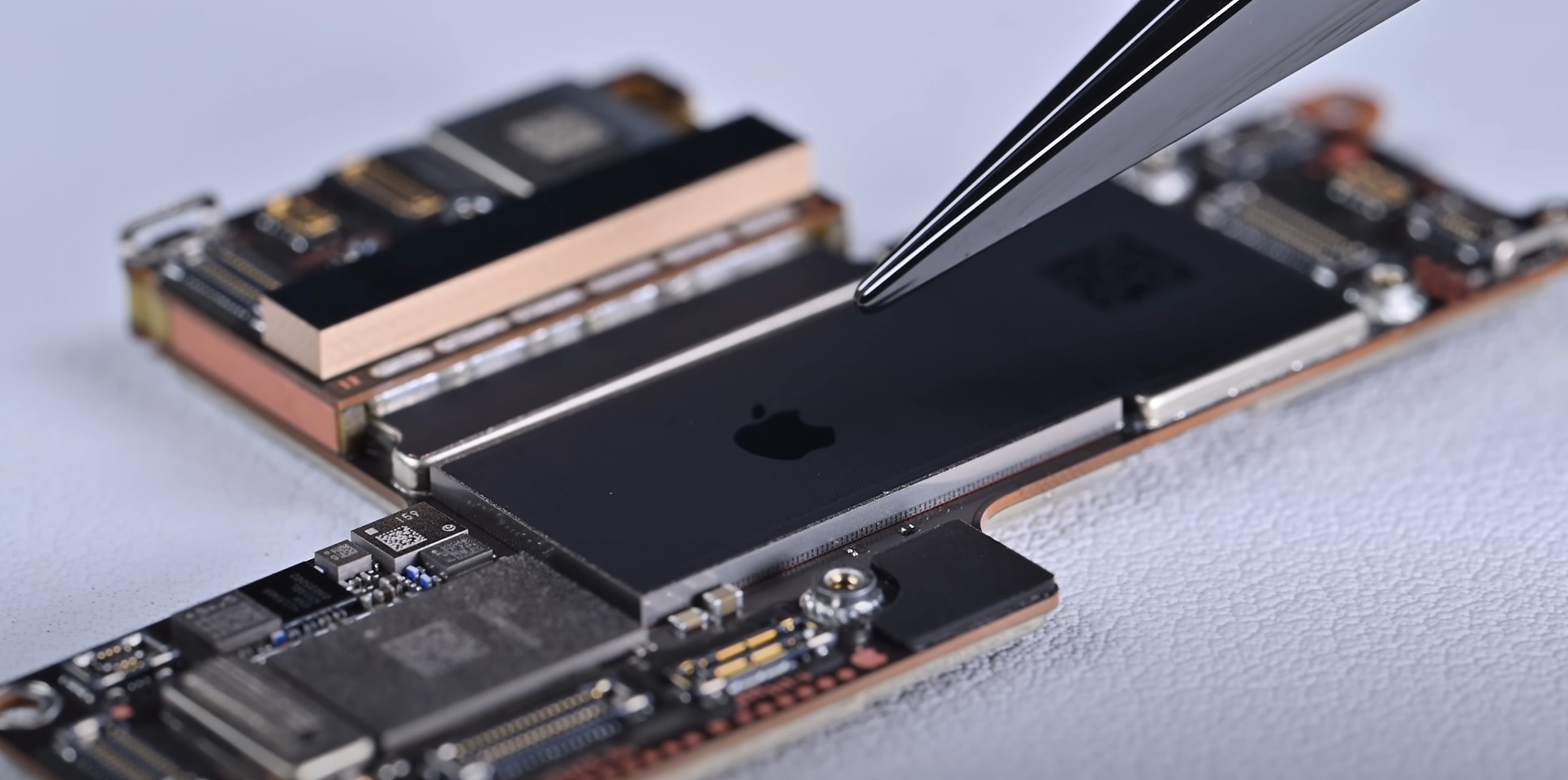
iPhone Air storage mods are hitting a wall, and a new hands-on attempt shows just how unforgiving that wall can be. For years, tinkerers have squeezed extra value out of iPhones by swapping in larger NAND chips—an attractive alternative to paying steep factory premiums for more storage. On the latest iPhone Air, though, a widely watched mod has run into what looks like a hard stop during the iOS restore process.
A well-known device modder, DirectorFeng, took a brand-new iPhone Air with 256GB of storage and attempted to upgrade it to 1TB by desoldering the original NAND and installing a higher-capacity chip. During teardown, he noted the storage package carried a serial starting with “2NB,” a marking he hadn’t seen on earlier models. He also pointed out that the chip didn’t appear to come from the typical big-name suppliers he’s encountered in past iPhones, and speculated—without confirmation—about its potential origin.
The physical upgrade itself went smoothly, but flashing iOS immediately triggered error 4014, halting the restore. Thinking capacity might be the issue, he tried again with 512GB and then another 256GB module. Each attempt failed with the same 4014 error. The pattern suggests one of two possibilities: either compatible, recognized NAND modules for this iPhone generation aren’t yet available to independent repairers, or the phone is now enforcing tighter pairing/serialization rules that block third-party storage replacements outright.
The hard truth is that the iPhone Air used for the experiment is currently inoperable, since the original chip was wiped during the swap. It could be revived later if a compatible module appears or a reliable activation path is discovered, but there’s no timeline—and no guarantee—it will ever work.
What this means for users and repair pros:
– Storage upgrades via aftermarket NAND swaps on the latest iPhone Air may be effectively blocked by software checks or component pairing.
– Error 4014 during restore can indicate deeper issues than a bad solder job—potentially a recognition or activation barrier for non-original storage.
– If you need more space, the safest route remains choosing a higher-capacity model at purchase or using cloud and external storage options.
– Anyone considering a DIY upgrade risks permanently bricking the device and voiding any warranty or service eligibility.
Bottom line: For now, treating the iPhone Air’s storage as non-upgradable is the safest assumption. Until proven-compatible NAND modules or a verified activation process surface, paying for the capacity you need upfront looks far less painful than turning a flagship phone into a paperweight. The findings here come from a single, well-documented attempt, so more testing will be needed to confirm whether this is a universal behavior across production units and future software builds.