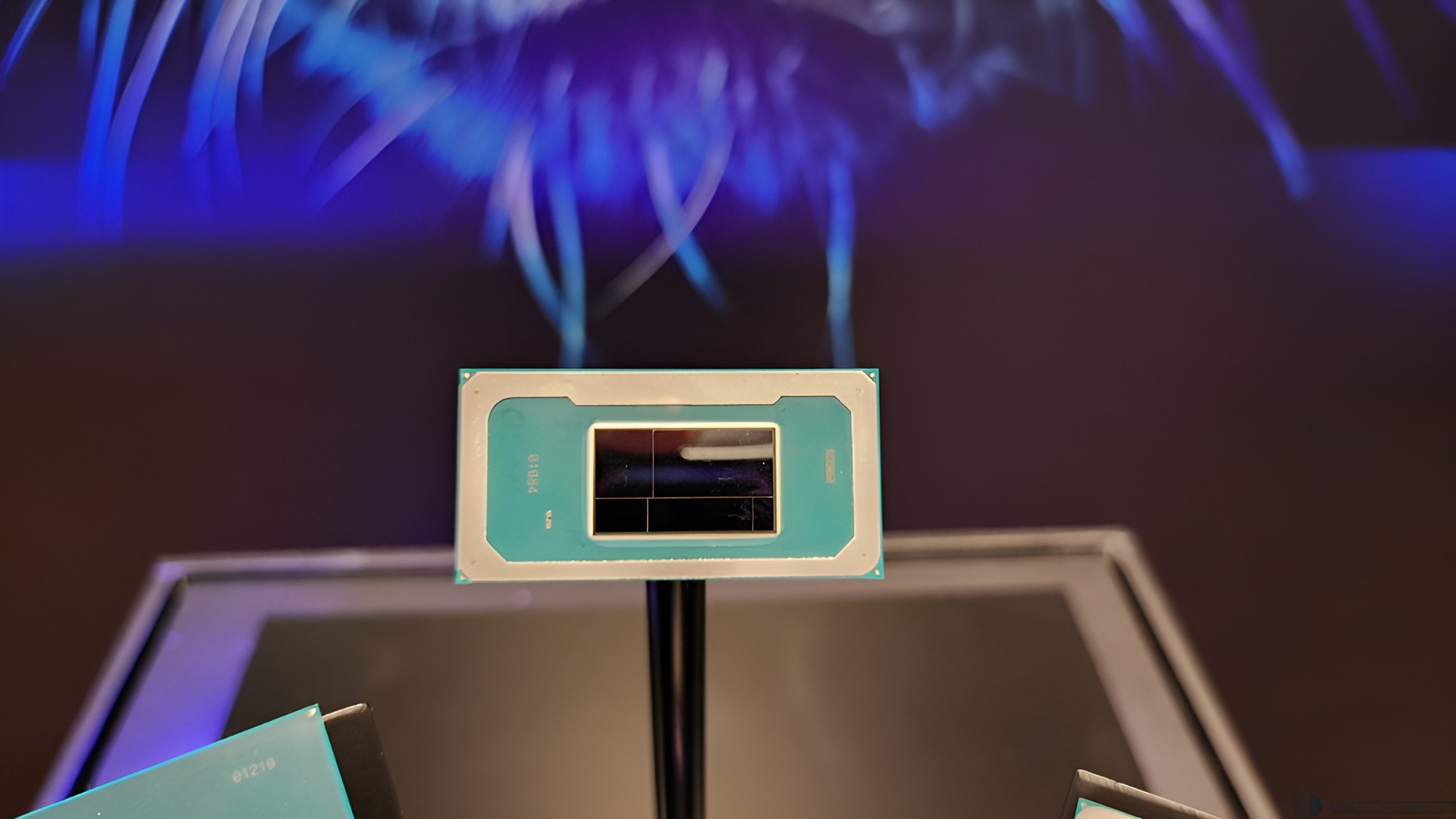
Intel’s next mobile platform, Panther Lake, is shaping up to be one of the most important releases in the company’s recent history. Slated to headline the Core Ultra 300 family and built on the cutting‑edge 18A process, these chips aim to push performance, efficiency, and on-device AI to new heights—while also serving as a litmus test for Intel’s manufacturing roadmap and broader ambitions in U.S. chipmaking.
When to expect it
Current guidance points to a late 2025 introduction for Panther Lake mobile CPUs, with high-volume manufacturing ramping in early 2026. In practical terms, that means most mainstream laptops powered by Panther Lake are likely to arrive across 2026, contingent on how smoothly the 18A node scales.
Why Panther Lake matters
This launch isn’t just about faster laptops. It’s about proving out 18A at scale and signaling whether Intel Foundry can become a cornerstone of domestic semiconductor production. A strong debut would validate the company’s aggressive process roadmap and set the stage for follow-up platforms like Clearwater Forest.
Lineup and architecture
Panther Lake will carry forward the Core Ultra branding introduced with Meteor Lake and continued by Lunar Lake. Expect H- and U-series parts at launch, with no HX variants initially. The architecture combines Cougar Cove performance cores with Darkmont efficiency cores in a modern, multi-tile design that includes compute, graphics, SoC, and I/O. Early chatter suggests LP-E cores may appear on later revisions rather than day one.
What the SKUs could look like
– Core configuration: Many models are expected to stick with four P-cores, while E-core and potential LP-E allocations will differentiate tiers.
– Power targets: U-series parts are rumored around a 15W base, while H-series target roughly 25W, with higher turbo envelopes up to about 45W depending on the model.
– Memory support: Up to LPDDR5X 8533 MT/s is on the table, with DDR5 speeds potentially reaching 7200 MT/s, alongside lower-speed options for broader compatibility.
– Graphics: Top configurations are expected to offer up to 12 Xe3 cores, a notable step up from the previous generation.
A bigger leap in AI performance
Panther Lake is anticipated to debut Intel’s 5th‑generation NPU, purpose-built for on-device AI workloads. Rumors point to up to 180 TOPS of AI compute, far beyond the NPU4 in Lunar Lake and positioned to challenge or exceed rival offerings. This kind of throughput is tailor-made for AI PCs—accelerating tasks like local generative models, media enhancement, voice and vision applications, and intelligent productivity features, while keeping latency and privacy advantages of on-device processing.
Xe3 “Celestial” graphics take center stage
Panther Lake is also expected to be the first platform with Xe3 “Celestial” integrated graphics. Compared to Xe2, Xe3 is targeting major gains in performance, efficiency, and media capabilities. With up to 12 Xe3 cores, faster clocks, and upgraded XMX engines, users should see stronger gaming at 1080p, better content creation acceleration, and more advanced AV1 encoding. Xe3’s debut in integrated form will also preview the technology underpinning Intel’s next wave of discrete GPUs.
Early engineering glimpses
An engineering sample demoed earlier in development showcased a 16-core, 16-thread configuration with 1.6 MB L1, 24 MB L2, and 18 MB L3 cache. Clock speeds at that stage weren’t representative of final silicon, but the demo underscored the platform’s momentum as it moved toward launch.
What this means for laptops in 2026
If Intel executes, expect slimmer, cooler systems that deliver:
– Noticeably higher CPU performance per watt
– Substantial integrated GPU gains for gaming and creation
– A massive uplift in NPU throughput for advanced AI features
– Faster memory support that feeds both CPU and GPU
– Better battery life thanks to the efficiency focus of 18A and the multi-tile design
The bottom line
Panther Lake is the make-or-break showcase for 18A in client computing. A successful rollout would reinforce confidence in Intel’s process roadmap and foundry strategy, while giving laptop buyers exactly what they want in 2026: faster, smarter, and more efficient AI PCs. With upgraded cores, a next-gen NPU, and Xe3 graphics, Panther Lake looks poised to be a decisive moment for Team Blue—and for the future of mobile computing.


