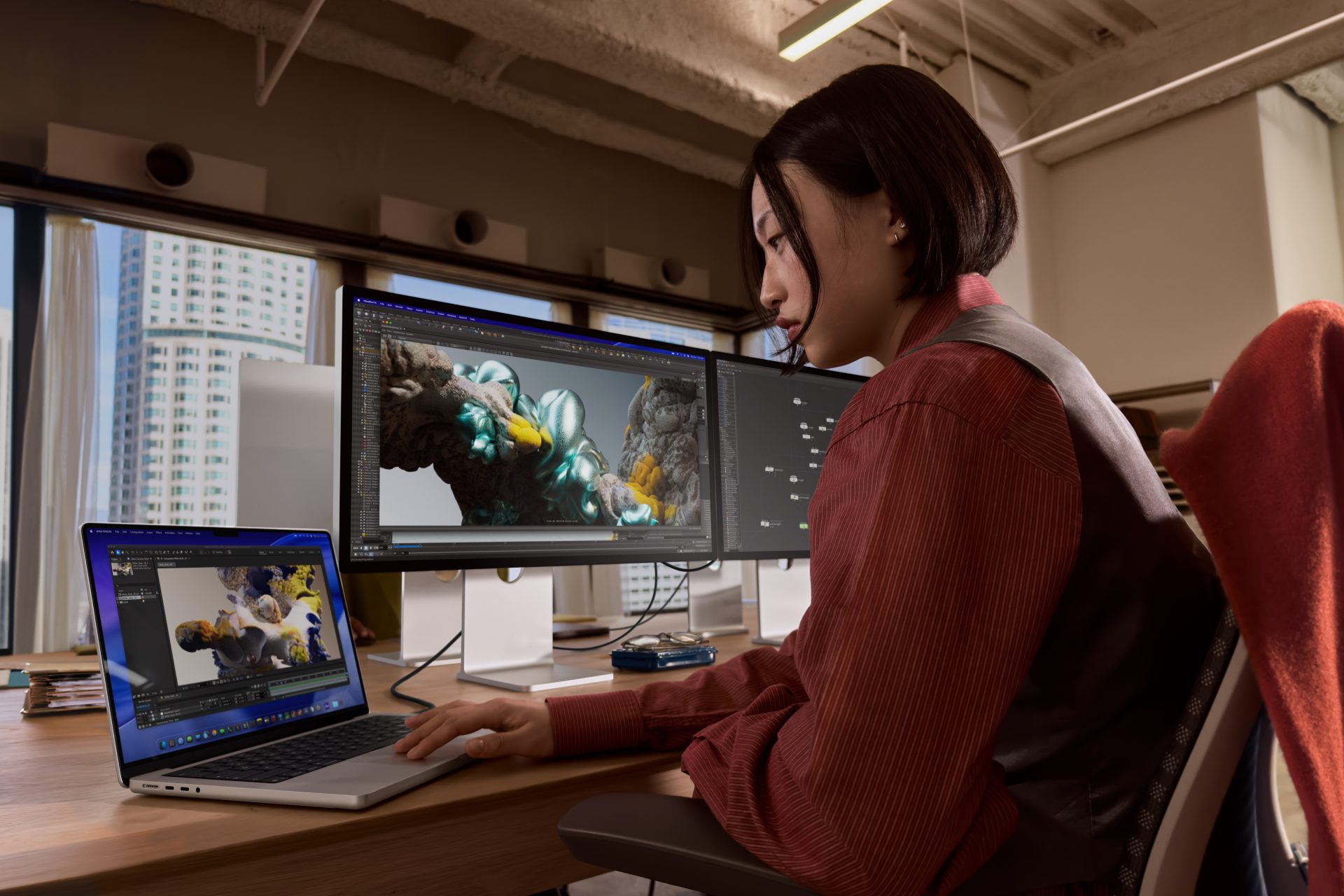
Apple’s product lineup is always evolving, and the company has a well-earned reputation for making bold changes that quickly reset expectations across the tech world. The latest shift is a big one for creative professionals: Apple has discontinued the 32-inch Pro Display XDR and is now pushing a new model in its place, the Studio Display XDR.
This move effectively ends Apple’s only 32-inch desktop display option and replaces it with a smaller, more affordable alternative. For users who loved the idea of a large 6K screen—especially anyone holding out for a 32-inch, high-refresh display—the change is bound to sting. The new display may be powerful, but it doesn’t offer the same screen real estate that made the Pro Display XDR such a standout in high-end production setups.
What Apple is offering instead is a 27-inch 5K Retina XDR experience built around mini-LED technology and a faster refresh rate. In other words, it’s designed to be a premium display that feels more modern in daily use, even if it steps down in size and resolution compared to the older flagship.
Here’s what the Studio Display XDR brings to the table.
It features a 27-inch 5K panel with a 5120-by-2880 resolution, aiming to deliver crisp text, sharp UI scaling, and high detail for photo and video work. Apple pairs that with a mini-LED backlight and 2,304 local dimming zones, which should help produce deeper blacks, punchier highlights, and stronger overall contrast.
Brightness is another major focus. The Studio Display XDR is rated for up to 1000 nits in SDR and up to 2000 nits peak brightness for HDR, along with a claimed 1,000,000:1 contrast ratio—specs that clearly target HDR creators and anyone working in demanding lighting conditions.
Color support is also aimed at professionals. In addition to P3 wide color, Apple adds Adobe RGB support, and the display is said to cover more than 80 percent of Rec. 2020, which matters for HDR workflows, color grading, and video production where wider color spaces can make a visible difference.
A key upgrade many users will care about is refresh rate. The Studio Display XDR includes a 120Hz refresh rate with Adaptive Sync support, letting the refresh rate vary from 47Hz to 120Hz. That can translate into smoother motion, better responsiveness, and reduced latency—useful not only for gaming, but also for scrolling timelines, animation, and general fluidity.
Apple is also positioning the display for specialized fields. It includes support for DICOM medical imaging presets and a Medical Imaging Calibrator, allowing it to be used in diagnostic radiology environments where accurate calibration standards are required.
On the collaboration side, it includes a 12MP Center Stage camera designed to keep you centered as you move, plus Desk View for showing both your face and a top-down view of your workspace—features that can be handy for teaching, remote reviews, or demonstrating creative work.
Audio gets a premium treatment as well, with a three-microphone array that uses directional beamforming and a six-speaker system with Spatial Audio support, turning the display into more of an all-in-one workstation centerpiece.
Connectivity is highlighted by Thunderbolt 5, along with a second port for downstream accessories or daisy-chaining other displays, and two additional USB‑C ports for extra peripherals.
Price is where Apple is likely hoping to win people over. The Pro Display XDR debuted at $4,999, while the Studio Display XDR starts at $3,299. It’s still firmly in premium territory, but the entry point is notably lower—especially for buyers who wanted an Apple-branded professional monitor without spending five thousand dollars before accessories.
There are important compatibility limits to keep in mind. The Studio Display XDR is designed for M-series Macs only, and if you’re on an M1, M1 Pro, M1 Max, M1 Ultra, M2, or M3 system, you’ll be capped at up to 60Hz rather than the full 120Hz. That means the smoothest experience may require newer hardware, which could affect the overall value proposition for many existing Mac owners.
Overall, Apple’s decision trades big-screen 6K workspace for a smaller 5K panel with modern mini-LED tech and high refresh capabilities, at a lower starting price. For some creators, that will feel like a practical upgrade. For others—especially those who wanted the largest canvas Apple offered—it will look more like a step backward in size, even if the feature list is stronger in other ways.