Most galaxies announce themselves with bright starlight, glowing gas, and well-defined spiral arms or elliptical shapes. CDG-2 does the opposite. It’s a rare “dark galaxy” so faint that it’s nearly starless, making it extremely difficult to spot with traditional observing methods. Instead of shining across space, CDG-2 is dominated by something we can’t see at all: dark matter.
Researchers estimate that about 99% of CDG-2’s total mass is dark matter. Because it gives off very little visible light, CDG-2 falls into the category of a low-surface-brightness galaxy—an object that exists more as a gravitational presence than a luminous one. What made it stand out wasn’t a bright core or a cloud of gas, but an unusual clue: a tight grouping of globular clusters.
Globular clusters are dense, ancient collections of stars that often orbit galaxies like bees around a hive. In CDG-2’s case, these clusters acted like signposts pointing to something bigger. Astronomers initially detected the system based on how closely packed these clusters were, suggesting they were bound together by a hidden mass. That mass, it turns out, is a galaxy that’s largely invisible.
CDG-2 sits inside the Perseus Cluster, a massive gathering of galaxies roughly 300 million light-years from Earth. This region of space is anything but gentle. Galaxies moving through a dense cluster can experience powerful gravitational interactions that pull material away. One major process at work is gas stripping, where essential gases—especially hydrogen—get removed from smaller galaxies. Another is ram-pressure stripping, which happens as a galaxy plows through hot, thin cluster gas, effectively sweeping away the raw fuel needed to form new stars.
That matters because hydrogen is a key ingredient in star formation. Without it, galaxy-building slows dramatically. The extreme environment of the Perseus Cluster may help explain why CDG-2 has so few stars and such a dim glow: much of its star-forming material may have been stripped away long ago, leaving behind a galaxy that’s mostly dark matter with only a faint stellar footprint.
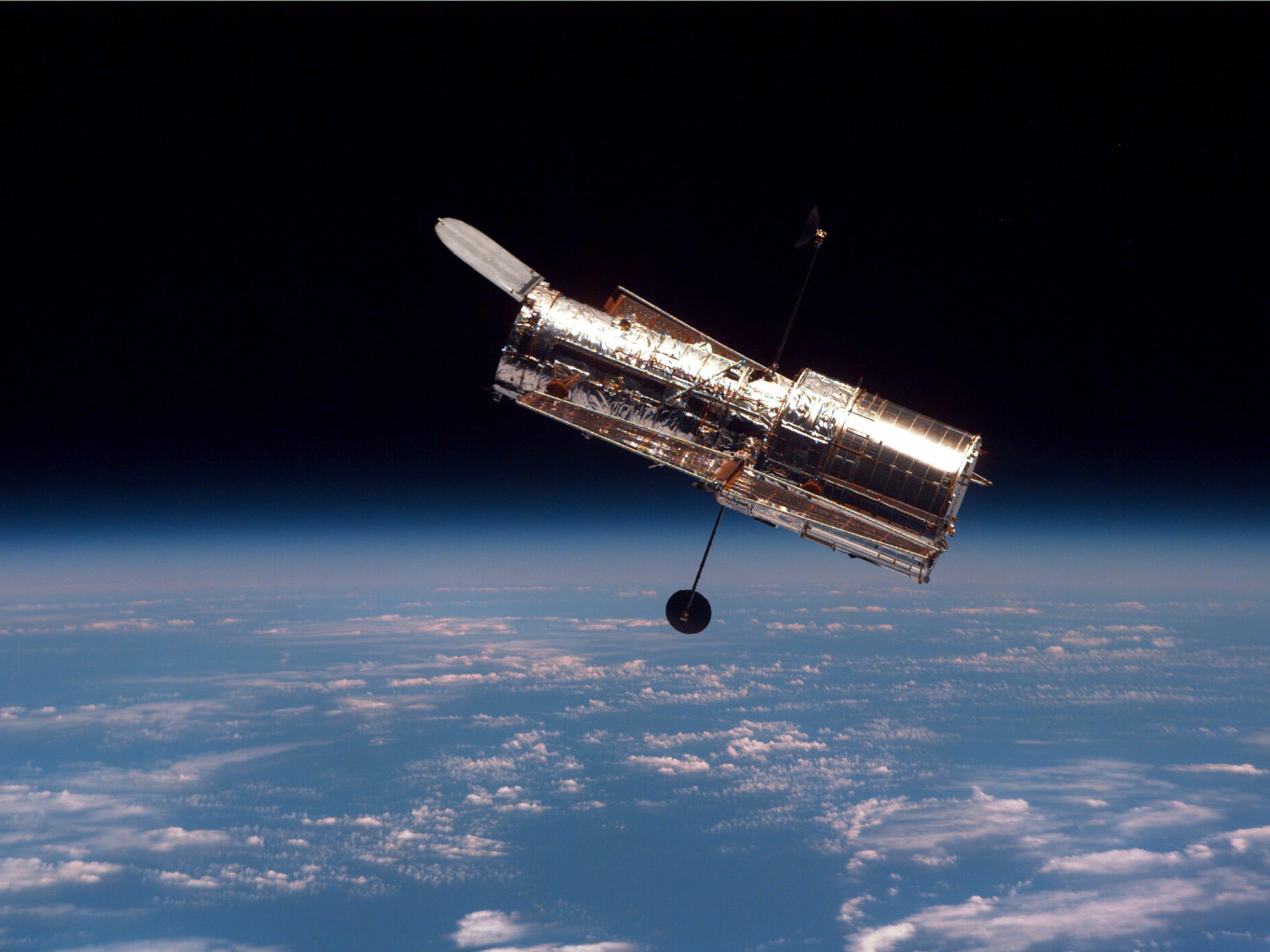
To confirm CDG-2 wasn’t just a coincidental grouping of clusters, astronomers relied on three major observatories working together. The Hubble Space Telescope delivered sharp, high-resolution images that clearly identified four globular clusters. Euclid, designed to excel at detecting extremely faint, low-surface-brightness objects, reinforced the finding by revealing the subtle diffuse light spread around the clusters through wide-field imaging. The Subaru Telescope added crucial ground-based deep imaging to support the detection with additional confirmation data.
Together, the three observatories showed that these globular clusters weren’t floating in isolation. They were embedded in a faint, extended glow—strong evidence that an underlying galaxy is there, even if it’s barely visible.
Discoveries like CDG-2 are more than cosmic curiosities. Dark matter remains one of the biggest mysteries in modern physics, detectable only through gravity and its influence on visible objects. A galaxy made almost entirely of dark matter offers astronomers a valuable natural laboratory. By studying systems like CDG-2, scientists get a clearer window into how dark matter shapes galaxies, how extreme cluster environments can shut down star formation, and what might be happening behind the universe’s most elusive curtain.