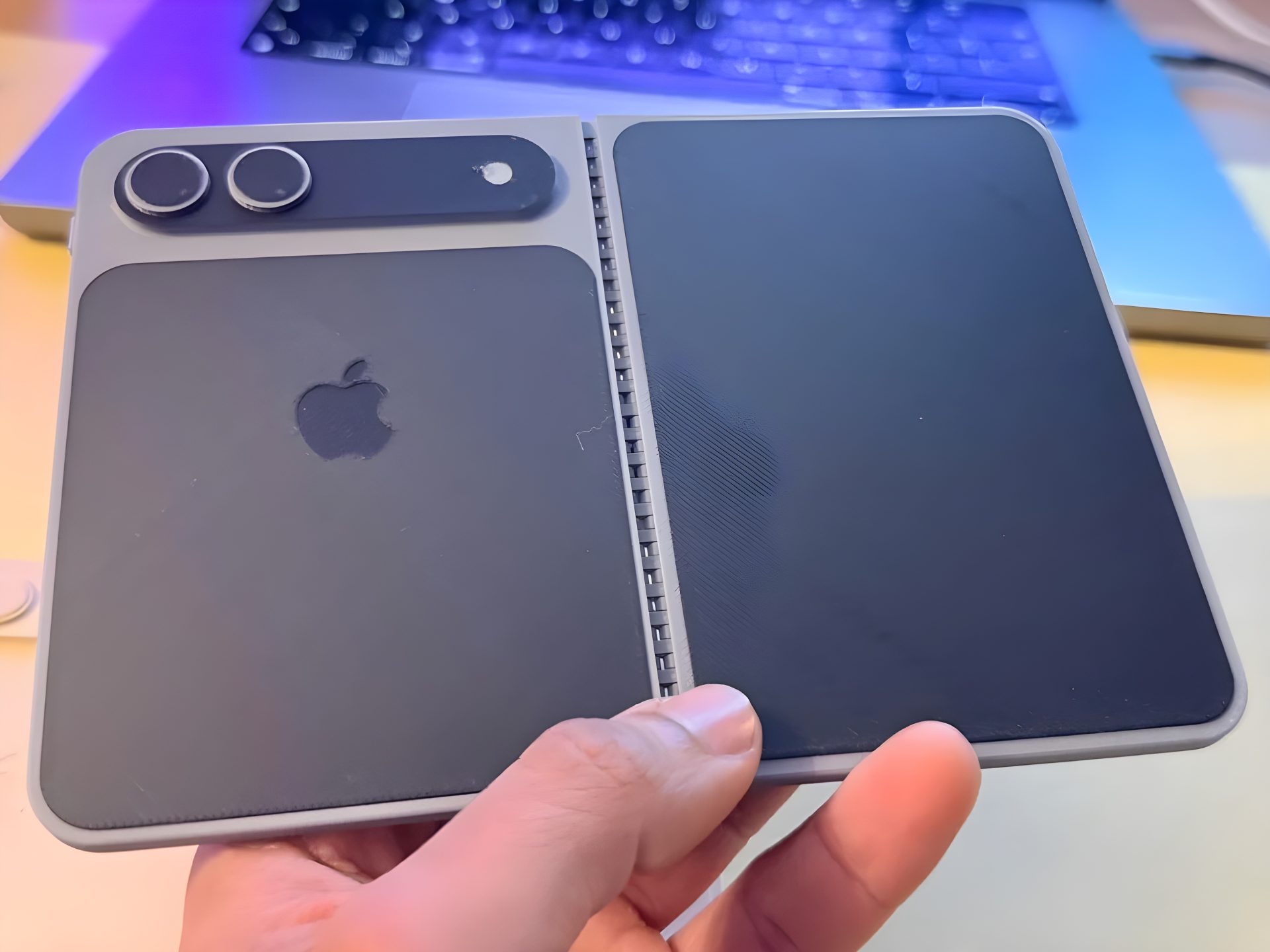
Apple’s rapid-fire launch streak has finally cooled off, and that shift is already putting the spotlight on what could be the company’s biggest iPhone swing in years: the iPhone Fold. With a likely debut window in the second half of 2026 alongside the iPhone 18 Pro and iPhone 18 Pro Max, Apple’s first foldable iPhone is already generating serious momentum—especially if the latest supply-chain chatter is accurate.
A new report from Taiwan says Apple has increased its initial iPhone Fold production target by around 20 percent. If true, it’s a strong sign of confidence. Companies don’t typically raise early inventory plans unless they believe demand will be there, and this move would also be a clear win for Foxconn, which is expected to be the primary device assembler.
The same report suggests Apple has been refining this product for years, reportedly revising the iPhone Fold’s design more than 10 times over the last five years. With the launch drawing closer, mass production for key components is said to ramp up toward the end of Q2—right in line with the traditional manufacturing timeline for a major fall release.
One reason the iPhone Fold is drawing so much attention is its rumored “passport-style” form factor. Instead of going for an ultra-tall foldable look, Apple is expected to use a wider design, featuring a roughly 7.7-inch main display and a 5.4-inch cover screen. That broader layout could make the unfolded iPhone Fold feel closer to a compact tablet, potentially giving it a more natural advantage for productivity, reading, and multitasking.
Apple also appears to be going all-in on durability and premium materials. The iPhone Fold is rumored to use a liquid metal hinge paired with a titanium body—an expensive combination designed to improve rigidity while keeping weight and balance under control. For foldables, the hinge is everything, and Apple is expected to treat it as a major differentiator.
Another key focus is the crease—or more specifically, reducing it to the point where it’s barely noticeable. The display crease is still one of the biggest pain points for foldable phones, and Apple reportedly wants a near-creaseless result. One detail making the rounds claims the crease depth could be as low as 0.15mm, which would be extremely subtle. Achieving that would likely require extensive use of ultra-thin flexible glass technology as well as a redesigned hinge mechanism that better supports the panel over time.
On the display side, Apple is also said to be exploring a power- and weight-saving OLED approach by using COE (Color Filter on Encapsulation). In simpler terms, this method can reduce layers in the display stack, helping make the screen lighter and potentially more energy efficient—two advantages that matter a lot when you’re powering a large foldable panel.
A batch of additional rumored specs helps paint a clearer picture of what Apple may be aiming for with its first foldable iPhone. The main display is expected to land at 2,713 x 1,920 resolution with a 4:3 aspect ratio, which reinforces the idea of a more tablet-like experience when unfolded. Cooling may also be a priority, with talk of a dedicated vapor chamber to manage heat.
Security could take a different route as well. Instead of Face ID, the iPhone Fold is rumored to use side-mounted Touch ID. That wouldn’t be unprecedented—especially when internal space is tight and the device design is complex—but it would still be a notable shift for a flagship-tier iPhone.
Performance and connectivity rumors point to an A20 Pro chip paired with 12GB of RAM, along with an in-house C2 5G modem. If accurate, that combination would signal Apple’s continued push toward deeper control over its wireless stack—something that could affect battery life, signal performance, and long-term platform optimization.
The camera setup is expected to include a 48MP dual rear camera system, plus an in-display front-facing camera that could reach up to 24MP. Meanwhile, battery estimates range from about 5,400mAh to 5,800mAh—reasonable for a wide, dual-display foldable, especially if Apple is targeting all-day endurance.
Other reported details include an eSIM-only approach and a projected price around $2,399, placing it firmly in ultra-premium territory. As for sales expectations, first-year shipments are rumored to land somewhere between 7 million and 9 million units, which would be an ambitious start for a brand-new iPhone category.
If these details hold up, Apple isn’t planning to simply enter the foldable market—it’s aiming to make a statement with design, materials, display engineering, and polish. The increased production target only adds to the sense that Apple expects the iPhone Fold to be more than a niche experiment. It may be positioning it as the next major evolution of the iPhone.