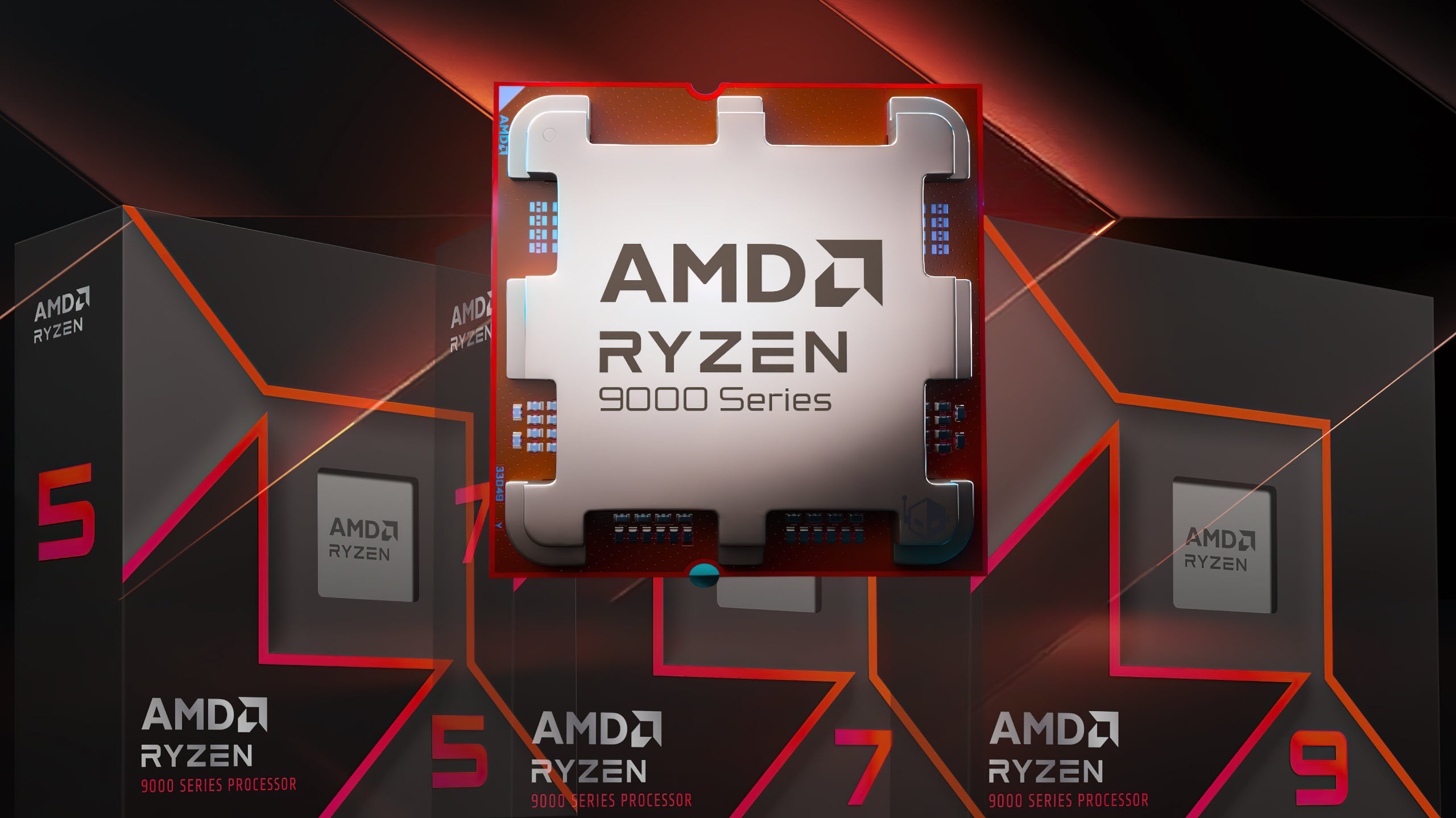
AMD has introduced significant performance upgrades for its Ryzen 9000 “Zen 5” and Ryzen 7000 “Zen 4” CPUs with the latest Windows 11 24H2 update. Initially, the launch of the Ryzen 9000 “Zen 5” Desktop CPUs faced criticism for not meeting performance expectations, particularly in gaming. This issue was identified as stemming from insufficient support within the Microsoft Windows operating system, particularly in branch predictor optimization.
The Windows 11 24H2 update has now addressed these optimization issues, leveraging the branch prediction capabilities of the Ryzen 9000 “Zen 5” CPUs effectively. As a result, AMD’s internal testing shows a 9% average performance uplift at 1080p when compared to the Ryzen 7000 “Zen 4” CPUs. Independent testing by outlets such as Hardware Unboxed corroborates these findings, showing significant performance gains across various titles.
Interestingly, the Ryzen 7 9700X and Ryzen 7 7700X CPUs saw negligible differences in performance following the Windows update, suggesting that both Zen 5 and Zen 4 architectures benefit from the improvements. This contradicts AMD’s initial marketing claims that emphasized a stark performance rise exclusive to Zen 5.
The rationale behind AMD keeping this substantial update low-key remains unclear. Capitalizing on the Windows update at the launch of the Granite Ridge “Ryzen 9000” lineup could have garnered a more favorable market reception. The benchmarks indicate that the benefits of the Windows 24H2 update extend beyond AMD processors, also providing a slight performance boost to existing Intel SKUs.
As the desktop CPU market evolves, the increased gaming performance of AMD’s Ryzen 9000 “Zen 5” CPUs will be under scrutiny. With Intel’s Arrow Lake-S CPUs set to release in October, the competitive landscape could see further shifts. The unfolding scenario will determine if AMD’s enhancements will hold against Intel’s upcoming offerings.