AMD Hits Record Server CPU Revenue Share in Q1 2026 as EPYC Demand Surges
AMD started 2026 with strong momentum in the x86 CPU market, led by major gains in the server segment and continued growth across client processors. According to the latest Q1 2026 CPU market data from Mercury Research, AMD reached a total CPU unit share of 30%, gaining 5.6 percentage points compared to the same period last year. Its overall CPU revenue share also climbed to 38.1%, up 6.5 points year over year.
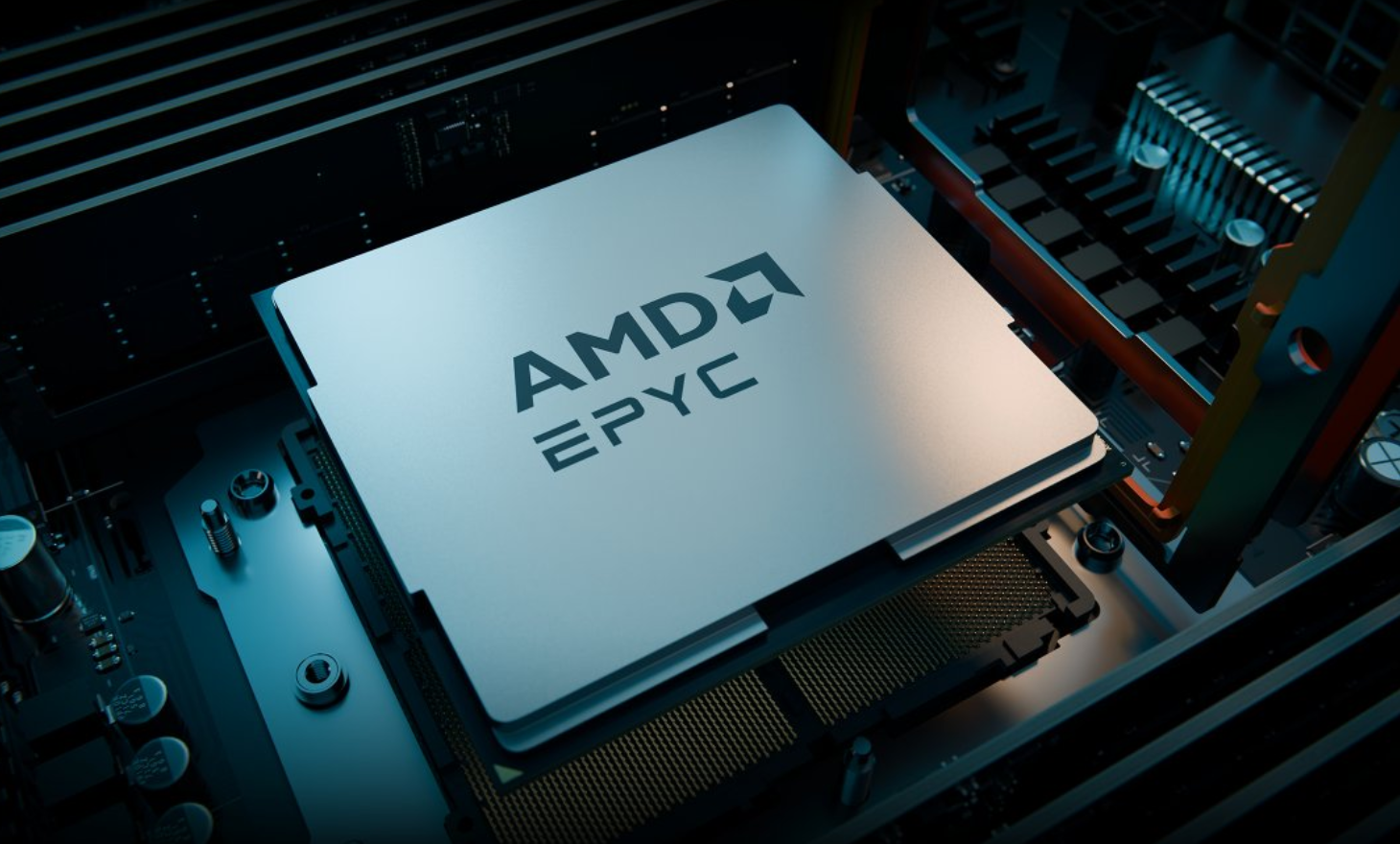
The biggest highlight was AMD’s server business, where EPYC processors pushed the company to a record 46.2% revenue share. That marks an increase of 6.8 percentage points from last year and 4.9 points from the previous quarter. AMD’s server unit share also reached 33.2%, showing that EPYC adoption continues to expand across cloud providers, enterprise customers, and high-performance computing environments.
AMD’s server growth reflects the strength of its current EPYC CPU families, including Genoa and Turin, which have helped the company gain ground in data centers. With future platforms such as Venice, Verano, and the MI400 series expected to support next-generation AI and high-performance computing systems, AMD is positioning itself to capture more demand as workloads become increasingly AI-driven.
The company’s client CPU business also showed steady improvement. Total client unit share reached 29.6%, while client revenue share climbed to 31.4%. That is a slight increase from the previous quarter and a much stronger gain compared to last year, when AMD held 24.1% client unit share and 26.6% client revenue share.
Desktop CPUs showed mixed performance. AMD’s desktop unit share came in at 33.2%, down 3.2 points compared to the previous quarter, but up 5.1 points year over year. Desktop revenue share reached 37.6%, down 5 points quarter over quarter but still up 3.2 points from the same quarter last year.
The decline from the previous quarter appears to reflect a slower desktop PC market. Higher memory and graphics card prices have made full system upgrades more expensive, causing some consumers to delay purchases. Even so, AMD remains in a much stronger desktop position than it was a year ago, helped by continued interest in Ryzen processors among gamers, creators, and PC enthusiasts.
AMD’s mobile CPU business delivered one of the strongest results in the client category. Notebook unit share rose to 28.3%, up 2.3 points from the previous quarter and 5.8 points year over year. Notebook revenue share reached 28.9%, gaining 4 points quarter over quarter and 6.6 points year over year.
The rise in notebook share has been supported by the growing reception of AMD’s Ryzen AI and Ryzen AI MAX processors. These chips combine strong performance, improved power efficiency, and built-in AI acceleration, making them attractive for premium laptops, creator-focused systems, and next-generation AI PCs. AMD’s continued development of Ryzen XDNA technology is also helping strengthen its position in the AI PC market.
Here is a breakdown of AMD’s Q1 2026 CPU share performance:
Server CPU share:
Unit share: 33.2%
Revenue share: 46.2%
Quarter-over-quarter change: up 3.3 points in units, up 4.9 points in revenue
Year-over-year change: up 6.0 points in units, up 6.8 points in revenue
Desktop CPU share:
Unit share: 33.2%
Revenue share: 37.6%
Quarter-over-quarter change: down 3.2 points in units, down 5.0 points in revenue
Year-over-year change: up 5.1 points in units, up 3.2 points in revenue
Mobile CPU share:
Unit share: 28.3%
Revenue share: 28.9%
Quarter-over-quarter change: up 2.3 points in units, up 4.0 points in revenue
Year-over-year change: up 5.8 points in units, up 6.6 points in revenue
Total client CPU share:
Unit share: 29.6%
Revenue share: 31.4%
Quarter-over-quarter change: up 0.4 points in units, up 0.2 points in revenue
Year-over-year change: up 5.5 points in units, up 4.8 points in revenue
Total CPU share:
Unit share: 30.0%
Revenue share: 38.1%
Quarter-over-quarter change: up 0.7 points in units, up 2.7 points in revenue
Year-over-year change: up 5.6 points in units, up 6.5 points in revenue
The broader market trend continues to favor AMD in areas tied to AI, cloud computing, and high-performance workloads. Demand for advanced server processors is rising quickly as companies invest in infrastructure for AI training, inference, analytics, and enterprise automation. AMD’s EPYC CPUs, paired with its Instinct accelerators and future AI platforms, give the company a stronger opportunity to grow in data centers over the coming quarters.
However, supply constraints remain an important factor. Leading chip manufacturers are facing heavy wafer demand from AI companies, cloud providers, and processor vendors developing their own custom silicon. As AI infrastructure spending accelerates, advanced manufacturing capacity is becoming one of the industry’s biggest pressure points.
Even with those challenges, AMD’s outlook in servers remains strong. The company has raised expectations for the server CPU opportunity, with the market forecast reaching around $120 billion. That gives AMD significant room for further expansion if EPYC adoption continues at its current pace.
The client PC market may recover more slowly due to pricing pressure on components, but AMD’s gains in notebooks and AI PCs show clear progress. With Ryzen processors gaining traction in mobile systems and EPYC CPUs setting records in the server market, AMD’s Q1 2026 results point to a strong start to the year and a growing role in the future of AI computing, data centers, and next-generation PCs.