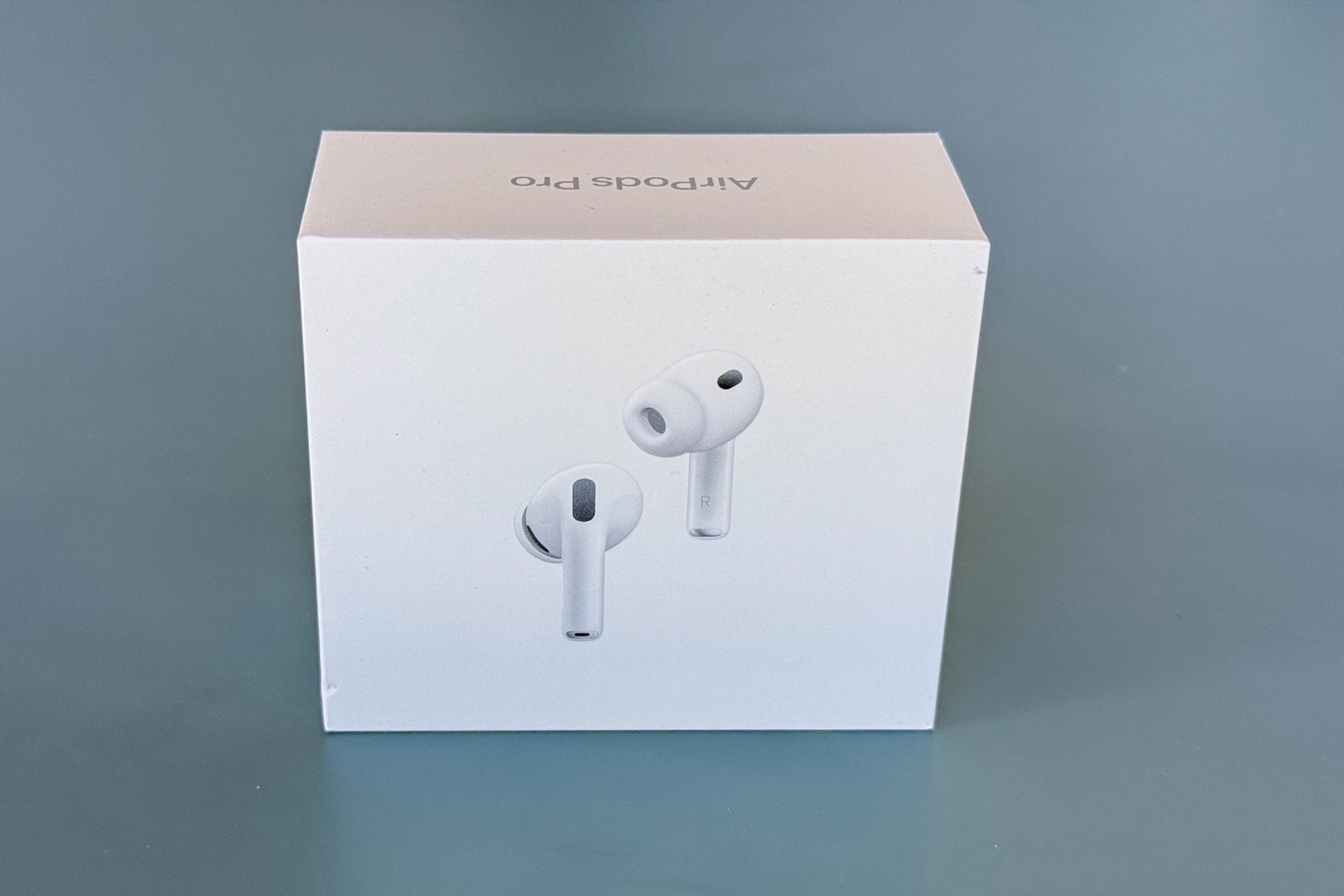
Apple’s AirPods Pro 3 just arrived with a very clear headline feature tied to Apple Intelligence, but fresh chatter suggests the next generation could shift focus in a big way. Instead of being primarily about smarter audio features, the next AirPods Pro may be built around something far more ambitious: spatial perception.
According to a new tip from well-known leaker Kosutami, the next AirPods Pro will be able to “see around you,” and notably, the claim also suggests Apple may keep pricing the same rather than charging extra for the new capability. If accurate, that would position the upcoming model as a major leap forward without breaking from Apple’s typical $249 tier for premium earbuds.
To understand why this rumor is catching attention, it helps to look at what Apple already packed into AirPods Pro 3. The newest model is said to feature a smaller earbud design for improved comfort, upgrades to spatial listening, noise cancellation that’s up to twice as effective, and a live translation feature powered by Apple Intelligence. It also reportedly adds a heart rate sensor, delivers up to 8 hours of battery life, and comes with IP57 sweat and water resistance.
So what does “see around you” actually mean for AirPods?
Right now, nobody outside Apple can say for certain whether this points to a true camera system or something more subtle like an infrared (IR) sensor. The distinction matters. A traditional camera could enable richer environmental understanding, while IR-based sensing could focus more on depth, proximity, and spatial mapping without capturing standard images the way a phone camera does.
The rumor aligns with earlier industry expectations that Apple has been exploring IR camera technology for earbuds. Back in 2024, analyst Ming-Chi Kuo suggested that IR camera-equipped AirPods were under consideration, potentially to enhance interaction and reinforce Apple’s broader spatial audio and spatial computing ambitions.
There’s also a relevant hint from Apple’s intellectual property activity. In mid-2025, Apple was granted a patent describing the use of camera-like components—similar in concept to Face ID’s dot projector—for proximity detection and 3D depth mapping. While patents don’t guarantee products, the described technology lines up with the idea of AirPods that can better understand their surroundings.
If Apple does bring some kind of environmental sensing to AirPods Pro 4, the real payoff could be in how the earbuds behave in the world. More accurate spatial awareness could improve dynamic spatial audio, make head tracking and positioning more realistic, and potentially unlock new gestures or context-based controls. It could also deepen integration with Apple’s spatial computing ecosystem by letting wearable audio play a more active role in how users interact with devices and digital content in real space.
This kind of hardware could also be a strategic stepping stone toward a broader category of wearable AI devices. One possibility frequently discussed in the wider rumor mill is an Apple-branded AI “pin” concept—something compact, potentially around the size of an AirTag, equipped with multiple sensors, microphones, a speaker, and wireless charging. If Apple is indeed testing environmental perception in AirPods first, it could be laying the groundwork for even more ambient, hands-free Apple Intelligence experiences later.
For now, the biggest takeaways are simple: a credible-sounding leak claims the next AirPods Pro will gain an ability to perceive the environment, and it may arrive without a price increase. Whether that “vision” comes from an IR sensor, a depth-mapping system, or something closer to a miniature camera array is still an open question—but the direction is clear. Apple’s next premium earbuds may be about far more than sound.