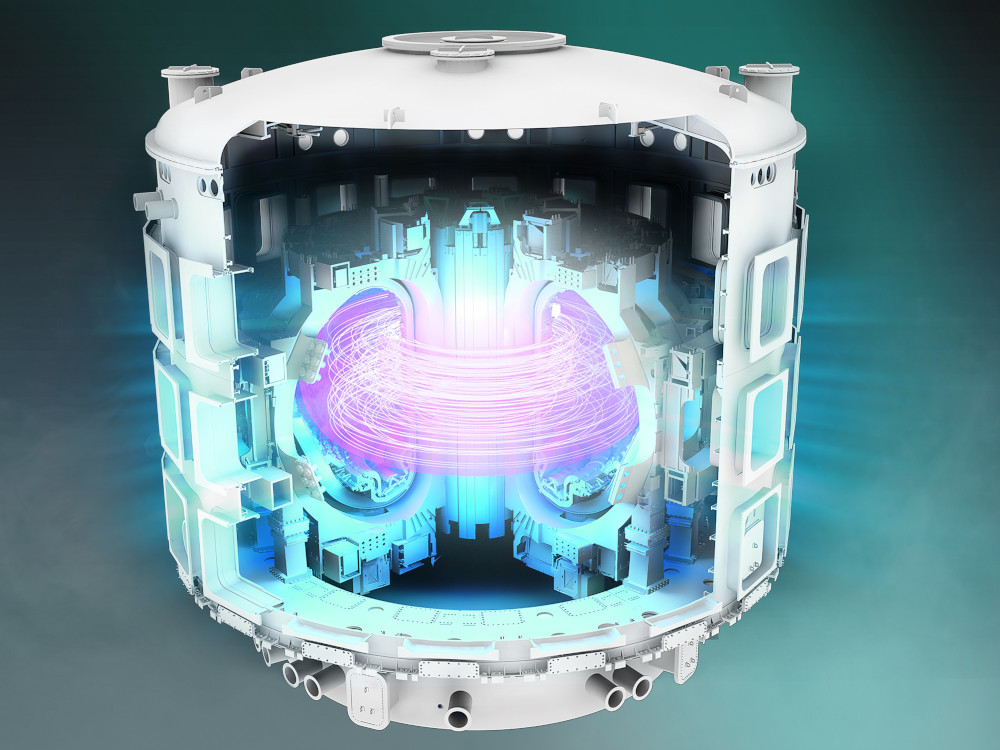
Obtaining super-hot hydrogen isotope mixtures through intensive heating is an incredible feat, yet the real challenge lies in maintaining the stability of the produced plasma. Achieving a state where atomic nuclei and electrons are separated isn’t natural on Earth, akin to preventing an ice cube from melting over a fire only using ice packs. With variables as unpredictable as the wind affecting the outcome, the task becomes even more complex.
At present, the record for sustaining the conditions necessary for nuclear fusion on Earth stands at a brief 30 seconds. Plasma, without the requisite heat, has been kept stable for up to 15 minutes. These durations fall dramatically short of what would be needed for a continuous operation. When plasma containment fails, an immediate cooldown is imperative to avert potential damage to the fusion reactor’s technology, a process that consumes vast quantities of energy.
Amid these challenges, the advent of deep reinforcement learning, a subset of machine learning, has emerged as a beacon of hope. It has paved the way for a method capable of averting the destructive disruptions of plasma flow. Scientists from Princeton University and Chung-Ang University in Seoul employed an augmented laser beam array and a cyclotron. This particle accelerator, complete with a strong magnetic field, is instrumental in sustaining the plasma within its desired scope.
Due to the innumerable variables involved, calculating the precise impact and necessary adjustments for these instruments is out of reach for traditional methods. Enter artificial intelligence, which has been specifically trained for this task. With its help, disruptions in the plasma flow were successfully prevented at the DIII-D nuclear fusion reactor, the largest tokamak nuclear fusion reactor in the United States. Even under sub-optimal conditions, the technology managed to stall plasma “tearing.” With a mere 25 milliseconds between two measurements, AI systems demonstrated their efficacy in maintaining plasma stability.
While AI applications span various fields, from graphics generation to composing texts, its role in the advancement of nuclear fusion positions it as a crucial tool for a sustainable, energy-rich future. Nonetheless, the technology remains in the experimental stage. Further testing and enhancements are required before it can be implemented in ITER, the pioneering fusion reactor projected to achieve a positive energy balance, which is currently in development.