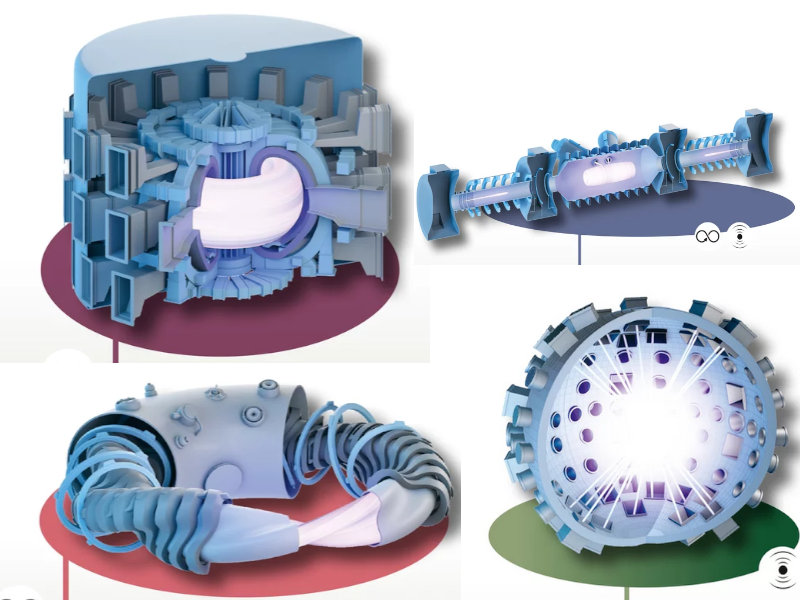
Nuclear fusion represents the pinnacle of transformative energy generation, symbolizing a future where clean, abundant energy could be a reality. The pursuit of effective nuclear fusion technology is the focus of intense research and innovation, with various experimental methods being tested and refined in the hopes of achieving a net positive energy output. In essence, the goal is to produce more energy from fusion reactions than is consumed in triggering them.
The Elusive ‘Triple Product’ and Its Significance
At the heart of successful nuclear fusion lies a critical concept known as the ‘triple product.’ This refers to a fusion system’s ability to maintain a stable state with sufficient density of atomic nuclei, high temperature, and durability. When these factors are multiplied and exceed a specific threshold, a positive energy balance is achievable – meaning that the system generates more energy than the input.
A landmark achievement was witnessed with laser fusion in 2021, when researchers at a leading US facility used laser beams to heat metal spheres, initiating a fusion reaction. The subsequent X-rays from this process raised the hydrogen within to fusion-worthy temperatures, while the system’s pressure drove the reaction forward, ultimately leading to a situation where thermal energy outpaced the energy from the lasers.
Yet, despite the success, this method faces significant hurdles. Specifically, it lacks the ability to operate continuously, which is essential for a power plant setting, as it requires the replacement of the metal sphere after each reaction cycle.
Pursuing Continuous Operation: The Tokamak Approach
The tokamak design has long been considered a frontrunner in the quest for continuous operation of nuclear fusion. This device uses magnetic fields to confine superheated plasma in a donut-shaped chamber, with the aim of sustaining the fusion reaction indefinitely. While the concept has been around for decades, and devices like ITER are advancing towards potential operational status, the technology’s immense energy consumption means that achieving a positive energy output remains elusive.
Innovating Fusion: Alternative Pathways
Beyond the established tokamak model, researchers are exploring alternative paths that might lead to a viable fusion energy source. Some propose modifying tokamak designs to generate additional pressure, which could lower the demanding temperature requirements, inching closer to practicality. Others are investigating the use of kinetic impacts to create the necessary conditions for fusion, like one Oxford University spin-off that aims to trigger nuclear fusion by firing a hydrogen-filled capsule and producing shock waves.
Notably, companies like TAE and Helion are experimenting with collisions between plasma packets accelerated in a magnetic field with the hopes of instigating fusion. These innovative methods seek to benefit from the intense conditions capable of nurturing fusion reactions, much like those found in the sun’s core.
Charting the Future of Fusion Energy
Despite the challenges, the quest for practical nuclear fusion forges on. Researchers are continually driven by the promise of a future powered by virtually unlimited, clean energy. The competition among various techniques remains fierce, with each endeavoring to uncover the formula that will tip the scales toward a surplus of energy output. As such, the world of nuclear fusion research continues to be a dynamic landscape of trial, error, and potential triumph, with all eyes on the horizon for that next great breakthrough.