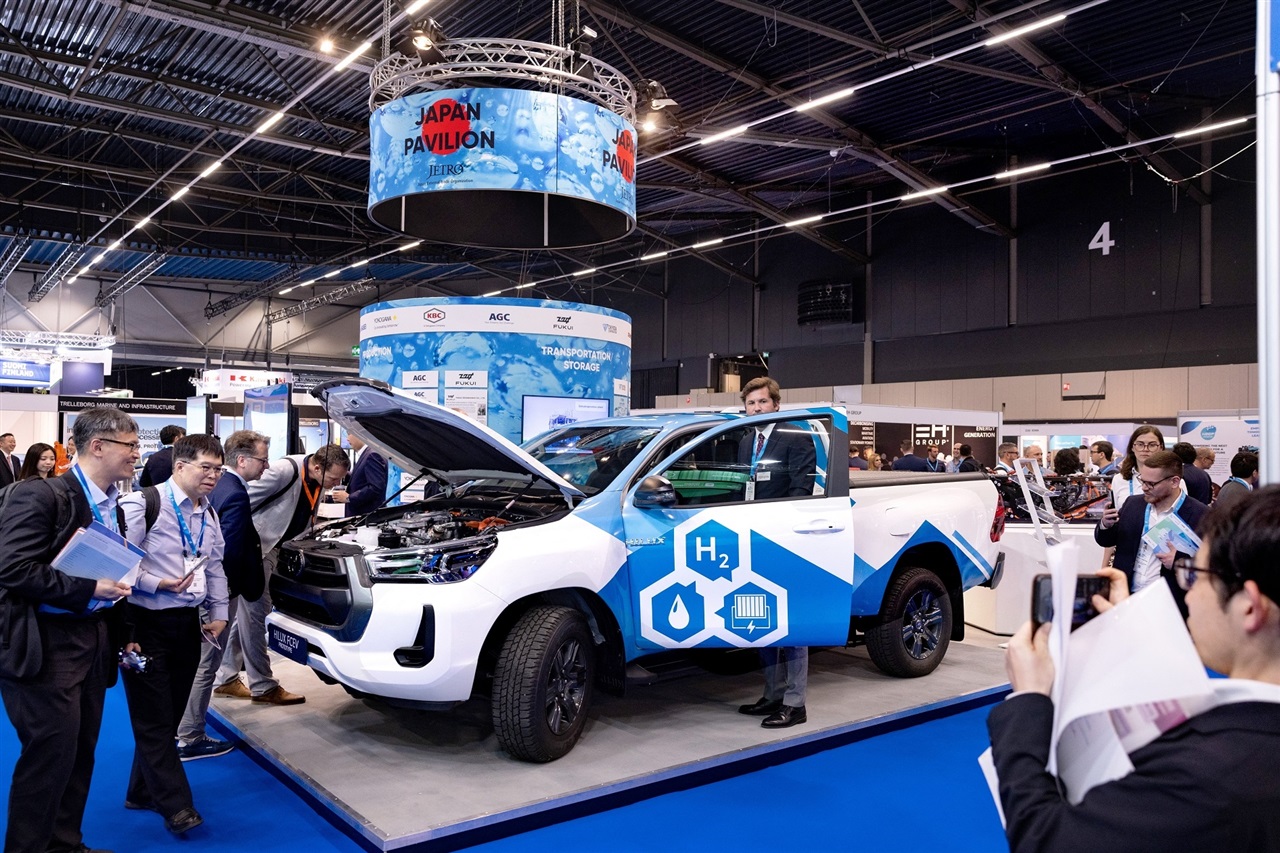
Japan is taking the lead in the groundbreaking world of hydrogen technology, infrastructure, and innovative applications, with Australia hot on its heels, having committed a substantial AUD8 billion to boost its hydrogen industry. Positioned strategically between these two powerhouses, Taiwan is exploiting its geographic advantage as local companies integrate seamlessly into the Japan-Australia hydrogen supply chain.
Next May, Japan is set to introduce a new hydrogen law aimed at turbocharging the sector’s growth. Heavyweights like Toyota, Eneos, and Iwatani are at the forefront, driving relentless innovation in hydrogen technologies. Meanwhile, Australia is focusing on the green hydrogen frontier, harnessing its abundant natural resources and renewable energy potential for export purposes.
Several Taiwanese firms, such as HD Renewable Energy and Green Harvest Holdings, are forging strategic partnerships with Japanese and Australian companies to capitalize on burgeoning hydrogen opportunities. This collaboration was highlighted earlier in the year when the inaugural Taiwan-Japan-Australia Hydrogen Forum took place in Tainan, bringing together industry leaders to discuss potential synergies.
Japan’s long-standing prowess in automotive manufacturing gives it a significant lead in hydrogen fuel cell vehicles. Simultaneously, Taiwan is emerging as a promising partner through its growing capabilities in fuel cell production. Australia’s swift advancements in green hydrogen production further facilitate collaboration. Given Taiwan’s domestic production challenges, importing green hydrogen from Australia could be crucial to bridging this gap.
However, the journey is not without hurdles. Producing genuine green hydrogen hinges on renewable energy, and international transportation of hydrogen poses significant logistical challenges. Typically, hydrogen is stored in gas form and transported by trucks or cylinders, with large-scale shipping still on the horizon.
In Taiwan, progress is steady yet slow. By late 2024, the nation’s first hydrogen refueling station is slated to become operational in southern Taiwan, coinciding with the debut of the country’s first hydrogen-powered trailer. Despite active discussions, Taiwan’s hydrogen infrastructure remains in its infancy.
Looking to the future, hydrogen applications are expected to focus on heavy-duty transport like buses and trailers, where the weight of batteries in electric vehicles reduces load capacity. Hydrogen offers more efficiency for such large vehicles. Additionally, residential and commercial uses are gaining traction. The UK is testing hydrogen-powered boilers and heaters, while Japan and the EU are advancing infrastructure projects. The next phase of hydrogen technology will likely target combined heat and power systems and high-power industrial applications, marking a new era of energy innovation.