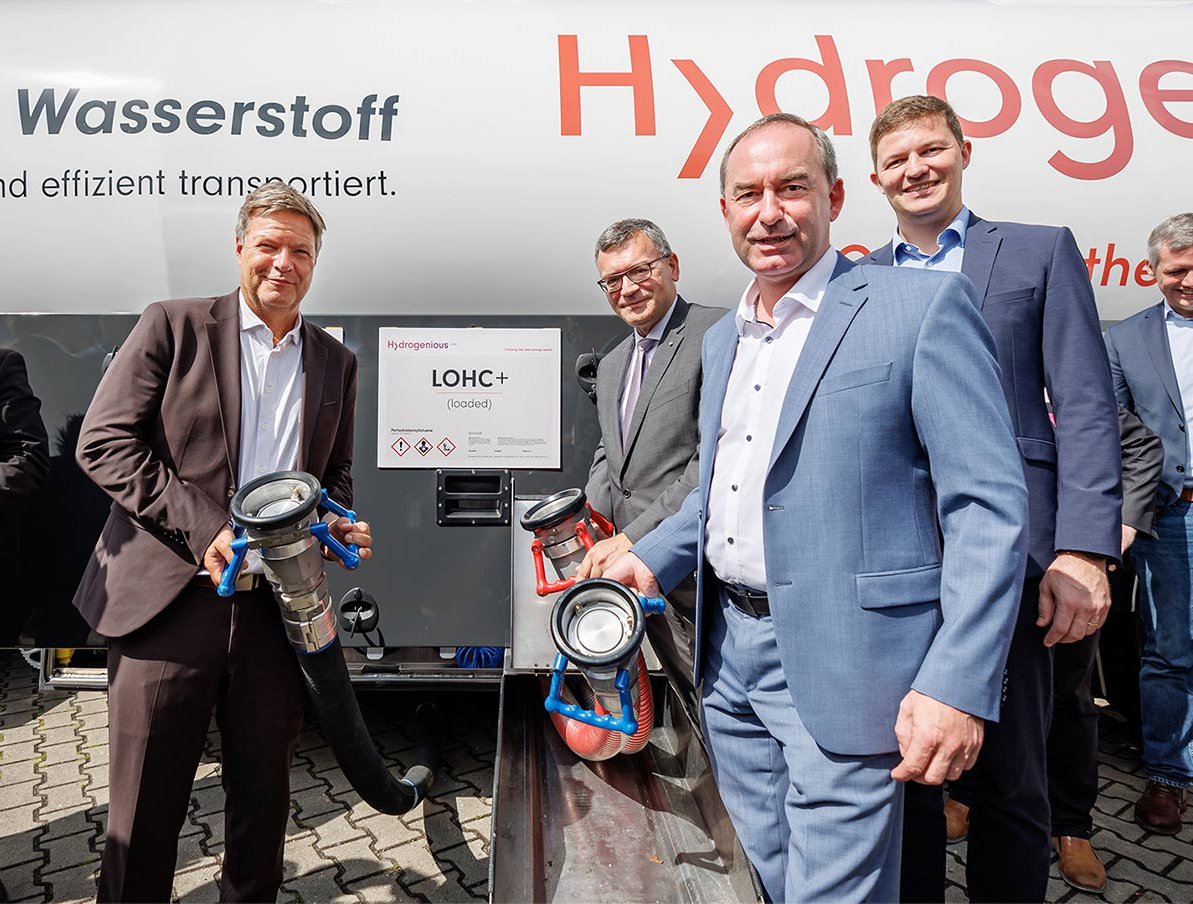
Transporting hydrogen has always posed significant challenges due to its highly explosive nature and the difficulty in storing it, given its tendency to evaporate quickly. However, a breakthrough has been made by a pioneering German company, which has successfully developed a cost-effective and safe method to transport this alternative energy carrier. This innovation has garnered significant support, receiving a substantial €72.5 million in funding, with 70% coming from the German government and 30% from the Free State of Bavaria.
The ambitious plan is to generate approximately 1,800 tons of green hydrogen in the Bavarian Danube region by 2028. This milestone project has received recognition from the European Commission, which in February 2024 declared the Green Hydrogen@Blue Danube initiative an “important project of common European interest” (IPCEI) as part of the “Hy2Infra” hydrogen initiative.
Central to this advancement is the use of Liquid Organic Hydrogen Carrier (LOHC) technology. This transformative process allows large quantities of green hydrogen to be transported from various parts of the world in a far safer and more economical manner. Existing infrastructure for liquid fuels, such as tanker trucks, rail, and inland waterway vessels, can now be utilized for hydrogen transport.
The key ingredient in this innovative technology is the flame-retardant oil, benzyltoluene, which safely bonds with the hydrogen. This bonding makes it substantially safer and cheaper to move than diesel. Upon reaching its destination, the hydrogen is released, and the carrier oil is ready to be used again for future storage and transportation. This technology promises a significant leap towards achieving the ambitious climate targets not just for Bavaria and Germany, but for the entire European continent.
Looking ahead, Hydrogenious will also establish the world’s largest LOHC-based hydrogen storage facility by 2025. This facility will cater to local industrial customers and, in the future, integrate into pipeline networks such as the HyPipe Bavaria, with plans to connect to Germany’s core hydrogen network.
At a recent event in Erlangen, Federal Minister for Economic Affairs and Climate Protection, Dr. Robert Habeck, alongside Bavarian State Minister for Economic Affairs, Regional Development, and Energy, Hubert Aiwanger, formally announced the monumental €72.5 million funding decision. Dr. Habeck emphasized the significance of this pioneering project, declaring, “Today marks the start of a truly groundbreaking endeavor in the field of liquid organic hydrogen carriers. This initiative aims to pilot a large-scale LOHC-based hydrogen infrastructure to supply regions not connected to the core network with green hydrogen. Supporting this innovative technology in Erlangen as part of IPCEI will significantly contribute to the growth of the hydrogen economy and drive substantial transformation across industries.”
This endeavor stands as a testament to the potential of young, cutting-edge technologies in reshaping our energy landscape, while also highlighting Europe’s commitment to a sustainable future.