The quest for a sustainable and efficient energy future has taken a leap forward with an exciting advancement in hydrogen storage technology. Hydrogen, often heralded as the fuel of the future, is notoriously challenging to store due to its volatility and explosive nature. However, a new catalyst with groundbreaking properties is poised to change the game.
Ammonia emerges as a promising solution for hydrogen storage and transportation. Unlike hydrogen gas, which requires chilling and pressurizing to become liquid, ammonia can be stored more easily. Its ability to hold three hydrogen atoms bonded to a nitrogen atom facilitates a simpler storage process, circumventing the need for specialized alloys that prevent hydrogen from seeping through metals. Although ammonia isn’t entirely risk-free — high concentrations can cause irritation and it can become explosive under certain conditions — its storage and transport have been safely managed for over a century.
One of ammonia’s advantages is its capacity to store more energy per liter than hydrogen itself. This quality makes it an attractive option for harnessing surplus electricity generated by renewable sources, essentially allowing energy produced today to be used later. The challenge, however, lies in efficiently retrieving hydrogen from ammonia for use in applications like fuel cells or hydrogen-powered vehicles.
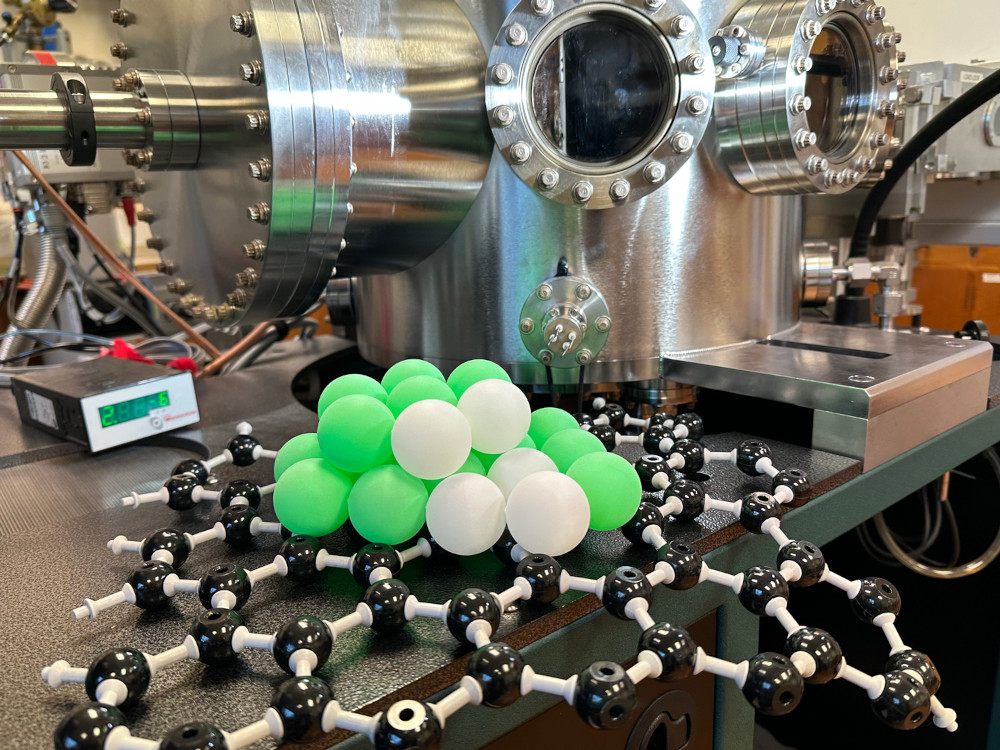
In a significant breakthrough, researchers at the University of Nottingham have unveiled a revolutionary catalyst designed to enhance this conversion process. This catalyst, featuring the rare element ruthenium deposited magnetically onto graphite, evolves over time. Under microscopic examination, it was observed that these ruthenium deposits gradually morph into pyramid-shaped structures. These new formations improve the efficiency of converting ammonia back into hydrogen, making the process more effective with each use.
This innovation marks a pivotal step in refining hydrogen storage solutions, bolstering the prospects of using hydrogen in energy storage systems. It exemplifies how we can make better use of rare elements like ruthenium, optimizing their performance over time.
As we continue to search for sustainable energy solutions, breakthroughs like these are crucial. The potential for improved hydrogen storage and energy conversion could become key contributors to a greener, cleaner future, leading us to new possibilities in energy management and utilization.