A super magnet capable of generating a constantly stable magnetic field at an unprecedented 20 Tesla strength marks a significant breakthrough in nuclear fusion research, according to physicist Dennis Whyte who is involved in the field. To put this into context, the most powerful magnetic resonance imaging (MRI) machines in medical applications peak at around 3 Tesla, occasionally hitting 6 Tesla, while the Earth’s magnetic field registers a minuscule 0.00005 Tesla.
Developing an efficient system that could yield an energy surplus through nuclear fusion has been a critical aspect of this research. The innovation here hinges on employing a novel superconducting material known as REBCO, short for rare-earth barium copper oxide. Unlike conventional superconductors that must be cooled to 3 Kelvin (-454 °F or -270 °C), REBCO operates without resistance at the relatively higher temperature of 20 Kelvin (-423 °F or -253 °C), thereby reducing the cooling efforts required significantly.
An added advantage of using REBCO is that it eliminates the need for costly insulation between cables, allowing for more space which could be utilized to enhance cooling efficiency and better magnet positioning.
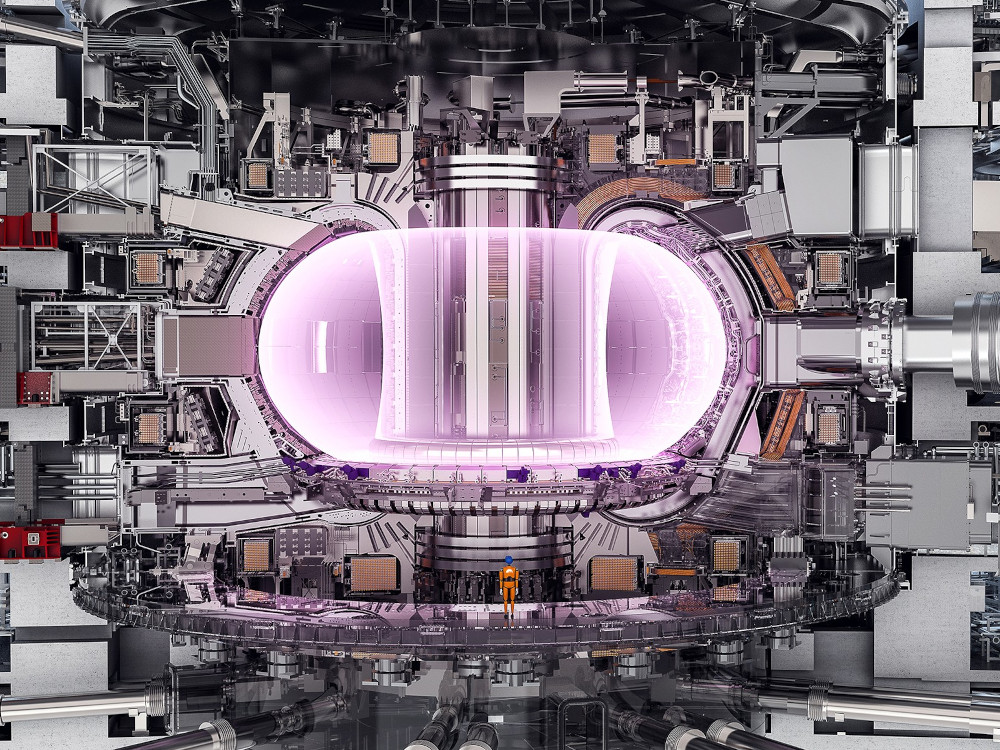
For the validation of this superconductor, researchers didn’t solely rely on models or extrapolations; they built and tested a 20,000-pound magnet, incorporating 200 miles of REBCO superconductor, aligning with the dimensions for planned nuclear fusion reactors such as the International Thermonuclear Experimental Reactor (ITER) located in southern France. The testing outcomes were promising, indicating that the magnet performed as expected at scale and was able to withstand all operating conditions, including critical scenarios involving fluctuating power and potential system failures. Despite some melting, likely due to extreme conditions, the results seemed to be in line with expectations, reinforcing the accuracy of the underlying calculations and projected material behavior.
The creation of a stable and operational fusion reactor is now on the horizon, thanks to the accumulation of superconductive material and strategic insights gleamed from the research – moving one step closer to harnessing the potential of nuclear fusion as a viable energy source.