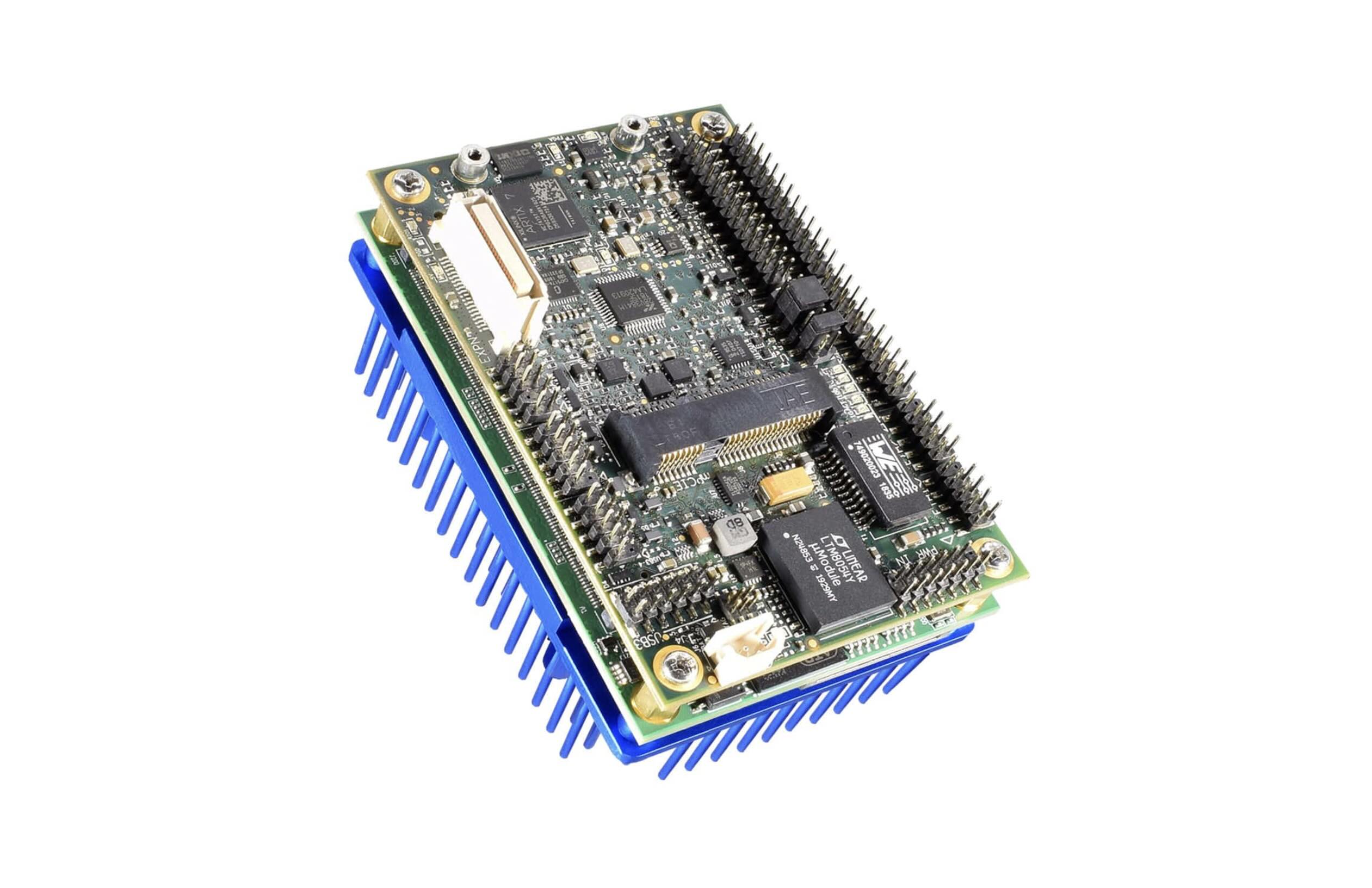
WinSystems, a well-known name in industrial and edge computing, has introduced the ZETA 3950, a rugged single-board computer designed for environments where typical electronics don’t last long. Built for extreme conditions, this compact SBC is rated to operate in temperatures as low as -104°F (-40°C) and as high as 185°F (85°C), making it a strong fit for industrial automation, remote monitoring, transportation systems, and other demanding deployments.
Despite its tough design, the ZETA 3950 stays impressively small. The board measures just 2.1 x 3.3 x 1.84 inches (5.5 x 8.4 x 4.7 cm), which helps it fit into tight enclosures and space-constrained embedded projects where size, reliability, and consistent operation matter more than raw computing power.
At the heart of the ZETA 3950 is an Intel Atom x7-E3950 processor, an x86-based quad-core chip with a 12-watt TDP. While the E3950 is an older platform and delivers modest performance by modern standards, it’s often a practical choice for embedded systems that prioritize low power draw, stable thermals, and long-term deployment over heavy multitasking or high-end compute tasks. Graphics are handled by the integrated Intel HD 505, suitable for basic display output and non-demanding visual workloads.
Where the ZETA 3950 stands out for embedded and industrial users is connectivity and expansion. I/O includes a 16-pin GPIO header, five USB 2.0 Type-A ports, one USB 3.0 Type-A port, and four RS-232/422/485 COM ports for legacy and industrial device communication. There’s also a MIPI CSI camera interface, single-channel LVDS and VGA display support, plus expansion options such as mini PCIe and microSD. Networking needs are covered through dual 1G Ethernet, a common requirement for industrial networking, redundancy, and edge deployments.
Memory and storage are also tailored for reliability. The board comes with 8GB of soldered LPDDR4-2400 RAM and 128GB of onboard eMMC storage. Additional storage can be added via the mini PCIe slot. It’s worth noting that many of the board’s I/O capabilities require a separate header board, which is a common approach in industrial SBC ecosystems where modular configurations help match different use cases without redesigning the core compute board.
On the software side, the ZETA 3950 supports Ubuntu and Windows 10 IoT out of the box, along with other x86-compatible platforms. That x86 compatibility can be a major advantage for organizations that rely on existing Windows or Linux applications, specialized drivers, or long-established industrial software stacks.
Pricing and availability aren’t listed publicly, as customers are asked to contact WinSystems for quotes. As is typical in industrial computing, pricing may vary based on configuration and order volume.
Overall, the WinSystems ZETA 3950 is aimed squarely at rugged industrial and edge use rather than casual tinkering. For buyers who need extreme temperature support, serial connectivity, dual Ethernet, and dependable embedded operation in a compact form factor, it’s a purpose-built SBC worth considering.