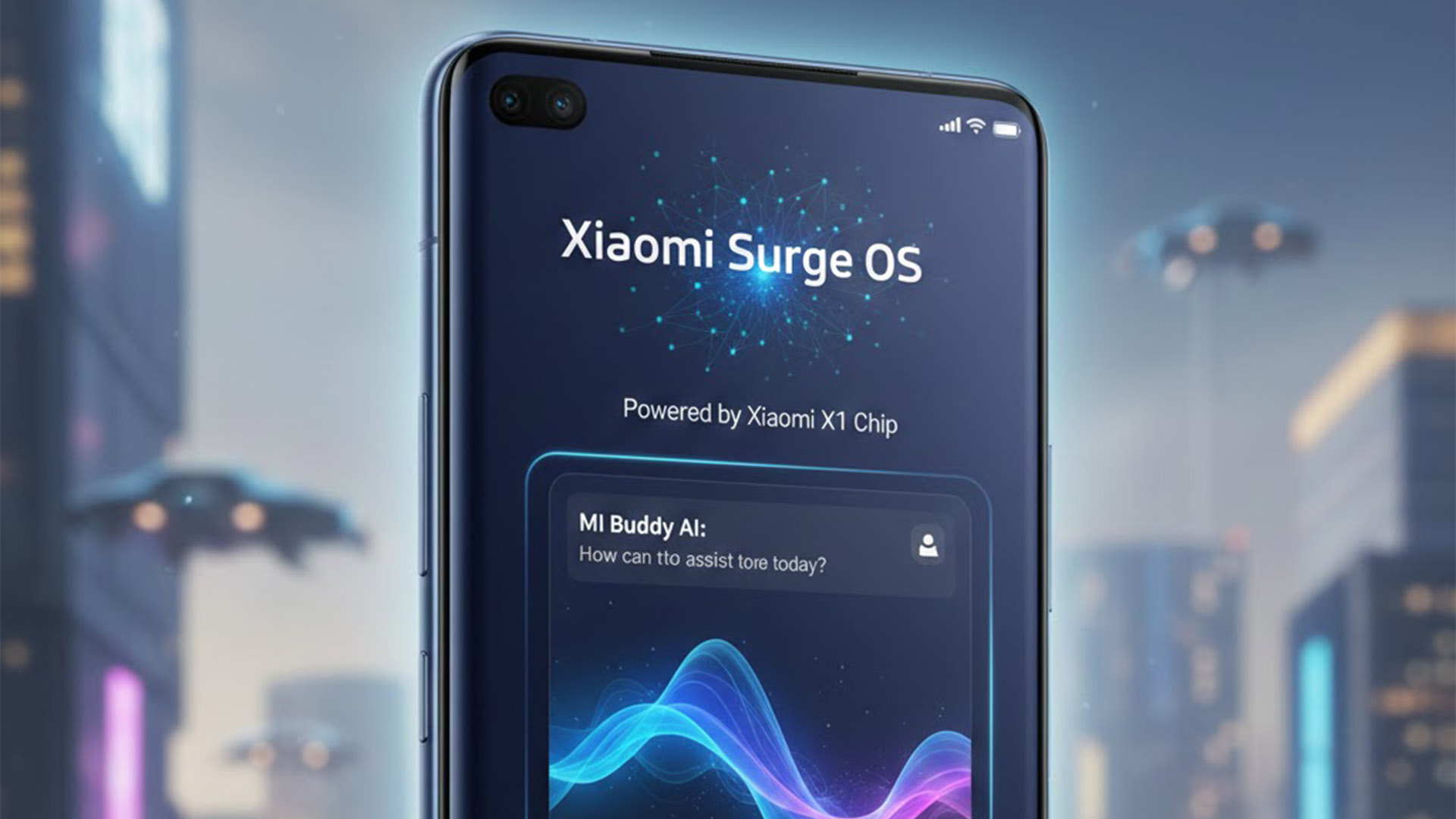
Xiaomi’s push to become more independent from major chip suppliers is gaining momentum, and the company’s XRING 01 chipset is being seen as a major milestone in that strategy. Now, fresh chatter suggests Xiaomi may be preparing something even bigger: a future smartphone designed to unite an in-house processor, an in-house operating system, and in-house generative AI into one tightly integrated device.
The rumor centers on a device said to arrive in 2026 with a clear “full-stack” goal, combining Xiaomi-designed silicon, Xiaomi’s own software platform, and localized AI that runs on the device. If Xiaomi can actually deliver this kind of end-to-end control, it would place the brand in rare company among Chinese smartphone makers, with Huawei often cited as the closest comparable example.
This speculation arrives alongside signs that Xiaomi is already thinking beyond its first chipset. A trademark filing for “XRING 02” has fueled expectations that a next-generation Xiaomi SoC is in development. According to the latest talk, this XRING 02 could show up in a new device while also serving as a foundation for broader product categories, not just phones and tablets.
One interesting detail in the rumor is manufacturing. With the industry looking toward next-gen 2nm production, it might seem logical for XRING 02 to make that leap. However, the expectation from the current discussion is that Xiaomi will likely remain on 3nm, reportedly using a modern 3nm-class process rather than jumping straight to 2nm.
There are practical reasons why. Advanced chipmaking below 3nm doesn’t just require access to leading-edge fabrication—it also depends on high-end electronic design automation tools that are critical for creating chips at those cutting-edge nodes. With the U.S. restricting access to certain advanced semiconductor technologies for China, Xiaomi could be motivated to stay with a 3nm route that remains more feasible in the current environment.
Cost is another major factor. Next-generation wafers produced on the newest nodes are expected to be extremely expensive, with estimates around $30,000 per wafer for 2nm. That kind of pricing can quickly push up development and production costs, especially if Xiaomi intends to scale XRING 02 across multiple product lines.
And Xiaomi may indeed want to scale it. The rumor suggests XRING 02 isn’t being evaluated only for consumer electronics like smartphones and tablets, but also for smart vehicles. That’s a far more complex and time-consuming path, since automotive-grade silicon must meet stricter safety, stability, and validation requirements.
Of course, not everyone is convinced this rumored “Xiaomi full stack” device would be truly independent. Skeptics argue the in-house chipset could still rely heavily on ARM CPU and GPU technology, and that manufacturing would still depend on a top-tier foundry for advanced production. Others also question the “in-house operating system” claim, suggesting it could ultimately be another Android-based fork with Xiaomi’s own interface layered on top rather than a completely new platform from scratch. On the AI front, some believe the “localized AI” could be built around an existing large language model such as DeepSeek, integrated into Xiaomi’s software rather than developed entirely in-house.
Even so, the ambition itself is significant. Xiaomi’s XRING 01 reportedly came after around a decade of research and long-term investment, with the company’s leadership previously pointing to massive spending tied to these efforts—figures as high as $14.5 billion have been referenced. That kind of sustained commitment is exactly what it takes for a smartphone brand to move from relying on third-party platforms to building its own.
Whether the rumored 2026 device becomes a real product—or remains an aspirational internal project—it highlights a growing industry trend: smartphone makers seeking tighter control over chips, software, and AI to differentiate performance, reduce external dependency, and create a more unified user experience. If Xiaomi manages to bring an in-house chip, OS, and generative AI together in one phone, it could mark one of the company’s biggest strategic shifts yet.