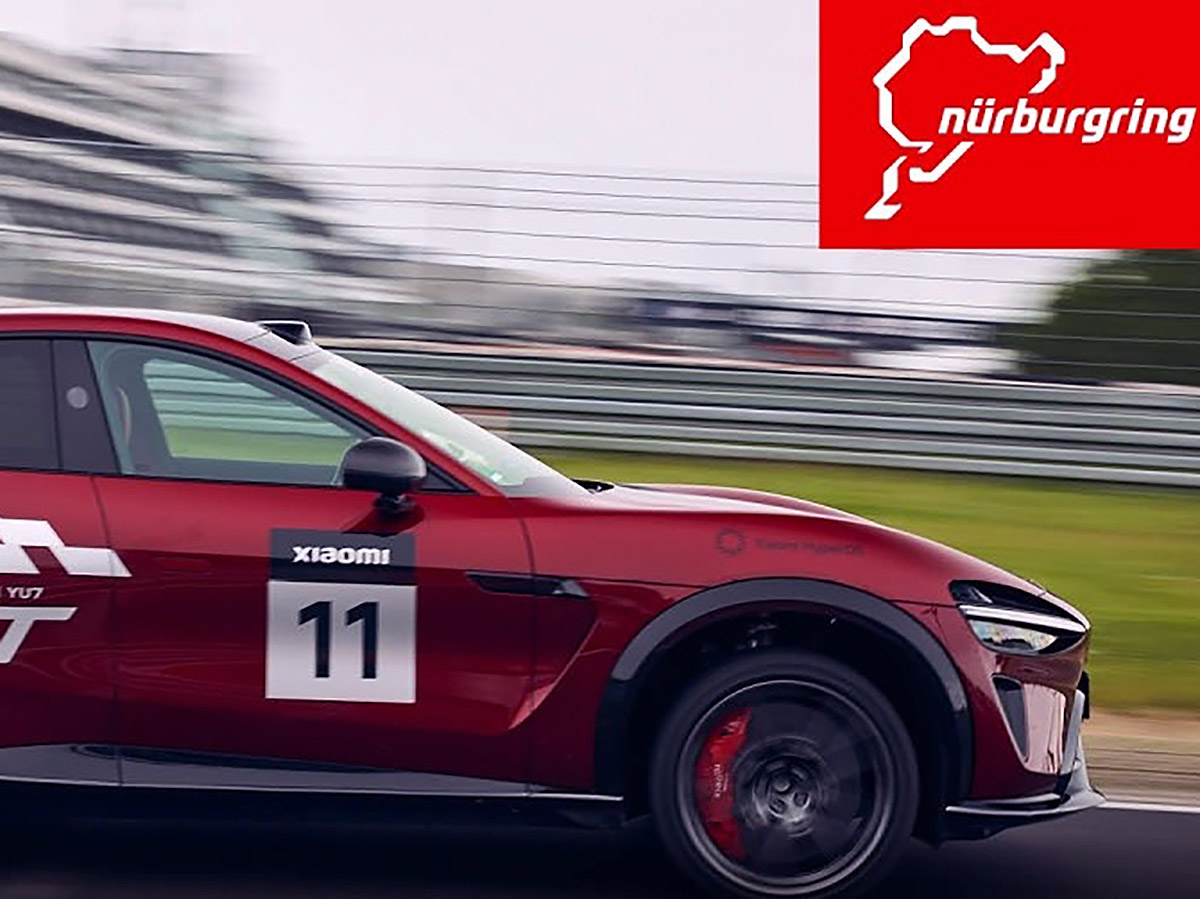
Xiaomi YU7 GT Sets Autonomous Nürburgring Lap Record, But Humans Still Have the Edge
Xiaomi is moving quickly in the electric vehicle race, and its latest achievement shows just how serious the company is about competing in advanced driver-assistance and autonomous driving technology. After reaching profitability in its EV business in only two years, Xiaomi is now aiming higher, taking on major electric car makers with bold demonstrations of performance and software capability.
One of its most attention-grabbing moves came at Germany’s legendary Nürburgring, one of the most challenging racetracks in the world. Xiaomi says its YU7 GT electric SUV has completed what it describes as the world’s first autonomous-driving lap record on the famous 20.8-kilometer circuit.
The Xiaomi YU7 GT finished the lap without a human driver controlling the vehicle, recording a time of 10 minutes and 29.483 seconds. For autonomous driving technology, that is a significant milestone. The Nürburgring is known for its complex corners, elevation changes, high-speed sections, and unforgiving layout, making it a tough test for both drivers and vehicles.
However, the record also highlights how far self-driving systems still have to go before matching top human performance. In May, the same Xiaomi YU7 GT completed the Nürburgring with a professional driver behind the wheel in 7 minutes and 22.755 seconds, setting a production SUV lap record. That means the autonomous run was more than three minutes slower than the human-driven lap.
That gap is important, but it does not take away from the achievement. Autonomous track driving is a very different challenge from everyday assisted driving. On a racetrack, the system must make fast decisions at high speeds, handle aggressive braking, choose precise racing lines, and manage risk in real time. Xiaomi described the run as “a new starting point rather than an end point,” suggesting that the company sees this as the beginning of a much larger push into autonomous performance driving.
Xiaomi Auto’s chief technology officer said that when the unmanned vehicle entered the track, everyone present stopped to watch, with the shared feeling that “the future had arrived.” That reaction captures the importance of the moment: even if the technology is not yet faster than a professional driver, seeing a production-based electric SUV navigate the Nürburgring on its own is a clear sign of how rapidly automotive software is evolving.
The Xiaomi YU7 GT also has the hardware to support much faster results in the future. The top version of the electric SUV uses a powerful dual-motor setup producing 1,003 horsepower. It can accelerate from 0 to 100 km/h in just 2.92 seconds and reach a top speed of 300 km/h. Those figures put it firmly in high-performance EV territory.
Charging and range are also part of the YU7 GT’s appeal. Thanks to its 900-volt architecture, the SUV can add around 250 miles of EPA-rated range in just 15 minutes under ideal fast-charging conditions. That means the vehicle’s performance hardware and charging platform are not the limiting factors. The real challenge now is improving the autonomous driving software so it can react faster, handle more complex racing situations, and make decisions with the confidence of an expert driver.
For Xiaomi, the Nürburgring run is more than a publicity stunt. It is a signal that the company wants to be taken seriously not only as an electric car manufacturer, but also as a developer of advanced automotive intelligence. As the competition in the EV market intensifies, autonomous driving capability could become one of the most important battlegrounds.
The Xiaomi YU7 GT’s self-driving Nürburgring lap may not yet rival the speed of a skilled human racer, but it marks an important step forward. With powerful EV hardware already in place, Xiaomi’s next challenge is clear: make the software smarter, faster, and more daring without compromising safety.


