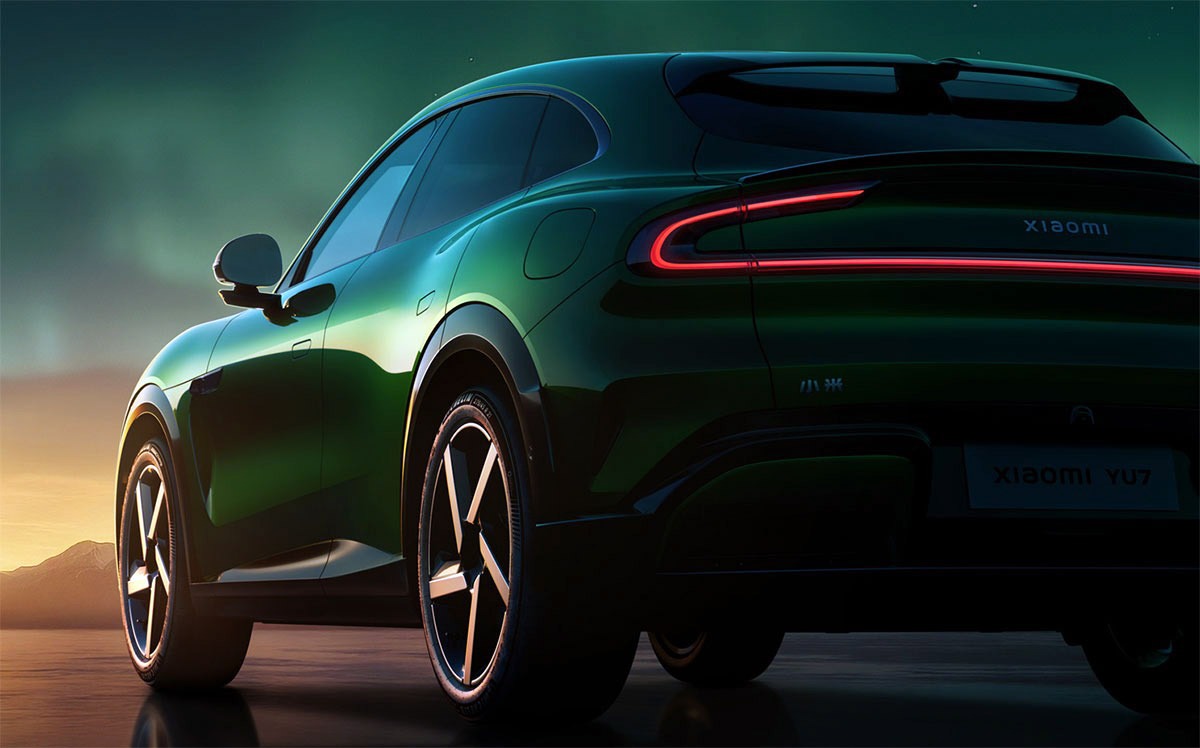
Xiaomi tears into Tesla’s playbook: YU7 SUV aims to outdo Model Y on range, charging, and price
Xiaomi has purchased several 2026 Tesla Model Y units for a full teardown as it finalizes the YU7, its first electric SUV. Founder Lei Jun praised the Model Y’s “outstanding” engineering, but says Xiaomi analyzed every component to benchmark and improve on it. The result, according to Xiaomi, is an SUV that delivers longer range, quicker charging with an 800V powertrain, more cabin space, and the biggest battery in its class—while undercutting the Model Y’s price in China.
Range is the headline figure. On China’s CLTC cycle, the Xiaomi YU7 base RWD is rated for 518 miles per charge, compared with 446 miles for the Model Y RWD. The CLTC standard is typically more optimistic than U.S. EPA ratings by roughly a third, but in an apples-to-apples comparison the YU7 still comes out ahead. That advantage, paired with a lower starting price in China, gives Xiaomi a compelling one-two punch for shoppers focused on efficiency and value.
Charging and powertrain tech is another focus. The YU7’s 800V architecture enables faster DC charging than typical 400V systems, reducing time spent at the plug and supporting long-distance travel. Xiaomi also claims interior packaging wins versus the Model Y, crediting its electronics-first engineering mindset and careful space optimization. Combined with what it calls the largest battery in its segment, the YU7 is clearly built to target real-world usability and road-trip convenience.
The YU7 is the next step in Xiaomi’s rapid expansion from consumer electronics into electric vehicles. After entering the market with the SU7 sedan last year, the company has racked up momentum by leveraging its massive manufacturing scale, software expertise, and supply-chain discipline. Even without the full vertical integration of rivals that build both cars and batteries, Xiaomi has quickly fielded products that go head-to-head with Tesla’s Model 3 and Model Y on performance and features.
Xiaomi is also moving upmarket. The SU7 Ultra and the forthcoming YU7 GT are positioned to challenge premium EVs, including high-performance models. And the roadmap doesn’t stop there: reports indicate Xiaomi is preparing an extended-range electric vehicle that pairs an electric drivetrain with a small engine acting primarily as a generator. That model is said to feature an approximately 80 kWh battery—exceptionally large for a hybrid-style setup—potentially supplied by CATL, promising standout total driving range and minimal charging anxiety.
What this means for buyers is straightforward: the competition in China’s EV market is accelerating. With the YU7, Xiaomi is betting that a blend of long-range capability, ultra-fast charging, spacious design, and aggressive pricing will sway shoppers who might otherwise default to the Model Y. If Xiaomi’s claims hold up in independent testing, the YU7 could emerge as one of the most practical and cost-effective family EVs in its class.
Key takeaways for shoppers considering the Xiaomi YU7 versus the Tesla Model Y:
– Longer rated range on the same CLTC test cycle
– 800V charging architecture for faster top-ups
– Emphasis on interior space and everyday practicality
– Largest battery in its category
– Lower price in China
As deliveries approach, all eyes will be on how these on-paper advantages translate into real-world performance. For now, Xiaomi’s teardown-first approach and fast-paced product development suggest the YU7 is engineered to make a strong first impression—and to push the EV value equation further than many expected.