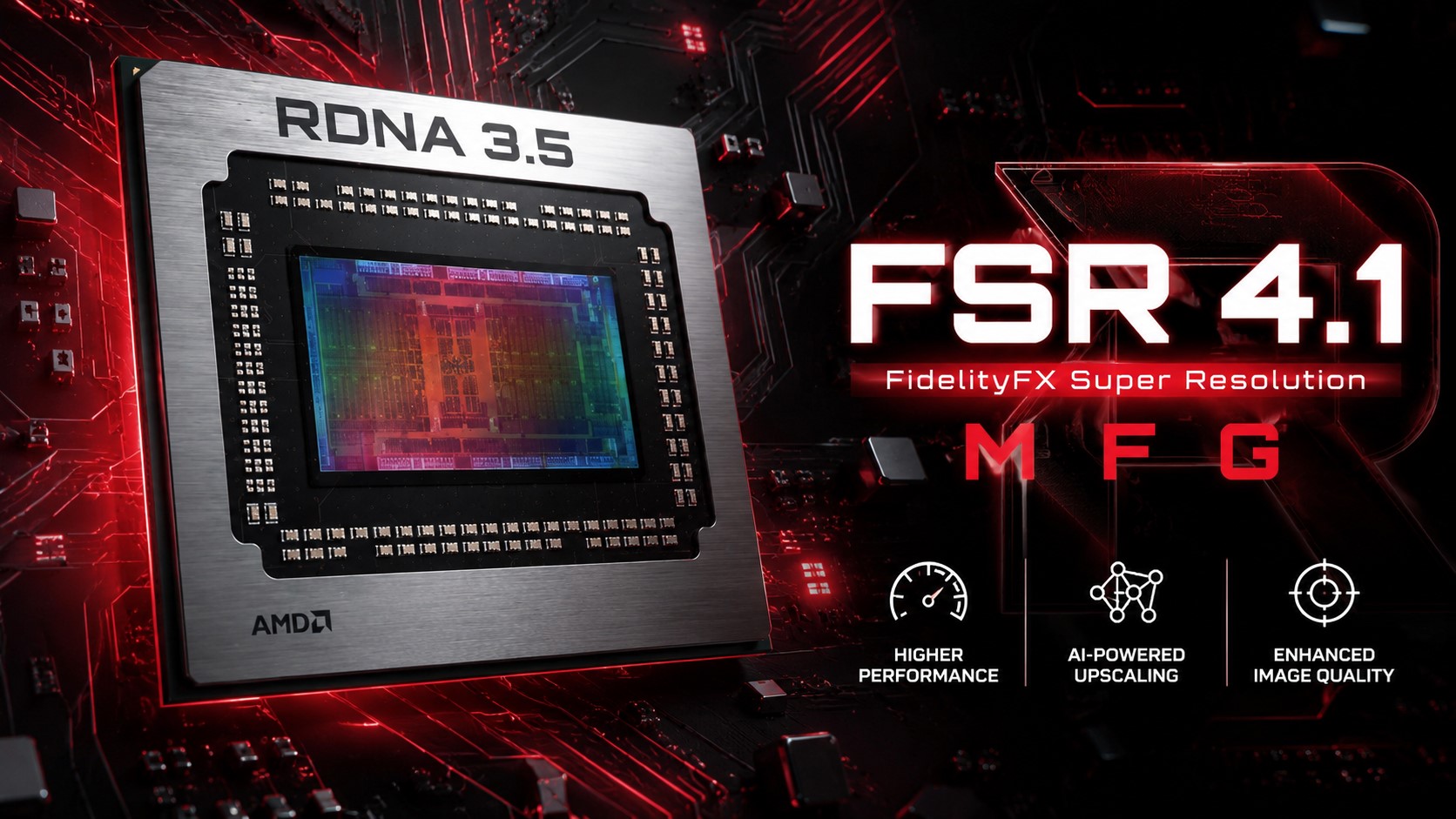
AMD FSR 4.1.1 INT8 reportedly leaks through Proton Experimental, and early tests suggest RDNA 3.5 support may be possible
A new AMD FidelityFX Super Resolution leak has sparked fresh excitement among PC gamers, especially those using Radeon GPUs and AMD-powered handhelds or laptops. Valve appears to have briefly pushed an early FSR 4.1 build through Proton Experimental before quickly removing it. However, the file was reportedly downloaded before it disappeared, giving users a first look at what could be AMD’s next major upscaling update.
According to reports shared by a Reddit user, the leaked file, named amdxcffx64.dll, was signed and could be used in games. That detail is important because a signed file is more likely to function properly with supported software rather than being blocked or treated as an invalid component.
The most interesting part of the leak is not just that FSR 4.1.1 exists in the wild, but that it appears to work on more Radeon hardware than expected. Early testing reportedly showed the leaked FSR 4.1.1 INT8 model running on the Radeon RX 7800 XT, a graphics card based on AMD’s RDNA 3 architecture. That result is not too surprising, since RDNA 3 GPUs are already expected to receive official FSR 4.1 support soon.
What caught more attention is that the same leaked build was also tested on the Radeon RX 6900 XT, which is based on the older RDNA 2 architecture. While it reportedly worked, the user noted that there were visual artifacts, suggesting support may not be fully polished yet. AMD is expected to bring FSR 4.1 to RDNA 2 and RDNA 3 GPUs, but the company may still need more time to refine compatibility and image quality across older hardware.
The biggest surprise is the reported compatibility with RDNA 3.5 graphics. Early testing suggests that the leaked FSR 4.1.1 INT8 model can run on the Radeon 890M, an integrated GPU found in high-end AMD Strix Point APUs. This is notable because AMD has not clearly confirmed official FSR 4 support for RDNA 3.5-based graphics so far.
RDNA 3.5 is especially important for AMD’s newer mobile and APU platforms. Many Zen 5-based laptop chips rely on this graphics architecture, and official FSR 4 support could make a meaningful difference for gaming performance on thin-and-light laptops, handheld-style devices, and compact systems without dedicated GPUs.
The leaked build was reportedly tested using OptiScaler, a tool that allows users to experiment with different upscaling technologies in supported games. After placing the leaked AMD file alongside OptiScaler and updating the required upscaler file, users were reportedly able to enable FSR 4.1 functionality through the configuration file. This method is not official, and results may vary depending on the GPU, game, driver version, and system configuration.
Because this is an unofficial leak, users should be cautious. A leaked file does not guarantee final performance, full compatibility, or stable image quality. The visual artifacts seen on the RX 6900 XT show that AMD may still be tuning FSR 4.1 for older Radeon GPUs. It is also possible that support for RDNA 3.5 is still being tested internally and has not yet been announced publicly.
Still, the early results are promising. If FSR 4.1 can officially support RDNA 2, RDNA 3, and RDNA 3.5 hardware, AMD could significantly expand the reach of its latest upscaling technology. That would be welcome news for Radeon users who want higher frame rates without sacrificing too much image quality.
For now, AMD has only confirmed upcoming FSR 4.1 support for RDNA 2 and RDNA 3 graphics. The appearance of working RDNA 3.5 support in the leaked FSR 4.1.1 INT8 build raises hopes that AMD may eventually extend official support to Radeon 890M and other integrated GPUs based on the same architecture.
Until AMD makes a formal announcement, this leak should be treated as an early preview rather than a final product. Even so, it gives gamers an exciting glimpse at where AMD’s FSR technology may be heading next, especially for Radeon GPU owners looking for better performance in modern PC games.