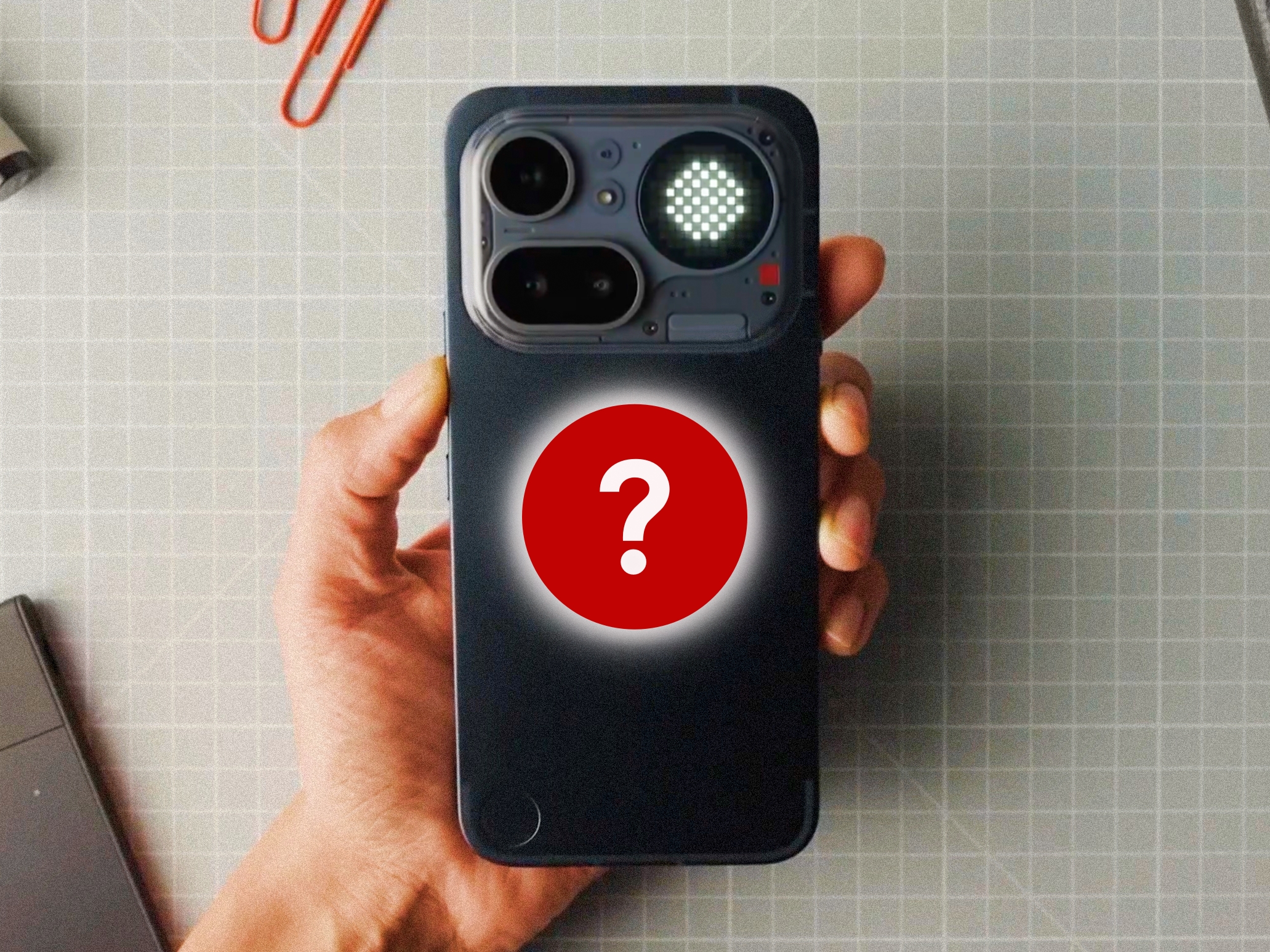
Nothing has carved out a recognizable identity in the smartphone world by leaning hard into design, and it’s easy to see why people notice its devices. The Nothing Phone 4a Pro is another example of that approach. The signature lights on the back are undeniably a gimmick, but they’re also playful and visually distinct in a market where most phones look the same.
And honestly, the phone looks great. Design will always be subjective, but the Nothing Phone 4a Pro has real shelf appeal, and one smart choice stands out immediately: the use of unibody aluminum instead of glass. That’s a practical upgrade because it makes the phone less likely to shatter during everyday drops. The only real concern is the camera island, which is still glass—so a bad fall landing directly on that area could still ruin your day.
The bigger problem isn’t the look or the materials, though. It’s what the Nothing Phone 4a Pro is trying to be—and what it actually delivers.
For a device with “Pro” in the name, there’s surprisingly little here that feels truly pro-level. You’re getting a fairly average mid-range processor, a base model with only 128GB of storage, no full IP68 water resistance, no wireless charging, and only three years of software updates. In 2026, those compromises are harder to justify in the “around €500” category, where buyers expect more longevity, better performance, and stronger long-term support.
That brings us to the real dealbreaker: pricing. The 256GB version lands at €500, while the 128GB model is €430. But for most people, 128GB just doesn’t cut it anymore—apps are larger, photos and videos take up more space, and offline downloads pile up fast. Realistically, the version most buyers should consider is the 256GB model, which makes this a €500 phone in practice. At that price, a flashy design can’t be the main selling point. Not when performance, camera quality, battery life, and long-term software updates are what determine whether a phone still feels good two or three years later.
Even if you appreciate what Nothing is going for, it’s tough to make the investment make sense when there are stronger options at the same price. For roughly €500, alternatives like the Galaxy S25 FE (256GB), the OnePlus 15R, and the Xiaomi Poco X8 Pro Max deliver more of what matters day-to-day: flagship-level processors and longer software support. Those two factors alone usually translate into smoother performance over time, better resale value, and a phone that doesn’t feel outdated halfway through its life.
Battery life is another area where competing phones are pushing hard, especially in Europe. OnePlus and Xiaomi are leaning into massive batteries that can comfortably deliver two days of real-world use. When devices in the same price bracket offer that kind of endurance, it makes a style-first mid-range phone feel even more like a niche pick rather than an obvious recommendation.
If the choice were mine, the Galaxy S25 FE would be the easiest one to justify at this price. You’re getting a flagship-grade camera, wireless charging, and seven years of OS updates—benefits that hold their value long after the novelty of a unique design wears off. Even if it only lasts a full day per charge, that’s a trade-off many people would gladly accept for better cameras and vastly longer software support.
Nothing’s strategy seems clear: chase the “cool” factor and aim for younger buyers who want something different. But it’s hard to see that approach holding up when so many shoppers are more budget-conscious than ever. In an economy where people want purchases to last, spending €500 on a phone that could realistically last twice as long—thanks to a much faster processor, better features, and two times the update support—simply makes more sense.
As it stands, the Nothing Phone 4a Pro feels like a phone you buy for the vibe, not the value. And at €500, value is exactly what buyers should demand.