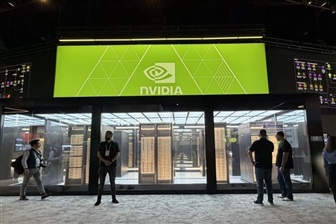
At GTC 2026, Nvidia CEO Jensen Huang put a spotlight on how fast artificial intelligence is changing. The industry is no longer defined primarily by the race to train ever-larger models. Instead, AI is entering a new phase where inference—running models efficiently at scale—and “agent computing,” where AI systems take actions across tools and workflows, are becoming the main event.
That shift matters because inference is where AI meets the real world. It’s the part that powers customer support bots, real-time translation, recommendation engines, coding assistants, enterprise copilots, and autonomous agents that can plan, execute, and iterate. As more companies deploy AI into products and internal operations, demand for low-latency, high-throughput inference hardware is exploding.
To address that surge, Nvidia is leaning on a major strategic move: integrating Groq following its acquisition. Groq’s technology is built around an LPU (Language Processing Unit) approach tuned for rapid execution of AI workloads, especially where speed and predictable performance are critical. In an AI market increasingly judged by responsiveness and cost per query, inference acceleration can be the difference between a demo and a scalable business.
A notable detail from the conversation around Nvidia’s Groq LPU push is the silicon foundation: the Groq LPU runs on Samsung-manufactured silicon. As AI compute expands, who can reliably manufacture advanced chips at scale becomes just as important as the architecture itself. Supply, yield, capacity planning, and advanced packaging can determine how quickly new AI accelerators reach customers—and in what quantities.
The takeaway from GTC 2026 is clear: AI’s next growth wave is being shaped by inference, AI agents, and deployable computing at scale. Nvidia’s Groq integration signals a stronger emphasis on inference performance and production readiness, while the Samsung silicon angle highlights how critical the semiconductor supply chain has become in delivering the next generation of AI hardware.