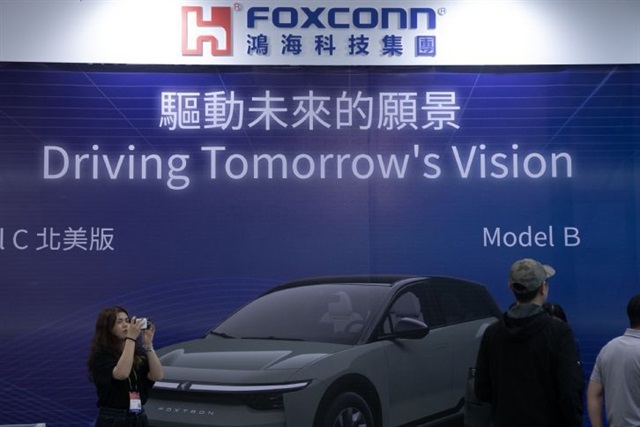
Talks between Hon Hai Precision Industry, better known as Foxconn, and Nissan Motor over a potential partnership centered on Nissan’s Oppama plant in Yokosuka, Kanagawa Prefecture have reportedly collapsed. Japanese media indicate that Foxconn ended negotiations, halting what could have been a high-profile collaboration between a global electronics manufacturing giant and one of Japan’s most storied automakers.
The proposed tie-up drew attention because it hinted at a new model for the changing automotive landscape: contract manufacturing and technology sharing between tech-savvy manufacturers and legacy carmakers navigating the shift to electrification and software-defined vehicles. With talks now off the table, the outcome raises pressing questions about strategy, execution, and timing on both sides.
For Nissan, the dead end underscores the delicate balance between protecting core manufacturing identity and seeking partners to optimize cost, capacity, and speed to market. Oppama is a landmark facility within Nissan’s domestic footprint, and any external collaboration there would have signaled a bold operational pivot. The breakdown suggests Nissan is still weighing how much of its future it wants intertwined with external manufacturing powerhouses, especially as it reshapes product roadmaps, reallocates resources, and fine-tunes its electrification path.
For Foxconn, the move highlights the complexities of translating its world-leading electronics supply chain prowess into automotive scale. The company has articulated ambitions to become a significant contract manufacturer for EVs and next-generation mobility solutions. Exiting these talks suggests either the economics, control, or timeline no longer aligned with its strategy—or that integration with an established automaker’s processes proved more complicated than anticipated. Automotive programs demand deep coordination across safety, homologation, long development cycles, and rigorous quality systems, all of which differ markedly from consumer electronics.
Why the negotiations may have faltered will likely come down to a familiar mix of factors. Strategic control is often the first friction point: who owns the platform, software stack, and critical intellectual property. Economics come next, including plant utilization rates, capital commitments, component sourcing, and the margin structure of contract-built vehicles. Then there is the question of speed and flexibility—how quickly a partnership can pivot in a market that’s moving from internal combustion to battery-electric and from hardware-centric to software-first. Any one of these could stall even a promising alliance.
The implications now ripple outward. Nissan’s path forward at Oppama and across its Japanese manufacturing base will draw fresh scrutiny as it refines its global production strategy, balances domestic and international output, and calibrates its EV rollout in a market defined by tightening regulations and changing consumer demand. The company may explore other forms of collaboration, but this outcome suggests it will be cautious about deals that cede too much operational control or blur brand identity.
For Foxconn, the search continues for automotive partners and products that fit its model. Its value proposition—rapid industrialization, cost discipline, and immense supply chain leverage—remains compelling, particularly for startups or brands seeking asset-light strategies. Yet partnerships with established automakers carry additional layers of complexity, from union relationships and supplier contracts to legacy platforms that are difficult to retrofit for new production methods.
This episode is also a reminder of a broader industry reality: building cars at scale is hard. The EV transition is forcing companies to rethink where and how vehicles are made, what software lives on the vehicle, and how profits are shared across an expanding ecosystem. The most successful partnerships will marry the reliability and safety culture of traditional automakers with the agility and cost structure of advanced manufacturers—without compromising brand equity or long-term technology ownership.
What to watch next:
– Whether Nissan signals alternative plans for Oppama, including internal optimization, different partners, or a renewed focus on specific vehicle programs.
– How Foxconn reallocates its automotive efforts, and whether it prioritizes partnerships with younger brands that embrace contract manufacturing from the outset.
– Shifts in Japan’s domestic manufacturing strategy as the industry navigates electrification, supply chain localization, and global competition.
– The evolving deal structures between tech manufacturers and car companies, particularly around platform control, software roadmaps, and lifecycle support.
In the end, the halted talks do not close the door on cross-industry cooperation; they clarify the terms under which it can work. For Nissan, it’s a prompt to reaffirm priorities at a critical plant and across its portfolio. For Foxconn, it’s a recalibration as it seeks automotive programs that align with its strengths. And for the wider market, it’s a case study in how high-profile partnerships must balance speed, scale, and sovereignty to succeed in the next era of mobility.