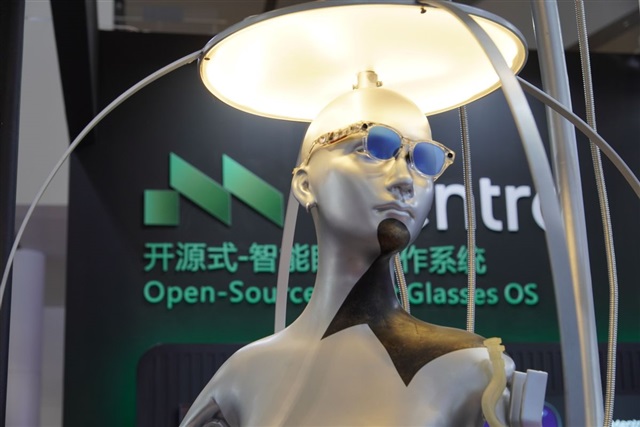
China has become the epicenter of the smart glasses revolution, and nowhere is that more evident than at the China International Optoelectronic Exposition. The event feels less like a trade show and more like a proving ground, where the country’s top component makers and emerging contenders square off in a fast-moving race to define the next generation of wearable displays.
Established leaders such as GoerTek, Sunny Optical, and Luxshare Precision are setting the tone, but what stands out this year is the surge of mid- and low-tier manufacturers entering the arena. That wave of new players is reshaping the competitive landscape, pushing innovation across both hardware and optics while compressing product cycles and prices. The momentum is unmistakable: smart glasses are moving from futurist concept to practical reality, with China’s supply chain driving the pace.
The star of the show is optical waveguide technology. This is the critical component that enables smart glasses to project bright, crisp images onto transparent lenses without bulky optics. The companies that master waveguides—achieving high brightness, wide field of view, low distortion, and superior color uniformity in a thin, lightweight form—will hold the keys to mass adoption. From diffractive to holographic approaches, the battle is happening at the nanostructure level, where tiny improvements in efficiency can translate to huge gains in comfort and clarity for end users.
Competition is intensifying on multiple fronts. On the optics side, teams are racing to improve light efficiency and reduce rainbow artifacts while keeping lenses thin and durable. In hardware, the focus is on shrinking processing units, boosting battery life, and improving thermal management so devices remain wearable for hours, not minutes. The integration challenge—packing displays, sensors, connectivity, and power into a frame that still looks like regular eyewear—is driving a rapid cadence of design experimentation and supply chain collaboration.
What makes this moment particularly significant is the diversity of companies now participating. Tier-one manufacturers bring scale, manufacturing precision, and global partnerships. Meanwhile, smaller and mid-tier firms are carving out niches with specialized components, aggressive pricing, and rapid iteration. That mix is accelerating the entire ecosystem, benefiting brands that want to bring consumer and enterprise smart glasses to market faster.
For buyers and developers, the implications are compelling. Expect more prototypes, more reference designs, and more pathways to customization. Enterprise-focused models for logistics, field service, and retail are likely to mature first, where ROI is clear and software can be tailored to task-specific workflows. On the consumer side, the push is toward lighter designs for notifications, navigation, media, and hands-free capture—features that rely on better optics and efficient power management. As waveguide yields improve and component costs fall, consumer-ready form factors will feel increasingly normal.
Of course, rapid growth brings challenges. Quality can vary widely between vendors, especially in optical uniformity and color accuracy. Safety and eye-comfort standards must be rigorously observed, particularly with high-brightness displays used outdoors. Interoperability and software frameworks will also be crucial—hardware alone won’t win the market without robust developer support and intuitive user experiences.
Still, the overall trajectory is clear. With China’s manufacturing leadership and a swelling mix of competitors at every tier, smart glasses are pushing toward mainstream viability. The energy on the expo floor reflects a broader shift: optical waveguides are moving from research labs into scalable production, and the companies that execute well now will influence the look, feel, and function of wearable displays for years to come.
If you’re tracking the future of augmented reality and heads-up wearables, keep your eyes on the advancements coming out of China’s optoelectronics sector. The front line has been drawn, the pace is accelerating, and optical waveguide technology is the decisive battleground shaping the next wave of smart glasses.