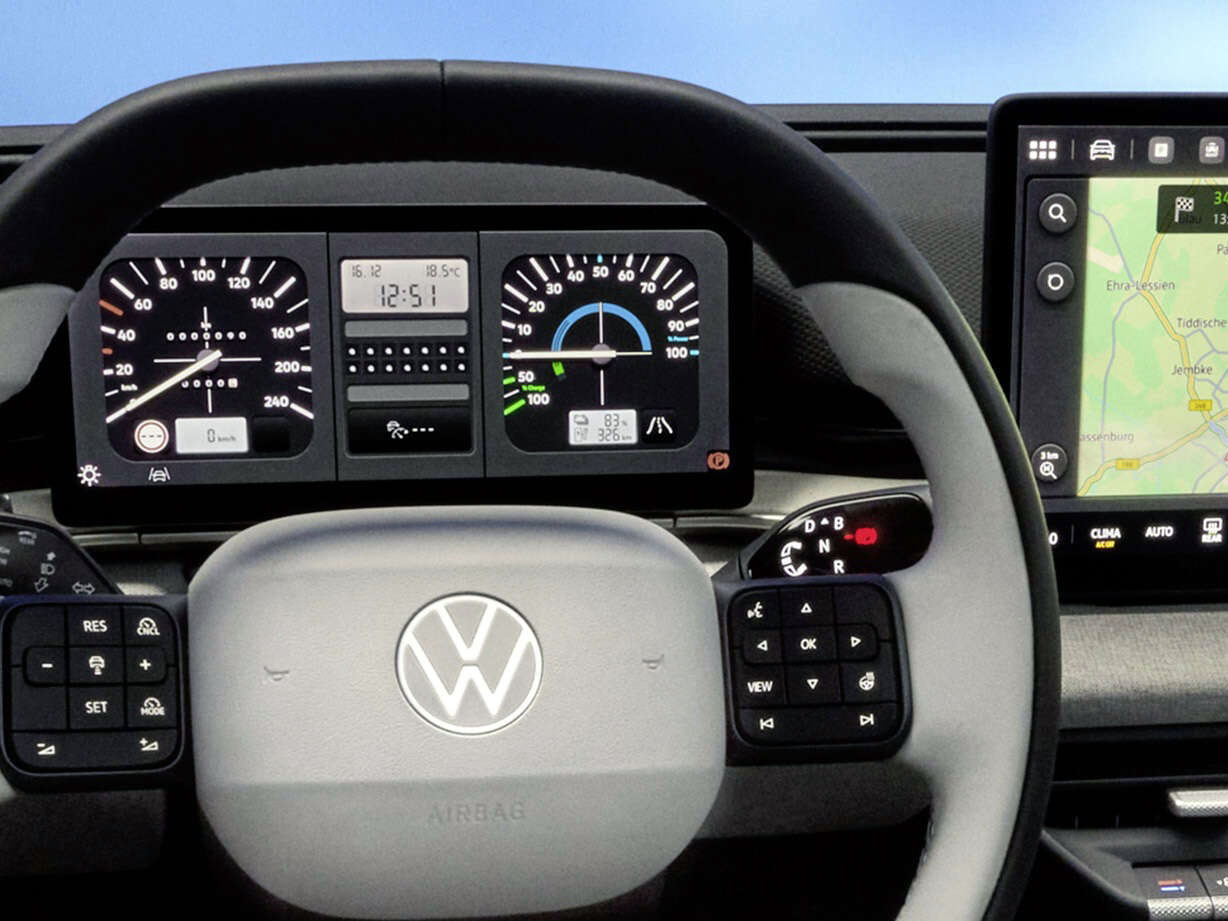
Volkswagen is preparing a major interior shake-up for its next generation of electric vehicles, and it’s drawing inspiration from a surprisingly beloved era: the golden age of the 1980s. After years of sleek, screen-heavy cabins that chased a minimalist look, VW is leaning back into a more familiar, driver-friendly cockpit filled with physical controls and retro-style design cues.
The biggest change is one many drivers have been asking for: real buttons and knobs are coming back. Volkswagen now openly admits that removing traditional controls from its electric cars was a mistake. Beyond nostalgia, there’s a practical reason for the shift. Research has repeatedly shown that physical buttons can be safer and easier to use while driving because they support muscle memory and reduce the need to look away from the road. It’s a recognition that convenience and clean aesthetics shouldn’t come at the cost of everyday usability.
VW has already hinted at this direction with its ID. 2all concept, which teased a return to pressable, tactile controls. That idea is expected to become reality soon with the upcoming small electric model often described as the spiritual successor to the Polo. Positioned as Volkswagen’s most affordable electric car when it arrives, it’s also set to debut this retro-meets-modern cabin approach in a big way.
A key highlight is the instrument cluster design. Spread across a 10-inch display, the gauges are styled to resemble the classic layout from the original VW Golf (Golf 1), complete with a retro digital clock look that reinforces the throwback theme. Alongside it sits a larger 13-inch infotainment screen, but notably, Volkswagen pairs it with a row of physical buttons underneath—bringing back quick, reliable access to common functions rather than forcing everything through on-screen menus. There’s even a cassette tape-style visualization element, which doubles down on the retro vibe, though it may feel a bit much for some tastes.
The tactile comeback doesn’t stop at the dashboard. The steering wheel features plenty of physical buttons, and the door panel also gets its share of controls. The end result is a cabin that aims to feel more intuitive and satisfying to use—especially for drivers who miss the sense of engagement that comes from turning a knob or pressing a real switch, instead of tapping through layers of touchscreen settings.
This design strategy also stands out in the broader EV market, where many brands have moved toward ultra-minimal interiors with fewer physical interfaces. One well-known approach has been to eliminate buttons under the argument that fewer moving parts means fewer things to break. But pushing nearly every control into a touchscreen can also reduce manufacturing complexity and cost. Over time, consumer feedback and even regulations have helped drive some tactile controls back into certain vehicles, reflecting a growing realization across the industry: touch-only isn’t always better.
With this new cockpit direction, Volkswagen appears ready to combine modern EV tech with an interior that feels warmer, more familiar, and easier to live with every day. For drivers tired of sterile cabins and overly digital controls, VW’s return to buttons, knobs, and classic-inspired gauges could be one of the most welcome EV interior trends to arrive this year.