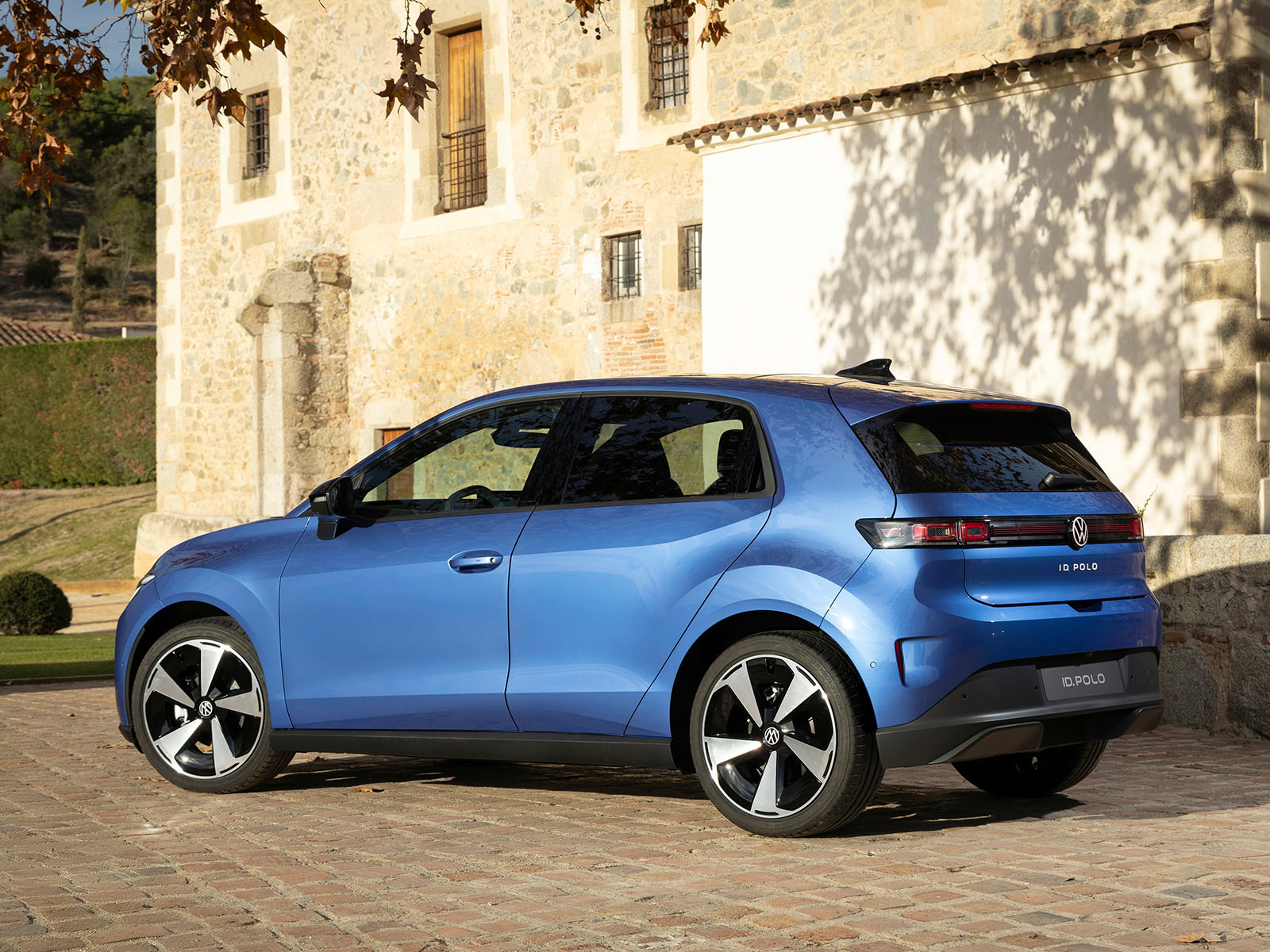
Volkswagen is putting real pressure on Tesla’s long-rumored affordable electric car by doing what Tesla still hasn’t: launching a small, lower-cost EV you can actually order today. While Tesla’s “Model 2” story has bounced between hints, delays, and shifting priorities, VW is stepping into the spotlight in Europe with the new ID. Polo, starting at €24,995.
That starting price matters because it lands right in the sweet spot shoppers have been waiting for: a practical, mass-market electric car that doesn’t require a luxury-car budget. And unlike Tesla’s still-uncertain “next-gen vehicle” plans, Volkswagen’s ID. Polo is positioned as a real-world option for city driving and everyday commuting, with DC fast charging available across the lineup.
Here’s how the VW ID. Polo range breaks down. The entry-level model comes with a 37 kWh LFP battery and a 114 hp motor. It’s clearly aimed at urban drivers who want an efficient runabout with enough flexibility for the occasional short trip outside the city. Charging is designed to be quick and convenient, with roughly a half-hour fast-charge window depending on conditions.
The more attention-grabbing version is the 52 kWh model, which uses an NMC battery and pairs it with a much stronger 211 hp front-mounted motor. VW quotes up to 454 km of WLTP range, which would likely translate to around 270 miles under EPA-style estimates. Fast charging is standard here too, with the smaller-battery version capable of 10–80% in about 27 minutes, reinforcing the ID. Polo’s focus on usability rather than just headline figures.
The timing is notable because this 52 kWh capacity is also the size that Tesla’s rumored Model 2 has frequently been associated with. The difference is that Volkswagen is already selling a vehicle in this category, while Tesla’s affordable car effort appears to have shifted direction. Reports indicate Tesla moved away from building a dedicated low-cost model and instead concentrated on reducing production costs for the Model 3 and Model Y. During its Q1 earnings discussion, Elon Musk also suggested that the upcoming autonomous two-seat Cybercab could attract the same customers who might have otherwise waited for a cheaper Tesla—assuming it clears regulatory hurdles, since it’s described as a pedal-less, driverless design.
On the manufacturing side, Tesla has promoted its “Unboxed Process” as a major cost breakthrough, targeting around a 50% reduction in manufacturing costs versus the Model 3 platform. In theory, that kind of cost cutting makes a $25,000 EV achievable, especially if Tesla can scale something like the Cybercab at extremely low production costs.
Volkswagen’s approach to lowering costs for the ID. Polo takes a different route. VW is using cell-to-pack battery technology, which boosts energy density by roughly 10% while also saving space—helping efficiency and packaging without necessarily needing a radical new vehicle architecture.
Inside the cabin, VW is also making a move many drivers have been asking for: physical buttons are back. The ID. Polo adopts VW’s updated ergonomics direction with real controls for key functions like climate settings, hazard lights, and window switches. After years of the “touchscreen for everything” trend that became closely associated with Tesla and spread across the industry, the pendulum is now swinging back as drivers and regulators increasingly push for tactile controls that are easier to use without taking eyes off the road.
If Tesla eventually launches a compact Model 2 hatchback—often imagined as a smaller Model Y-style vehicle—it may still favor a simplified, screen-first interior to protect margins and hit aggressive pricing. In other words, these two vehicles are aimed at the same core buyer: someone who wants an affordable, practical EV for daily use. Right now, though, only one of them is real, orderable, and already on sale.
There is one catch. While the ID. Polo starts below €25,000, the higher-spec 52 kWh version reaches €33,795. Without incentives, that price may feel less “affordable EV” and more like a stretch for budget-focused shoppers—especially those who were hoping the market would finally deliver a true low-cost electric car without subsidies.