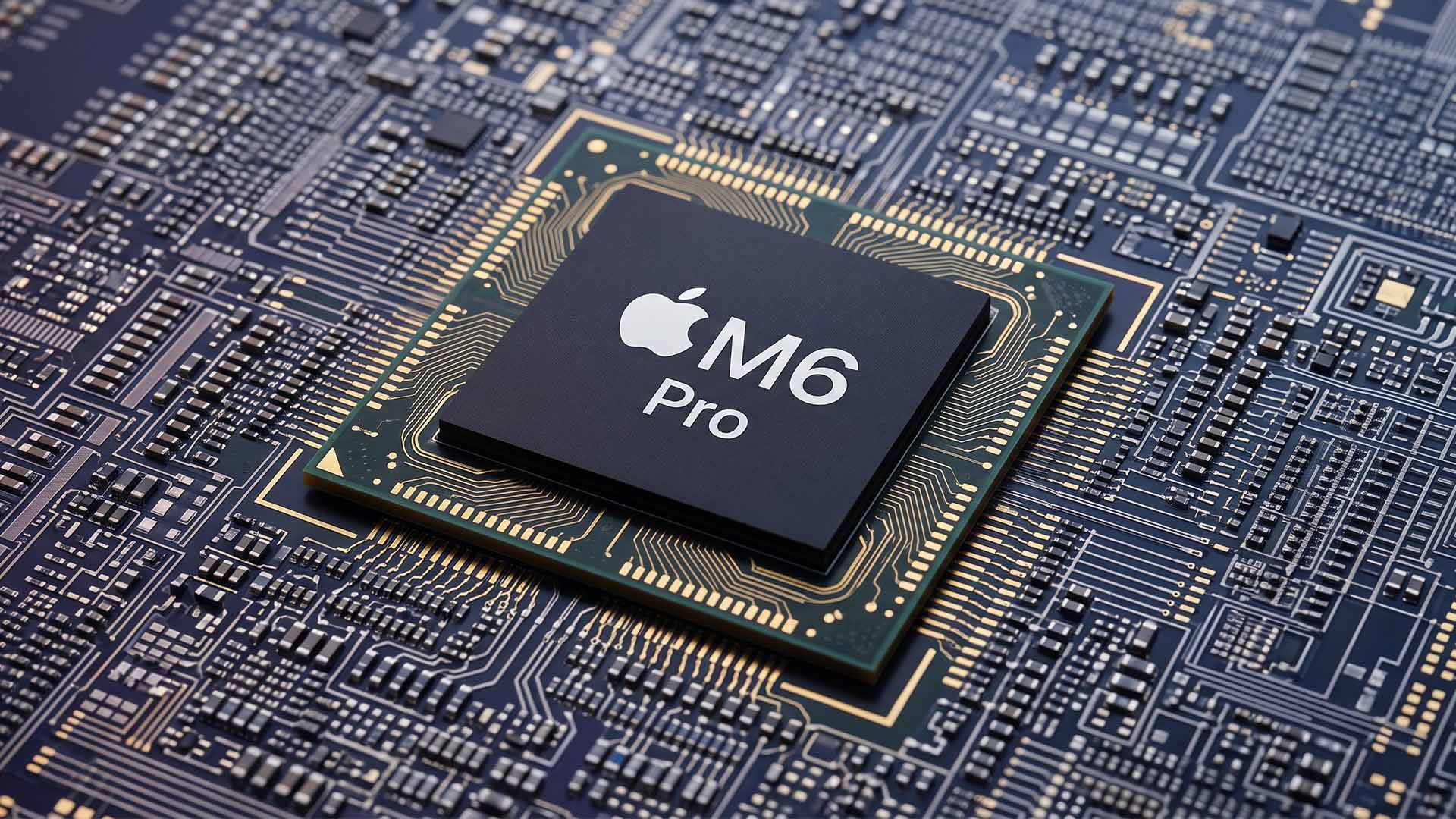
Apple M6 Pro Geekbench Scores Raise Eyebrows as Evidence Points to a Fake Listing
Apple fans briefly had a reason to get excited after an alleged M6 Pro chip appeared in Geekbench 7 with extremely impressive performance numbers. The listing suggested a major leap in both single-core and multi-core results, strong enough to make future MacBook Pro and Mac mini upgrades look very tempting.
However, the excitement may have been short-lived. There is now strong reason to believe the benchmark results are not genuine.
The alleged Apple M6 Pro scores showed performance that would have placed the chip far ahead of current Apple Silicon, with single-core results reportedly nearing the 5,000-point range and multi-core performance that appeared capable of outperforming the M5 Max. On paper, that would have made the M6 Pro one of the most powerful chips Apple had ever prepared for its Mac lineup.
But Geekbench creator John Poole reportedly found internal inconsistencies in the listing, leading him to believe the result may be fake. While the numbers looked convincing at first glance, those inconsistencies appear to be enough to cast serious doubt on the authenticity of the benchmark.
Interestingly, the fake-looking M6 Pro listing did not immediately stand out as impossible based on specifications alone. Some may assume the chip’s CPU core count was too high for an M6 Pro model, but that is not necessarily the case. Apple’s newer packaging approach, often referred to as Fusion Architecture, has already allowed the M5 Pro and M5 Max to share similar CPU core configurations. Because of that, a higher-core M6 Pro would not automatically be unrealistic.
The clock speeds also did not seem completely out of line. The alleged M6 Pro appeared to run slightly faster than the performance cores found in the M5 Max, which would match Apple’s usual pattern of gradually increasing maximum operating frequency with each new generation of Apple Silicon.
That is what made the listing so interesting. If the benchmark had been real, the M6 Pro would have represented a major step forward for Apple’s chip roadmap, especially for users waiting to upgrade to a future MacBook Pro or Mac mini. A chip with that level of single-core and multi-core performance would have been a serious productivity and creative workload powerhouse.
Still, the bigger issue is that Apple may not be planning to release an M6 Pro or M6 Max at all. Previous reports have suggested that Apple could skip those chips entirely and move directly toward the M7 Pro and M7 Max instead. If that is accurate, then the appearance of an M6 Pro benchmark becomes even more suspicious.
For now, the safest approach is to treat any Apple M6 Pro Geekbench listing with caution. Benchmark leaks can be exciting, especially when they hint at massive performance gains, but not every result that appears online is legitimate. Until more reliable information appears, the supposed M6 Pro performance figures should be viewed as unverified and likely fake.
Apple’s next major Mac chip updates are still expected to attract plenty of attention, especially as users look for better performance, improved efficiency, and stronger graphics capabilities in future MacBook Pro and Mac mini models. Whether Apple moves ahead with an M6 Pro-class chip or jumps straight to the M7 Pro and M7 Max, the next generation of Apple Silicon is likely to remain one of the biggest stories in the Mac ecosystem.


