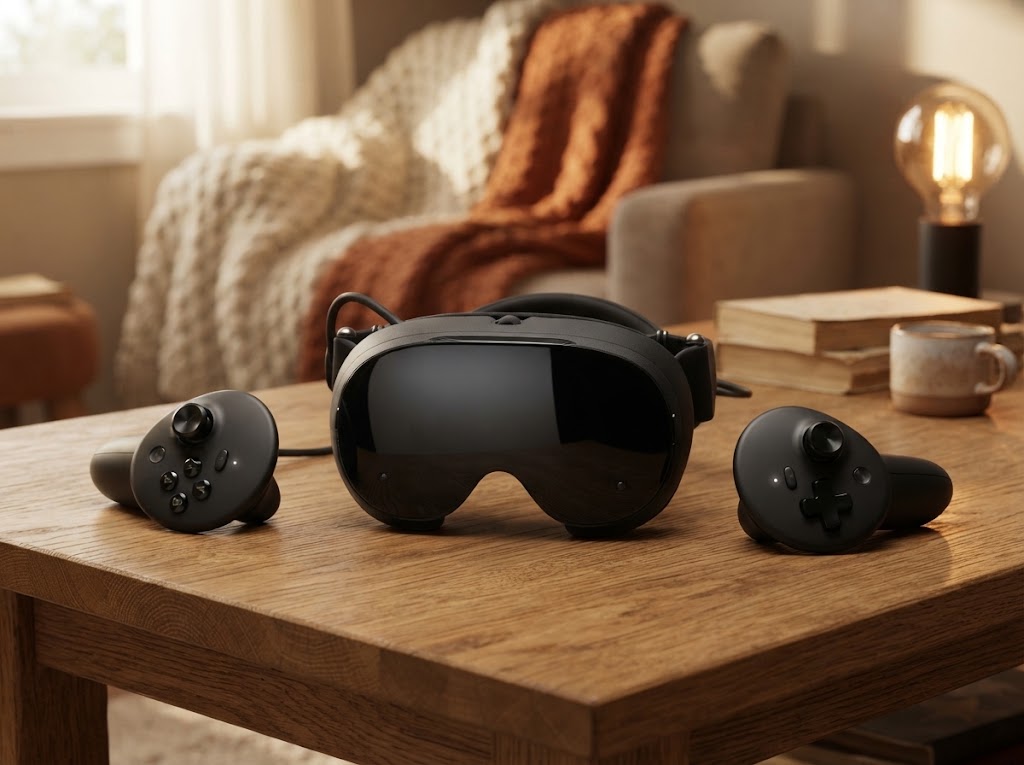
Valve has rolled out SteamOS 0.3.0 for the Steam Frame, delivering the headset’s first major software update just days after its September 14 launch. The update arrives at an important moment, as early users begin putting the new VR headset through its paces and highlighting areas where the experience could be improved.
The most notable change is faster charging when the Steam Frame is powered off or in sleep mode. Battery life and charging performance have been among the biggest talking points since launch, especially for players using demanding VR titles in Performance mode. By improving charging behavior while the headset is not actively in use, Valve is addressing one of the most immediate concerns from early adopters.
SteamOS 0.3.0 also brings a collection of stability and usability improvements designed to make the Steam Frame feel smoother and more reliable. Controller tracking has been improved when haptics are active, which should help maintain more accurate input during immersive gameplay. Valve has also strengthened system stability and reliability under heavy workloads, an important fix for VR experiences that push the hardware harder.
Audio quality gets attention as well. The update fixes a microphone issue that could cause garbled voice input, making communication clearer during multiplayer sessions, voice chat, or in-game recording. Another fix ensures that the per-application Motion Smoothing “Force Always-On” setting now functions correctly.
Valve has also refined motion smoothing specifically in Half-Life: Alyx, one of the most important VR titles for the Steam Frame ecosystem. This should help deliver a cleaner and more consistent visual experience during fast movement or graphically intense scenes.
Additional quality-of-life changes include a new setting that lets users dim games when the dashboard is visible. The Play Area screen has also been adjusted so it no longer automatically shows boundaries, reducing unnecessary interruptions and making the headset feel less intrusive during setup and play.
Developers benefit from the update too. SteamOS 0.3.0 changes the Playable performance criteria, allowing games to run at resolutions beyond the previous 1440p requirement. This could make it easier for more titles to meet compatibility standards and perform well on Steam Frame.
Valve has also included Vulkan-layer fixes aimed at improving game compatibility, along with operating system and Mesa graphics improvements intended to boost overall performance. These under-the-hood changes may not be immediately obvious to every user, but they are important for long-term stability, smoother gameplay, and broader software support.
With Steam Frame now reaching its first wave of customers, SteamOS 0.3.0 is a timely update. The improved charging behavior, better tracking, audio fixes, motion smoothing refinements, and developer-focused changes show that Valve is moving quickly to polish the headset’s launch experience. For early Steam Frame owners, this update should make the device feel more practical, stable, and ready for extended VR sessions.